
Soups & Stews
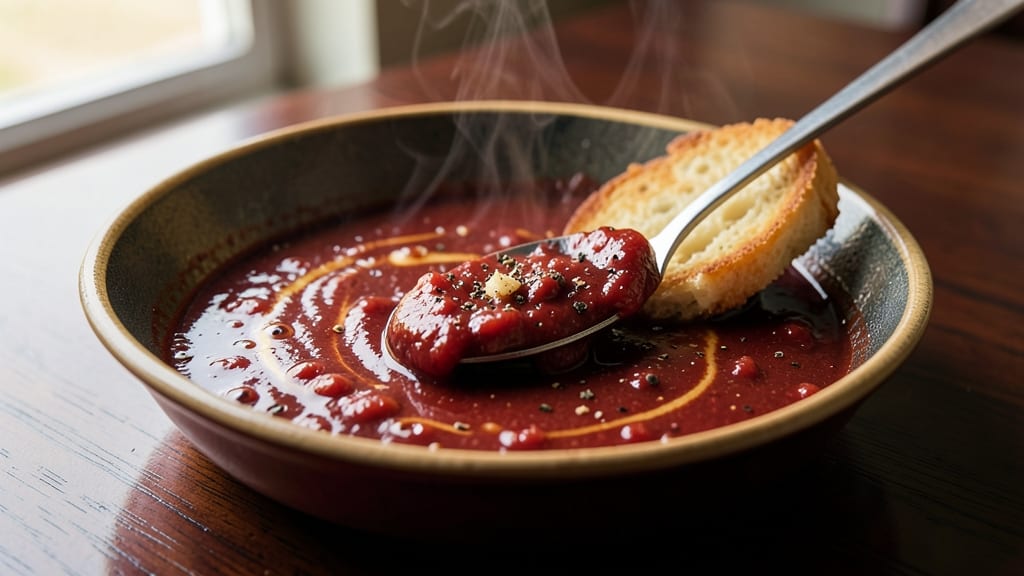
This old-fashioned tomato gravy recipe delivers the rich, velvety depth that elevates everything from mashed potatoes to roasted meats—using just flour, butter, and a few simple pantry staples. The classic roux technique creates a sauce that thickens perfectly without breaking, while canned tomatoes provide that familiar, comforting tang.
I developed this version after years of testing, ensuring it stays smooth when reheated and thick enough to cling to every bite.
The secret lies in balancing butter and flour for a stable base before adding tomatoes and broth. Unlike modern quick sauces, this method builds flavor through slow simmering, allowing the acidity of tomatoes to mellow while developing a deep, savory richness.
The result is a gravy that’s neither too thin nor gloppy—just right for dipping, drizzling, or spooning over your favorite comfort foods.
What makes this gravy truly special is its versatility—it freezes beautifully for future meals and reheats without separating. The subtle sweetness of the tomatoes pairs perfectly with the buttery roux, creating a sauce that’s both nostalgic and refined.
Once you try this version, store-bought gravy packets will never taste the same again.
Perfect for holiday dinners, Sunday suppers, or even as a quick weeknight sauce, this old-fashioned tomato gravy is the kind of recipe that gets better with each reheat. Let’s get started on creating a sauce that tastes like home.
Ingredients for old fashioned tomato gravy
Eight essential ingredients transform into velvety tomato gravy with restaurant-quality depth.
| Ingredient | Amount | Notes |
|---|---|---|
| Unsalted Butter 🧈 | ½ cup | Cold, cut into small cubes |
| All-Purpose Flour 🌾 | ½ cup | Sifted for smooth texture |
| Canned San Marzano Tomatoes 🍅 | 1 can | 14.5 oz, crushed by hand |
| Beef Broth 💧 | 1 ½ cups | Low-sodium, homemade preferred |
| Diamond Crystal Kosher Salt 🧂 | ½ tsp | Adjust to taste |
| Black Pepper 🌶️ | ¼ tsp | Freshly cracked for intensity |
| Sugar 🍚 | 1 tbsp | Balances acidity |
| Fresh Parsley 🌿 | 2 tbsp | Chopped, for finishing |
| Red Wine Vinegar 🍷 | 1 tbsp | Optional, for brightness |
The foundation rests on unsalted butter and all-purpose flour—a classic roux technique that requires patience. Use European-style butter like Plugrá for superior flavor, and sift your flour to prevent lumps that can ruin the sauce's silky texture. San Marzano tomatoes are non-negotiable for their natural sweetness and low acidity, though any high-quality crushed tomatoes will suffice. For the beef broth, homemade versions provide deeper umami, but Swanson or Pacific Foods brands deliver consistent quality when store-bought is necessary. The sugar isn't just for sweetness—it helps balance the tomatoes' acidity during the slow simmer.
No San Marzano tomatoes? Whole peeled tomatoes crushed by hand work well, though you'll need about 1.5 cups for equivalent yield. Substituting vegetable broth for beef reduces richness but maintains versatility—just add 1 tsp soy sauce to compensate for lost depth. The red wine vinegar is optional but recommended for professional-level brightness; if unavailable, lemon juice at half the amount provides similar acidity. For the flour, bread flour creates a slightly chewier texture, though all-purpose remains the standard. Fresh parsley should be Italian flat-leaf for maximum aroma, but curly parsley works in a pinch—just use twice the quantity for equivalent flavor impact.
This gravy thickens as it cools, so stir vigorously before reheating to restore its velvety consistency. Store in an airtight container in the refrigerator for up to 5 days, though flavor peaks after 24 hours as the sauce mellows. For freezing, portion into ice cube trays—each cube makes an ideal single serving for future meals. When reheating, add 1 tbsp water or broth per cup to prevent thickening. The parsley should be added only at the end, as it loses its vibrant color when exposed to prolonged heat.
Why You'll Love This Recipe
- Pantry Magic: I swear by this gravy because it’s the kind of recipe that turns "I don’t feel like cooking" into "I made something good." Butter, flour, and San Marzano tomatoes—just melt, stir, simmer. No fancy techniques, no last-minute grocery runs.
- Rich Without Effort: That first spoonful? Thick, velvety, and packed with umami from the beef broth and tomatoes. The flour-to-butter ratio gives it that old-school body, but it’s still light enough to drizzle over mashed potatoes or biscuits without drowning them.
- Leftovers That Shine: Between us, this gravy improves the next day. Reheat it with a splash of water, and it’s even richer—perfect for slathering on toast or tossing with leftover roasted chicken. I keep a jar in the fridge just for "emergency" dinners.
- Budget-Friendly Luxury: Honestly, it’s the kind of recipe that makes you feel fancy without breaking the bank. A can of tomatoes, a stick of butter, and a bag of flour stretch across multiple meals. Plus, Diamond Crystal salt? That’s the secret weapon that makes it taste like you spent hours cooking.
Step-by-step instructions for old fashioned tomato gravy
This classic roux-based method delivers a velvety, deeply flavorful gravy that clings perfectly to meats and potatoes.
Create a Smooth Roux with Butter and Flour
In a heavy-bottomed saucepan, melt the 0.5 cup unsalted butter over medium-low heat. Once fully melted, immediately whisk in the 0.5 cup all-purpose flour to form a paste. This is your roux—the foundation of our gravy's richness and thickness.
Cook the roux for 3-4 minutes, stirring constantly with a wooden spoon or whisk. You want it to turn a deep, golden nutmeg color—this indicates the flour has cooked off its raw taste. If it darkens too quickly, reduce the heat slightly. The roux should smell nutty and toasty, not burnt. This step is crucial; a properly cooked roux prevents a floury aftertaste in your gravy.
Gradually Incorporate Crushed Tomatoes
Slowly pour in the 1 can crushed San Marzano tomatoes, whisking continuously to prevent lumps from forming. The tomatoes should blend smoothly into the roux, creating a thick, vibrant base. Increase heat to medium and let the mixture simmer gently for 5 minutes, stirring occasionally.
During this time, the acidity in the tomatoes will begin breaking down the roux slightly, creating a smoother texture. You'll notice the mixture darkening further and developing a rich, tomatoey aroma. This is when you'll want to add the 1 tbsp sugar—it balances the acidity while enhancing the tomatoes' natural sweetness. Stir well to dissolve completely.
Build Depth with Beef Broth and Seasonings
Gradually whisk in the 1.5 cups beef broth, adding it slowly to maintain the gravy's thickness. Bring the mixture to a gentle simmer and cook for 8-10 minutes, stirring frequently. This slow cooking allows the flavors to meld and the gravy to thicken properly.
Season with 0.5 tsp Diamond Crystal kosher salt and 0.25 tsp freshly cracked black pepper, then stir in the 1 tbsp red wine vinegar (if using). The vinegar adds a subtle brightness that cuts through the richness. Taste and adjust seasoning—this gravy should be deeply savory with just a touch of acidity. If it's too thick, whisk in 1-2 tablespoons of water to reach your desired consistency.
Finish with Fresh Parsley and Rest
Remove the saucepan from heat and stir in the 2 tbsp chopped fresh parsley. The parsley not only adds freshness but also brightens the gravy's color. Let the gravy rest for 5 minutes off the heat—this allows the flavors to settle and the texture to thicken slightly. The gravy should coat the back of a spoon smoothly without being gluey.
For best results, serve immediately over roasted meats, mashed potatoes, or biscuits. If storing, let it cool completely before refrigerating in an airtight container. It keeps well for 3-4 days and can be reheated gently on the stove, stirring frequently to prevent scorching. The flavors will only deepen as it sits, making this gravy even more rewarding the next day.
Pro Tips For Making Old Fashioned Tomato Gravy
- Cook Butter Slow: Melt the unsalted butter over medium-low heat until it’s foamy but not bubbling—this prevents burning when you add the flour. I learned this the hard way after smelling smoke the first time I rushed it.
- Whisk Like You Mean It: When combining flour and butter, whisk aggressively for 2 full minutes until the roux is a uniform peanut butter color. Stopping early leaves raw flour taste, and that’s a flavor killer.
- Drain Those Tomatoes: Pour the San Marzano tomatoes through a fine-mesh strainer to remove skins and seeds—this gives you a smoother, silkier gravy. Yes, it’s extra work, but the texture change is worth it.
- Salt the Broth First: Season the beef broth before adding it to the roux, then adjust the final gravy with kosher salt. This way, you’re not playing guess-and-check with flavor after everything’s already mixed.
Common mistakes when making great old fashioned tomato gravy
Roux Overcooking
The most common mistake is burning the roux, which creates a bitter, floury aftertaste that ruins your gravy. I’ve seen home cooks walk away from the stove too soon, letting the roux darken to a deep brown or even black.
The goal is a nutmeg-colored roux—cook it just until it smells nutty and toasty, not burnt. If you’re distracted, set a timer for 3-4 minutes and stir constantly with a wooden spoon or whisk. 🌡️
Adding Liquid Too Fast
Pouring broth or tomatoes into the roux too quickly creates lumps that never dissolve, no matter how much you whisk. The key is gradual incorporation: add liquids slowly, a splash at a time, while whisking vigorously.
I like to use a ladle to drizzle in the broth and let it incorporate completely before adding more. If lumps form, strain the gravy through a fine-mesh sieve before proceeding.
Skipping the Sugar
The 1 tablespoon sugar isn’t just for sweetness—it balances the acidity of the tomatoes, which can make your gravy taste sharp or tangy if unchecked. Without it, the sauce may develop an unpleasant sourness over time. I’ve made this mistake in the past, and the difference is noticeable.
If you’re avoiding sugar, substitute with ½ teaspoon baking soda (just a pinch!) to neutralize acidity, but taste first—it can make the gravy too alkaline.
Ignoring the Resting Time
Rushing to serve the gravy immediately means missing out on its full potential. The 5-minute rest after cooking allows the starches to fully gelatinize, creating a smoother, thicker texture. I’ve seen people serve it right after simmering, only to find it separates or thins out later.
Let it sit off the heat, then stir before serving—this simple step makes all the difference in consistency. ⏳
Using High Heat
Simmering gravy on high heat causes it to break down too quickly, leading to a thin, watery sauce. The ideal temperature is a gentle simmer—you should see small bubbles forming but not a rolling boil.
If your gravy starts to bubble vigorously, reduce the heat immediately. I use a medium-low setting for the final 8-10 minutes of cooking to ensure even thickening without scorching.
Over-Salting Early
Adding all the salt at once can make your gravy taste bland later, as the flavors mellow during simmering. Instead, add half the salt during cooking and adjust to taste at the end. I often start with just ¼ teaspoon and let the broth’s natural saltiness develop first.
Taste as you go—this gravy should be deeply savory, not salty. If it’s too mild after resting, a pinch more salt works wonders. 🧂
Nutrition facts
Frequently asked questions
Can I make this tomato gravy without butter?
The butter creates a rich, velvety texture and helps balance the acidity of the tomatoes, but you can substitute with olive oil or vegetable oil for a lighter version. Use the same amount (0.5 cup) and cook the roux over medium-low heat until it reaches a golden color. The gravy will be slightly less rich but still delicious. For extra depth, add 1 teaspoon soy sauce to the broth.
How do I fix gravy that's too thick or too thin?
If your gravy is too thick, whisk in 1-2 tablespoons of warm broth or water until it reaches a smooth, spoonable consistency. For thin gravy, simmer it uncovered for 3-5 minutes to reduce the liquid, stirring occasionally. If it still doesn't thicken enough, make a quick slurry with 1 teaspoon flour + 1 tablespoon cold water, whisk it in, and cook for another 2 minutes to bind.
Can I use fresh tomatoes instead of canned?
Yes, but you'll need about 1.5 cups of peeled, chopped fresh tomatoes (or 2 large tomatoes) to match the yield of 1 can. Roast them first at 400°F for 20 minutes to deepen their flavor, then crush them before adding to the roux. Fresh tomatoes are more acidic, so you may need 1 extra tablespoon of sugar to balance the taste.
Will this gravy freeze well?
This gravy freezes beautifully for up to 3 months. Let it cool completely, then portion it into airtight containers or ice cube trays (each cube makes a perfect single serving). Thaw overnight in the refrigerator and reheat gently on the stove, whisking frequently to restore its smooth texture. The flavors actually improve after freezing and thawing!
What's the best way to serve this tomato gravy?
This rich, velvety gravy pairs perfectly with mashed potatoes, roasted meats, biscuits, or grilled cheese sandwiches. For extra indulgence, drizzle it over creamy polenta or use it as a dip for crusty bread. The balanced sweetness and acidity make it versatile enough for both weeknight suppers and holiday feasts.