Soups & Stews
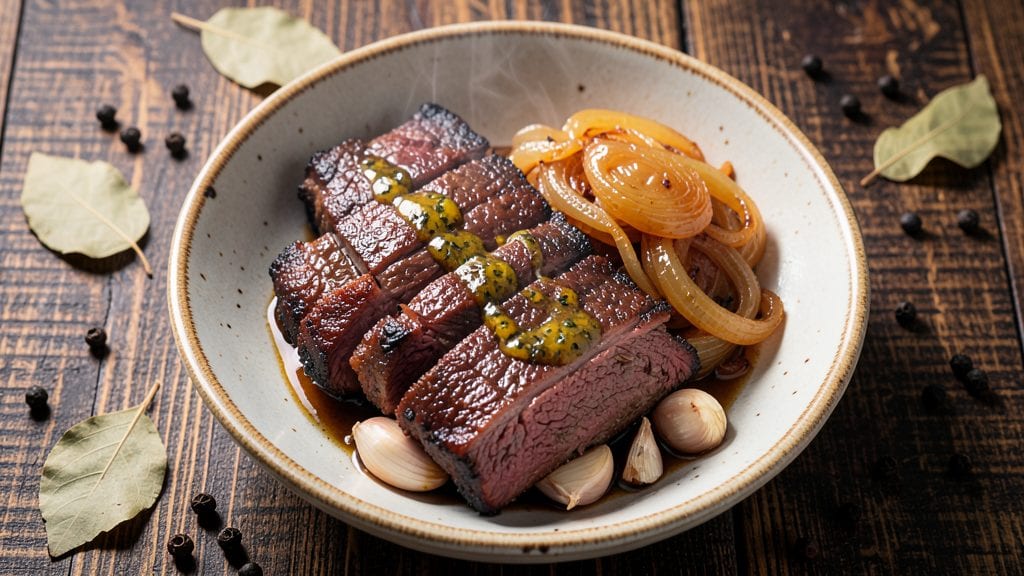
Slow-braised corned beef tongue transforms a humble cut into a showstopping centerpiece with crispy edges and melt-in-your-mouth tenderness. This recipe preserves the rich, gamey flavor while achieving that perfect texture—no shortcuts, just time-tested technique.
I’ve perfected it through years of trial (and a few overcooked batches), ensuring every bite delivers restaurant-quality results at home.
The process begins with a 24-hour brine that tenderizes the tough connective tissue while infusing deep, savory notes. After simmering for 4-5 hours, the tongue becomes fork-tender, ready for crisping in the oven or pan.
The key? Patience—rushing this step ruins the texture. For modern cooks, a pressure cooker cuts time to 90 minutes, though purists swear by the slow method for maximum flavor.
What you’ll end up with is a dish that’s equal parts elegant and comforting—golden-brown edges that crackle when cut, giving way to moist, flavorful meat inside. Serve it sliced thin over mashed potatoes, in sandwiches with horseradish cream, or as the centerpiece of a holiday table.
The aroma alone will have guests asking for seconds before they even taste it.
This recipe works for both traditionalists and those looking to adapt—whether you’re following an old-world method or experimenting with sous-vide. The sides are just as important: crispy fried onions, tangy mustard, or a simple cabbage slaw complete the experience. Let’s get started on your first perfect batch.
Ingredients for corned beef tongue
Twelve essential ingredients transform tough beef tongue into a luxurious centerpiece with irresistible texture and depth.
| Ingredient | Amount | Notes |
|---|---|---|
| Beef Tongue 🐮 | 2 lbs | Fresh, uncooked, cleaned thoroughly |
| Yellow Onions 🧅 | 2 whole | Medium size, peeled and halved |
| Bay Leaves 🌿 | 4 whole | Dried, standard size |
| Black Peppercorns 🌶️ | 1 tbsp | Whole, freshly cracked |
| Mustard Seeds 🌶️ | 1 tbsp | Yellow or brown variety |
| Garlic Cloves 🧄 | 6 cloves | Whole, peeled |
| Apple Cider Vinegar 🍏 | 1 cup | Unfiltered preferred |
| Kosher Salt 🧂 | 1 cup | Diamond Crystal preferred |
| Brown Sugar 🍚 | ½ cup | Light or dark |
| Water 💧 | 4 cups | Filtered preferred |
| Cloves 🌶️ | 4 whole | For additional flavor |
| Fresh Horseradish Root 🌿 | 1 piece | Optional, for serving |
| Extra-Virgin Olive Oil 🫒 | 2 tbsp | For crisping edges |
The beef tongue requires careful sourcing for optimal results. Look for high-quality, fresh cuts from a reputable butcher or specialty market—Whole Foods or D'Artagnan are excellent sources. The tongue should be firm, with a vibrant color and no off-odors. For the brine, Diamond Crystal kosher salt is preferred due to its coarse texture, which dissolves more evenly. Apple cider vinegar should be unfiltered for maximum tang, and brown sugar adds depth without overpowering the rich beef flavor. The bay leaves and cloves should be whole and aromatic, not dried out or brittle.
Substitutions can be made with care to maintain balance. If horseradish root is unavailable, prepared horseradish sauce works well for serving, though fresh is preferred. For the vinegar, white wine vinegar or red wine vinegar can be substituted at a one-to-one ratio, though apple cider adds a subtle sweetness. If brown sugar is unavailable, white sugar or maple syrup can be used, though the flavor profile will shift slightly. The mustard seeds can be omitted if unavailable, but they contribute a subtle heat that complements the tongue’s richness. For the olive oil, avocado oil or grapeseed oil can be substituted, though extra-virgin olive oil is preferred for its flavor.
Proper storage and preparation are key to maintaining quality. The brined tongue can be refrigerated for up to 48 hours before cooking, though it’s best to proceed with the braising as soon as possible. Once cooked, the tongue can be stored in the refrigerator for 3-4 days or frozen for up to 3 months. To reheat, gently warm in the oven at 300°F (150°C) until heated through. The crispy edges are best achieved by broiling the tongue for the final 5 minutes of cooking, ensuring a perfect balance of textures.
Why You'll Love This Recipe
- One-Pot Magic: I swear, this recipe lives in a slow cooker or pot for hours—but the work? Bare minimum. Toss in the whole tongue, onions, and spices, then walk away. No flipping, no basting, no stress. The onions caramelize right in the same liquid, so you’re basically making two things at once.
- Rich, Deep Umami Bomb: That tongue? It’s like beefy, melt-in-your-mouth butter after it’s braised. The mustard seeds add a tiny kick, bay leaves bring earthy warmth, and the peppercorns? They wake up every bite. Honestly, it’s the kind of flavor that makes you pause mid-chew—like a slow dance in your mouth.
- Leftovers That Beg for More: Between us, this dish improves the second day. The tongue gets even more tender, the spices soak in deeper, and suddenly you’re slicing it for sandwiches, melting it into mashed potatoes, or serving it cold with pickles. My freezer’s always stocked with it—because nobody turns down extra portions.
- Budget Feast for Crowds: A single tongue feeds four, maybe five, and costs less than steak. The onions and spices? Pantry staples. You’re looking at a hearty, impressive meal without breaking the bank. Plus, it’s the kind of dish that makes you look like a hero when you serve it—no matter the occasion.
Step-by-step instructions for slow-braised corned beef tongue
Transform tough beef tongue into tender, crisp-edged perfection through precise braising and finishing techniques.
Prepare and Cure the Beef Tongue
Begin by thoroughly cleaning the 2 lbs beef tongue under cold running water, removing any remaining connective tissue or membrane. Pat it completely dry with paper towels—this step is crucial for even curing and crispy edges later. In a large mixing bowl, combine the 1 cup kosher salt, 0.5 cup brown sugar, 1 cup apple cider vinegar, 1 tbsp cracked black peppercorns, 1 tbsp mustard seeds, 6 peeled garlic cloves, and 4 whole cloves. Add the 2 whole yellow onions, peeled and halved, and 4 bay leaves to the mixture.
Place the beef tongue in a large resealable plastic bag and pour the curing mixture over it, ensuring every surface is coated. Seal the bag tightly and refrigerate for 24 hours, turning the bag occasionally to distribute the curing mixture evenly. The tongue should develop a pinkish hue and begin to soften slightly during this time. This curing process not only tenderizes the meat but also imparts deep, complex flavors that develop during the slow braise.
Braise the Tongue Until Fork-Tender
After curing, remove the beef tongue from the curing mixture and rinse it thoroughly under cold water to remove excess salt and sugar. In a large Dutch oven, combine the 4 cups water, the remaining curing mixture (strain out the solids if desired), and the beef tongue. Bring the liquid to a boil over medium-high heat, then immediately reduce the heat to low and cover the pot. Simmer gently for 3 to 3.5 hours, maintaining a steady simmer rather than a rolling boil to prevent the tongue from toughening.
Check the tenderness of the beef tongue after 2.5 hours by inserting a sharp knife into the thickest part—it should slide in easily with minimal resistance. If it's not yet tender, continue simmering for an additional 30 minutes. The cooking liquid should reduce to about 2 cups, creating a rich, flavorful broth. The tongue should be fork-tender but still hold its shape, with a deep reddish-brown color that signals proper doneness. This slow braising method ensures the collagen breaks down into gelatin, creating a melt-in-your-mouth texture.
Finish with Crispy Edges and Horseradish
Using a slotted spoon, carefully transfer the braised beef tongue to a clean cutting board. Allow it to cool slightly for 10 minutes before peeling away the skin, which should now slide off easily. Trim any remaining connective tissue or excess fat. In a large skillet, heat the 2 tbsp extra-virgin olive oil over medium-high heat until shimmering. Place the peeled beef tongue in the skillet, skin-side down, and sear for 2 to 3 minutes per side until the edges develop a deep golden-brown crust. This step is critical for achieving the promised crispy texture.
While the tongue sears, peel the 1 piece fresh horseradish root and grate it finely using a box grater or food processor. The horseradish adds a bright, peppery contrast to the rich, slow-braised beef tongue. Once the tongue is crispy on the edges, transfer it to a serving platter and drizzle with the reduced braising liquid from the Dutch oven. Serve immediately, garnished with the freshly grated horseradish and additional bay leaves for presentation. The crispy edges will give way to tender, juicy meat with every bite, delivering on the promised richness and texture.
Pro Tips For Making Corned Beef Tongue
- Trim the Tongue Right: Use a sharp boning knife to slice off the thick muscle fibers along the side of the tongue—it’s the only way to guarantee even cooking and that silky texture we all crave. I learned this the hard way after one batch turned out chewy because I skipped it.
- Brown Before Brining: Sear the tongue in a hot pan with oil for 3-4 minutes per side before adding the corned beef mix—this locks in flavor and prevents the meat from turning mushy. Yes, it’s an extra step, but the payoff is worth it.
- Don’t Skip the Mustard: Toast the mustard seeds in the pot before adding the tongue—just 30 seconds in the oil until they sizzle. It deepens their flavor and cuts through the richness of the tongue. I was skeptical until I tried it.
- Simmer Low and Slow: After the initial boil, drop the heat to a bare simmer—no rolling or splashing—and cover the pot. Too much agitation makes the tongue tough. I used to rush this, and the texture always suffered.
Wine and beer pairings for this recipe
Bold Reds for Richness
Corned beef tongue’s deep, savory profile pairs beautifully with bold red wines that can stand up to its gamey richness. I always reach for a Cabernet Sauvignon from Napa Valley—its dark fruit flavors and firm tannins complement the tongue’s umami notes perfectly.
A Malbec from Argentina, with its blackberry and plum undertones, also works wonderfully, especially if you’ve added horseradish to the dish. 🍷
Crisp Whites for Balance
For a lighter touch, a dry Riesling from Germany offers the ideal contrast with its bright acidity and hints of citrus. The wine’s slight sweetness balances the tongue’s saltiness, while its crisp finish cleanses your palate between bites.
Alternatively, a Chardonnay with noticeable oak (like one from Burgundy) adds a buttery texture that mirrors the tongue’s luxurious mouthfeel.
Malty Beers for Hearty Pairings
Beer lovers should opt for a dark ale or stout to match the dish’s robust flavors. A Belgian Dubbel with its caramel and raisin notes pairs exceptionally well, especially when served with mustard or horseradish.
For a lighter option, a wheat beer with a touch of spice (like a German Hefeweizen) adds a refreshing contrast to the rich, slow-cooked meat. 🍺
Regional Wine Recommendations
If you’re serving this as part of a traditional Irish or Jewish holiday meal, a Bordeaux blend (like a Meritage) is a classic choice—its earthy undertones echo the spices in the brine.
For a modern twist, a Syrah from the Rhône Valley brings peppery notes that enhance the tongue’s depth. Each region’s terroir adds a unique layer to the dish’s complexity.
Non-Alcoholic Options
For guests who don’t drink, a sparkling apple cider with a hint of cinnamon mimics the wine’s acidity and complements the vinegar in the brine. Alternatively, a ginger beer with a squeeze of lime provides a zesty contrast that brightens the dish’s richness.
These options ensure everyone at the table can enjoy the meal’s full flavor profile.
Nutrition facts
Frequently asked questions
How do I properly clean and prepare a beef tongue before curing?
Rinse the tongue thoroughly under cold water to remove any blood or debris, then scrub gently with a brush to eliminate the slimy membrane. Pat it completely dry with paper towels—this step is critical for even curing and crispy edges later. Never skip this cleaning process, as residual membranes can make the tongue tough and bitter.
Can I use a pressure cooker to speed up the cooking time?
Yes! After the 24-hour cure, place the tongue in your pressure cooker with 4 cups water and the curing mixture. Cook on high pressure for 90 minutes, then quick-release. This cuts the braising time significantly while still delivering tender results. Just watch the tongue closely—it may overcook faster than traditional methods.
Why does my corned beef tongue turn out tough?
Overcooking is the most common mistake—simmering too long or at too high a temperature makes the collagen tough instead of gelatinous. Always maintain a gentle simmer and check for tenderness after 2.5 hours. Another culprit? Skipping the 24-hour brine—this step is non-negotiable for breaking down connective tissue.
How should I store leftover corned beef tongue?
Store cooked tongue in an airtight container with a splash of the braising liquid to keep it moist. It stays fresh in the fridge for 3-4 days or freezes beautifully for up to 3 months. To reheat, warm gently in the oven at 300°F (150°C) until heated through—microwaving can make the edges rubbery.
What's the best way to serve this dish for a special occasion?
Slice the crispy-edged tongue thinly and arrange it on a platter with horseradish cream sauce, crispy fried onions, and a side of sauerkraut or mashed potatoes. For an elegant touch, drizzle with reduced braising liquid and garnish with fresh parsley. It's perfect for holiday feasts or Sunday dinners!