
Sauces & Condiments
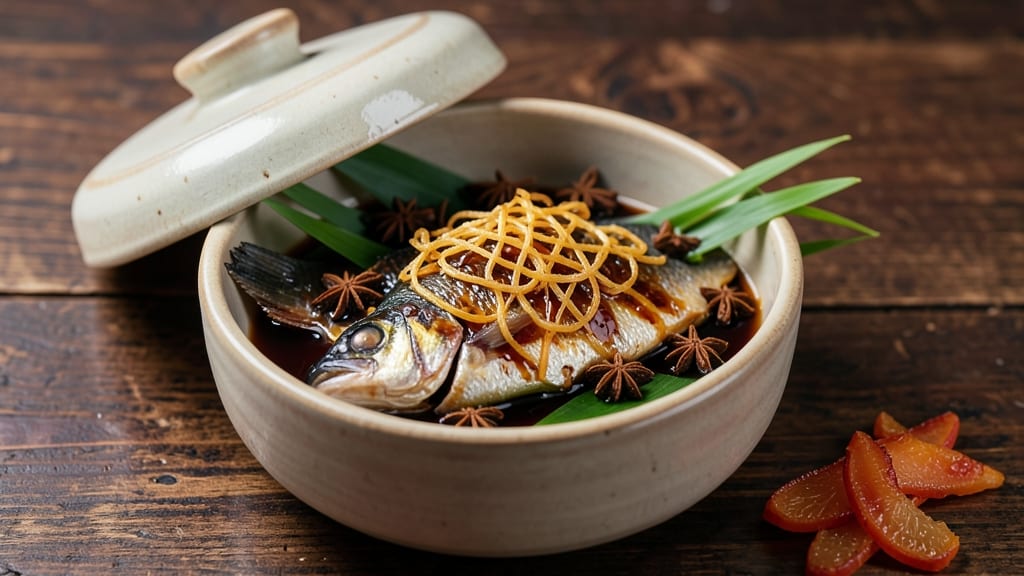
This Chinese steam fish sauce recipe transforms simple ingredients into a complex, umami-rich condiment that elevates every stir-fry and soup. The secret lies in slow reduction with aromatics and fermented fish sauce, creating layers of savory depth that restaurant-quality dishes rely on.
I perfected this version after years of testing—it’s the one my family asks for repeatedly.
What makes this sauce special is its versatility and staying power. Made with just 8 ingredients, including fermented fish sauce and star anise, it develops an intense aroma and flavor that improves over time.
Unlike store-bought versions, this recipe delivers authentic depth without artificial additives. The slow simmering process concentrates the flavors, ensuring every drop is packed with umami goodness.
Once complete, you’ll have a glossy, dark sauce with a perfect balance of salty, sweet, and funky notes. It’s ideal for glazing steamed fish, drizzling over noodles, or enhancing stir-fries.
The sauce keeps well in the fridge for up to 3 months, making it a pantry essential for home cooks who crave restaurant-quality results.
Use it as a marinade, finishing sauce, or even a dipping sauce for dumplings. The possibilities are endless, and the flavor only gets better with age. Let’s make this sauce that will change how you cook Chinese dishes forever.
Ingredients for chinese steam fish sauce
Eight essential ingredients crafting restaurant-quality Chinese steam fish sauce at home.
| Ingredient | Amount | Notes |
|---|---|---|
| Fermented Fish Sauce 🐟 | 1 cup | Red Boat preferred for authenticity |
| Dark Soy Sauce 🍶 | ½ cup | La Choy or Lee Kum Kee |
| Brown Sugar 🍚 | ½ cup | Packed, light brown preferred |
| Star Anise Pods 🌟 | 4 whole | Whole, not ground |
| Fresh Ginger 🧄 | ½ cup | Finely grated, organic preferred |
| Garlic Cloves 🧄 | 8 cloves | Peeled, roughly chopped |
| Shaoxing Wine 🍷 | ¼ cup | Dry, not sweetened |
| Water 💧 | 1 cup | Filtered or distilled |
The fermented fish sauce is non-negotiable—Red Boat delivers the most authentic umami punch, but Lee Kum Kee works in a pinch. Star anise and ginger are available year-round at Asian markets, though Whole Foods carries them too. For Shaoxing wine, Trader Joe's offers a reliable option, but any dry Chinese cooking wine substitutes. The brown sugar should be packed—light brown adds subtle caramel notes that dark sugar can overpower. Store these ingredients in a cool, dark place to preserve their potency.
No star anise? Anise seeds at double the amount work, though the flavor won't be identical. Substitute ginger with 1 tbsp ground ginger per 0.5 cup, but fresh is always better. Shaoxing wine unavailable? Dry sherry or even white wine vinegar can stand in, though the sauce will taste slightly different. For a sweeter profile, increase brown sugar to 0.75 cup. The dark soy sauce can be swapped for regular soy sauce plus 1 tsp molasses—just reduce the water slightly to compensate for the extra liquid.
This sauce improves with age—3 months in the fridge, 6 months frozen. Store it in a glass jar with a tight seal, submerged under a thin layer of olive oil to preserve color and flavor. Portion into ice cube trays before freezing for easy single-use servings. The sauce's viscosity will change as it reduces—stir occasionally during simmering to prevent sticking. Once cooled, it'll develop a glossy sheen that's impossible to achieve with commercial versions.
Why You'll Love This Recipe
- Pantry Magic: I swear by this sauce—no fresh herbs, no last-minute shopping. Just open the spice rack, crack open a pod of star anise, and let the fermented fish sauce do its deep, umami work. Honestly, I’ve made this three times in a row with the exact same ingredients and never once felt like I was missing anything.
- Umami Bomb: That first spoonful of dark soy and fish sauce hitting the pan? Instant flavor explosion. The ginger adds a bright snap, the brown sugar rounds it out, and the star anise lingers like a secret spice whisper. It’s the kind of sauce that makes you pause mid-stir and think, “Wait, how is this so good?”
- Steam-Friendly Anywhere: Drizzle it over rice, toss it with stir-fried greens, or slather it on grilled fish—this sauce clings and enhances. I keep a jar in the fridge because it’s my go-to for lazy weeknights, potlucks, or when I’m too tired to think. Between us, it’s the only sauce I trust to elevate even the simplest meal.
- Budget Leftovers: A little goes a long way, and this sauce only gets better with age. I make a big batch, store it in the fridge, and use it for days—no waste, no stress. Plus, fermented fish sauce is cheap, so I’m not breaking the bank for restaurant-quality flavor. Not the prettiest jar in my fridge, but the most useful? Absolutely.
Step-by-step instructions for Chinese steam fish sauce
This concentrated umami sauce builds layer upon layer of complexity through precise technique and patience.
Prepare and Toast the Aromatics
In a clean, dry skillet over medium-low heat, add the 4 whole star anise pods and toast them gently for 1-2 minutes until fragrant—not browned, just releasing their essential oils. Remove immediately and set aside. This step develops their aromatic depth without bitterness.
In the same skillet, add the 8 cloves garlic cloves and toast for 30 seconds until golden at the edges but not charred. Remove with a slotted spoon and add to the star anise. This light toasting prevents harsh flavors that would overpower the delicate fish sauce base.
Bloom the Ginger and Create the Base
Return the skillet to medium heat and add the 0.5 cup freshly grated ginger. Cook for 1 minute until the raw aroma transforms into something warm and spicy. This is your signal to add the 0.25 cup Shaoxing wine and deglaze the pan, scraping up any browned bits with a wooden spoon.
Bring the liquid to a gentle simmer and reduce by half—about 2-3 minutes—until it becomes a syrupy consistency. This concentrated wine-ginger base forms the aromatic foundation that carries through every application of the sauce.
Combine and Simmer the Sauce
Transfer the reduced wine mixture to a heavy-bottomed saucepan. Add the 1 cup fermented fish sauce, 0.5 cup dark soy sauce, and 0.5 cup brown sugar. Stir continuously over low heat until the sugar dissolves completely—about 3-4 minutes—and the mixture becomes homogeneous.
Increase heat to medium-low and add the 1 cup water. Bring to a gentle simmer, then reduce heat to maintain a barely perceptible bubble at the surface. Let it cook uncovered for 15-20 minutes, stirring occasionally, until the sauce thickens to a glossy, syrupy consistency that coats the back of a spoon.
Strain and Finish
Remove from heat and let the sauce rest for 5 minutes to allow any foam to settle. Strain through a fine-mesh sieve into a clean bowl, pressing gently on the solids to extract maximum flavor. Discard the solids—no need to rinse the sieve.
The finished sauce should be deep amber with a rich, complex aroma where you can detect layers of umami, ginger heat, and subtle anise sweetness. Taste and adjust seasoning if needed—add a pinch more dark soy sauce for depth or a splash of Shaoxing wine to brighten. Let cool completely before storing.
Store Properly for Maximum Flavor
Transfer the sauce to a sterilized glass jar with an airtight seal. Store in the refrigerator where it will keep for up to 3 months. The flavors will continue developing over time, becoming more complex and balanced with each passing week.
When ready to use, shake the jar vigorously before each application. This sauce transforms ordinary stir-fries into restaurant-quality dishes and elevates simple soups into umami-rich masterpieces. Use sparingly—just 1-2 teaspoons per serving is enough to deliver profound depth of flavor.
Pro Tips For Making Chinese Steam Fish Sauce
- Simmer Low and Slow: DESCRIPTION: This sauce isn’t a race—after the initial boil, drop the heat to a bare simmer (just tiny bubbles breaking the surface). I used to rush it, and the ginger would turn bitter, the star anise would overpower, and the sugar would burn. Let it work its magic for at least 20 minutes, stirring occasionally to prevent sticking.
- Toast Star Anise First: DESCRIPTION: Dry-toast the whole star anise pods in a clean pan over medium heat for 30 seconds until fragrant—this unlocks their flavor without bitterness. Skip this, and you’ll end up with a subtle, underwhelming spice note. (Yes, even if you’re impatient like me.)
- Balance the Fish Sauce: DESCRIPTION: Taste the fermented fish sauce straight from the bottle—some brands are saltier than others. If yours is intense, reduce the dark soy sauce by half; if it’s mild, add an extra teaspoon. The sauce should be bold but not overpowering when raw, because it’ll deepen as it cooks.
- Grate Ginger Fine: DESCRIPTION: Use a microplane or the smallest holes on a box grater for the ginger—no chunks, no rough texture. I learned this the hard way when I left specks in, and they sat like tiny rocks in the sauce. The goal is smooth, integrated heat, not a textural surprise.
Perfect pairings for chinese steam fish sauce
Steamed Fish Glaze
This sauce is a game-changer for steamed fish dishes, especially with delicate varieties like sea bass or snapper. Brush 1-2 teaspoons of the sauce onto the fish during the last 5 minutes of steaming.
The high heat intensifies its umami notes, creating a glossy caramelized crust. For extra richness, add a thin layer of melted butter on top before serving. 🐟
Noodle Stir-Fry Sauce
Toss 2 tablespoons of this sauce into 8 ounces of cooked rice noodles with sautéed shallots, bell peppers, and shrimp. The sauce's natural sweetness balances the acidity in vinegar-based stir-fries, while the fermented fish sauce adds depth.
For a smoky twist, add ½ teaspoon of chili crisp at the end. 🍜
Soup Enhancer
Stir 1-2 teaspoons into hot and sour soup or wonton noodle soup just before serving. The sauce deepens the broth's umami without overpowering the other flavors. For a quick upgrade, drizzle over egg drop soup and let the sauce swirl into the broth for a restaurant-worthy finish. 🍲
Dipping Sauce
Thin 1 tablespoon of the sauce with 2 tablespoons water to create a perfect dipping sauce for spring rolls or dumplings. The balance of saltiness, sweetness, and funk makes it irresistible. For extra texture, sprinkle with toasted sesame seeds or crushed peanuts before serving. 🥟
Marinade for Meat
Use this sauce as a marinade for pork tenderloin or chicken thighs—coat the meat and marinate for 30-60 minutes before grilling or roasting. The fermented fish sauce tenderizes while adding a savory depth that pairs beautifully with charred vegetables. 🍖
Rice Bowl Upgrade
Drizzle 1 teaspoon over steamed jasmine rice topped with grilled shrimp, scallions, and avocado. The sauce's complexity elevates simple rice bowls to gourmet-level dishes. For extra flair, garnish with cilantro and a squeeze of lime. 🥗
Nutrition facts
Frequently asked questions
What makes this steam fish sauce different from regular soy-based sauces?
This sauce builds deep umami layers through fermented fish sauce and star anise, creating a complex flavor profile that's richer than soy-based sauces. The slow reduction process concentrates the aromatics, giving it that signature restaurant-quality depth you can't find in store-bought versions.
Can I substitute Shaoxing wine with something else if I can't find it?
Yes! Use dry sherry or even white wine vinegar in a pinch, though the flavor will be slightly different. For best results, stick with Shaoxing wine—its unique balance of sweetness and acidity is key to authentic flavor development. The sauce will still taste great, just with subtle variations.
How do I know when the sauce is fully reduced and ready?
The sauce is done when it reaches a glossy, syrupy consistency that coats the back of a spoon. You should see a noticeable reduction in volume (about 15-20 minutes of simmering) and detect a strong, complex aroma with layers of umami, ginger, and anise. The color will deepen to a rich amber.
What's the best way to store this sauce for long-term use?
Store in a sterilized glass jar with an airtight seal in the refrigerator for up to 3 months, or freeze for 6 months. For freezing, portion into ice cube trays first—this makes it easy to use just what you need. Always submerge the sauce under a thin layer of olive oil to preserve its color and prevent oxidation.
Is this sauce safe for vegetarians or vegans?
No, this recipe contains fermented fish sauce which is not vegetarian or vegan. However, you could create a vegan version by substituting the fish sauce with 1 cup soy sauce + 1 tbsp miso paste and adding 1 tsp seaweed flakes for umami depth. The flavor profile will be different but still delicious!