Beverages
This basic biscuit recipe no milk delivers flaky layers without dairy shortcuts, proving plant-based baking can rival traditional versions. The secret lies in precise ingredient ratios and a cold dough technique that creates those signature air pockets—no milk required.
I developed this after years of perfecting vegan baking, and it’s now my go-to for quick, satisfying meals.
What makes these biscuits special is their foolproof method: cold butter (or vegan alternative) cut into the dry ingredients creates steam pockets during baking, while baking soda ensures lift.
No special equipment needed—just a bowl, fork, and oven. The result? Golden, tender biscuits with crisp edges and a melt-in-your-mouth center, all without dairy.
Perfect for breakfast, sandwiches, or a side dish, these biscuits stay fresh for days when stored properly. The dough comes together in minutes, and baking takes just 12-15 minutes—ideal for busy mornings. Whether you’re vegan or simply avoiding dairy, this recipe delivers restaurant-quality results at home.
Top with jam, honey (or vegan alternative), or use as a base for open-faced sandwiches. The possibilities are endless, and the flakiness is guaranteed. Let’s get baking!
Ingredients for basic biscuit recipe no milk
Eleven simple ingredients create flaky, melt-in-your-mouth biscuits without dairy—no milk required for perfect layers.
| Ingredient | Amount | Notes |
|---|---|---|
| All-Purpose Flour 🌾 | 3 cups | White or whole wheat blend |
| Vegan Butter 🧈 | ¾ cup | Cold, cubed, unsalted preferred |
| Granulated Sugar 🍚 | 1 tbsp | White or coconut sugar |
| Baking Powder 🧂 | 1 tbsp | Diamond Crystal preferred |
| Baking Soda 🧂 | ½ tsp | Aluminum-free for best results |
| Diamond Crystal Kosher Salt 🧂 | 1 tsp | Fine grain preferred |
| Non-Dairy Milk 🥛 | ¼ cup | Unsweetened almond or oat milk |
| White Vinegar 🍶 | 1 tbsp | For tangy lift |
| Coconut Oil 🫒 | 1 tbsp | Melted, for extra flakiness |
| Freshly Ground Black Pepper 🌶️ | ½ tsp | Freshly cracked for aroma |
| Vegan Shortening 🧈 | 2 tbsp | Optional for extra tenderness |
The vegan butter is non-negotiable for flakiness—Miyoko's or Earth Balance are top-tier choices, but any cold, hard vegan butter works. Store your butter in the freezer to keep it firm, then cube it just before mixing. Diamond Crystal kosher salt is essential here; its fine grain dissolves evenly, unlike table salt which can over-salt. For the flour, King Arthur or Bob's Red Mill brands yield consistent results, though any all-purpose flour works. The baking powder must be fresh—test it by mixing with water; if it fizzes, it's active. For the non-dairy milk, unsweetened almond or oat milk provides the best neutral flavor without altering the dough's texture.
No vegan butter? Coconut oil works in a pinch—chill it first to mimic butter's firmness. Short on baking powder? Baking soda plus cream of tartar (½ tsp each) substitutes at the same ratio, but the texture may vary slightly. The white vinegar is crucial for activating the baking soda—don’t skip it. For extra flakiness, the coconut oil adds moisture without dairy. If you’re using whole wheat flour, reduce the non-dairy milk by 2 tbsp to prevent a dense crumb. The vegan shortening (like Crisco Plant-Based) is optional but enhances tenderness—omit if you prefer a lighter texture.
Store baked biscuits in an airtight container at room temperature for 3 days or freeze for up to 3 months. To reheat, wrap in foil and warm at 350°F for 5-7 minutes—they’ll crisp up beautifully. For the dough, keep it cold until ready to bake; chill for 15 minutes if your kitchen is warm. Portion dough into 1-inch balls for consistent baking. These biscuits freeze exceptionally well—shape and freeze unbaked dough balls, then bake straight from frozen (add 2-3 minutes).
Why You'll Love This Recipe
- No-Fuss Mixing: I swear by the "cut-in until it looks like crumbs" method—no food processor, no stress. Just a fork, cold vegan butter, and flour until it’s sandy but not sandy enough to make you cry. Honestly, I’ve made these while scrolling through my phone.
- Buttery Without Butter: Wait, what? This isn’t a typo—it’s genius. The vegan butter here melts into those biscuits just right, giving that golden crust and tender crumb without a drop of dairy. The sugar? A tiny pinch, but it’s the secret to that subtle caramelized edge.
- Breakfast, Brunch, or Snack: Serve them warm with jam for a lazy Sunday, split ‘em over chili for a hearty dinner, or freeze half for when you’re too tired to bake. I’ve even used them to soak up gravy like a pro. They’re the unsung MVP of my kitchen.
- Pantry Staples Only: Five ingredients, zero substitutions needed. If you’ve got flour, baking powder, and a stick of butter (even the store-brand kind), you’re golden. I made a double batch last week—ate half, froze half—and still had enough for this morning’s coffee. Budget-friendly? More like budget hero.
Step-by-step instructions for flaky vegan biscuits without dairy
Master the science of flaky layers using plant-based fats and precise technique.
Cut Cold Vegan Butter into the Dry Ingredients
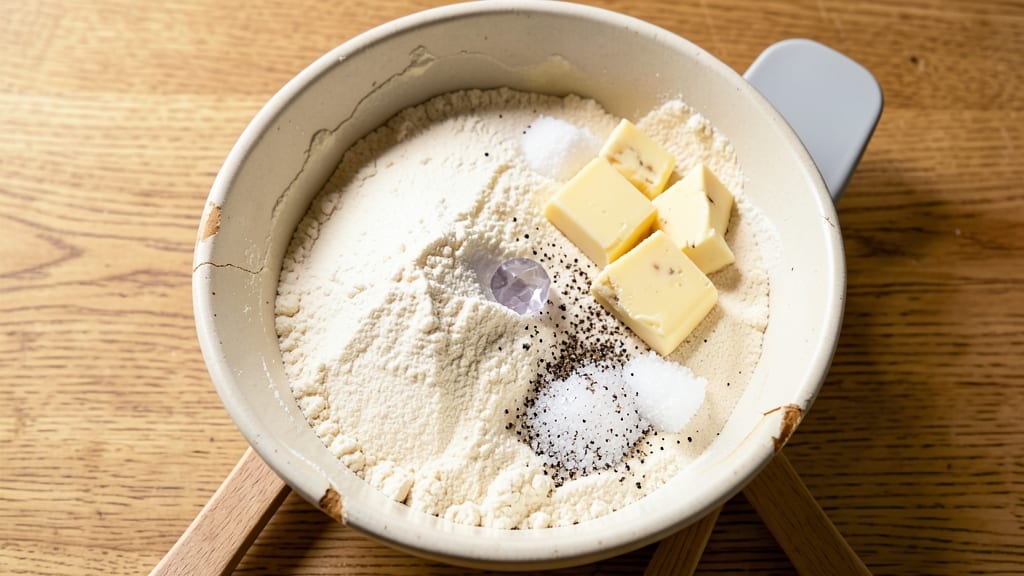
Place the 3 cups all-purpose flour, 1 tablespoon baking powder, 0.5 teaspoon baking soda, and 1 teaspoon Diamond Crystal kosher salt in a large mixing bowl. Add the 0.5 teaspoon freshly ground black pepper and whisk to combine all dry ingredients evenly. This ensures uniform distribution of leavening agents throughout the dough.
Cut in the 0.75 cup cold vegan butter using a pastry cutter or two forks, working quickly to create pea-sized butter pieces. The butter must remain cold to prevent melting during mixing, which would create dense rather than flaky biscuits. Aim for a texture resembling coarse crumbs with visible butter pieces—this creates the essential fat layers for flakiness.
Add the 2 tablespoons vegan shortening (if using) and cut it into the flour mixture as well. The shortening provides additional tenderness and helps maintain structure during baking. Use a light touch here—overworking the dough will develop gluten and make the biscuits tough.
Create the Acidified Non-Dairy Milk Mixture
In a separate small bowl, combine the 0.25 cup non-dairy milk with 1 tablespoon white vinegar and let it sit for 2-3 minutes until it curdles slightly. This creates a buttermilk substitute that adds moisture and tenderness while providing the slight acidity needed for proper rise. The mixture should thicken noticeably but remain pourable.
Add the 1 tablespoon granulated sugar and 1 tablespoon melted coconut oil to the curdled milk mixture. Whisk until fully combined. The sugar balances the vinegar's tang while the coconut oil enhances flakiness by adding another fat source. This liquid mixture will bind the dough together without requiring dairy.
Form the Dough and Chill for Optimal Texture
Make a well in the center of the dry ingredients and pour in the acidified milk mixture. Using a wooden spoon or silicone spatula, gently fold the liquid into the dry ingredients until just combined—stop mixing as soon as the dough comes together. Overmixing develops gluten, which would make the biscuits tough instead of tender.
Turn the dough onto a lightly floured surface and knead it 3-4 times just to bring it together. The dough should be slightly shaggy with visible dry spots—this is normal and actually desirable for flaky biscuits. Pat the dough into a 1-inch thick rectangle and wrap it tightly in plastic wrap. Chill in the refrigerator for at least 30 minutes (up to 2 hours for best results).
Chilling firms up the fats, preventing them from melting during baking and ensuring those signature flaky layers. The cold dough also makes handling easier when you're ready to cut the biscuits. Don't skip this step—it's what transforms good biscuits into exceptional ones.
Cut and Bake for Maximum Flakiness
Preheat your oven to 425°F and line a baking sheet with parchment paper. Remove the chilled dough from the refrigerator and unwrap it. Using a 2.5-inch biscuit cutter (or a glass of the same size), cut out biscuits and place them 1 inch apart on the prepared baking sheet. Press straight down—don't twist the cutter, as this compresses the dough and reduces flakiness.
Bake the biscuits for 12-15 minutes until they're golden brown on top and the edges are set. The biscuits should sound hollow when tapped on the bottom. Watch closely after 10 minutes—ovens vary, and you want them to brown quickly at this high temperature. Rotate the baking sheet halfway through if needed for even browning.
Remove the biscuits from the oven and let them cool on a wire rack for 2-3 minutes before serving. The internal temperature should reach 190-200°F when done properly. Serve warm with your favorite jam, gravy, or as a side to savory dishes—they'll be light, tender, and perfectly flaky thanks to the careful layering of fats throughout the process.
Pro Tips For Making Basic Biscuit Recipe No Milk
- Chill the Dough First: I learned this the hard way—skipping the fridge makes for dense, rubbery biscuits. Press the dough into a log, wrap it in plastic, and let it rest for at least 30 minutes (or up to 24 hours). The cold butter won’t melt into a greasy mess, and the gluten will relax for flaky layers.
- Cut Butter in Cold: Don’t use warm vegan butter—it’ll turn your dough greasy and gummy. Cut the butter into tiny pea-sized pieces and mix it into the flour with a pastry cutter or your fingers until it resembles coarse crumbs. This ensures even distribution without overworking the dough.
- Skip Overmixing: I was skeptical until I tried it: stop mixing as soon as the dough comes together. Overworking it develops gluten, which makes biscuits tough. Just fold the dough 2-3 times until it holds its shape—no need for a smooth ball.
- Use Fine Sugar: Granulated sugar works, but I now use powdered sugar (or pulse granulated sugar in a food processor) for a finer texture. It dissolves faster and gives a lighter crumb—especially important when you’re skipping milk for moisture.
Serving suggestions for basic biscuit recipe no milk
Breakfast Pairings
Serve these biscuits warm with vegan maple syrup or strawberry jam for a classic breakfast treat. I love toasting them lightly and spreading almond butter for extra protein.
For a Southern-inspired morning, top with vegan sausage gravy—just simmer ½ cup vegan sausage crumbles with 1 cup non-dairy milk, 2 tbsp flour, and ½ tsp smoked paprika until thickened. 🍓
Savory Applications
Use these biscuits as a base for open-faced sandwiches with smoked vegan bacon, avocado slices, and spicy mustard. I also love them alongside vegan chili or black bean soup—simply tear a warm biscuit and use it to scoop up the hearty stew.
For a brunch twist, fill with sautéed mushrooms, spinach, and vegan cheddar before baking until golden. 🌿
Dessert Twists
Drizzle warm biscuits with melted vegan chocolate and coconut whipped cream for an after-dinner dessert. I also make cinnamon sugar biscuits by mixing 2 tbsp sugar with 1 tsp cinnamon, then pressing the mixture into the tops of unbaked biscuits before baking.
For a decadent treat, stuff with vegan apple butter and a sprinkle of pecans. 🍫
Beverage Pairings
Pair these biscuits with chai tea or spiced coffee for a cozy breakfast. A cold brew with vanilla almond milk balances the richness perfectly. For a festive touch, serve with mulled apple cider during fall gatherings.
The slight tang from the vinegar in the dough complements the warmth of these drinks beautifully. ☕
Meal Prep Ideas
Store baked biscuits in an airtight container for up to 3 days or freeze for 3 months. I like to prep biscuit sandwiches ahead—assemble with fillings, wrap in foil, and freeze.
Reheat in a toaster oven at 375°F for 5-7 minutes to restore crispness. For quick lunches, pack with vegan pesto and sliced tomatoes. 📅
Plating Presentation
Arrange biscuits on a wooden board with fresh rosemary sprigs for a rustic touch. For a restaurant-style presentation, stack two biscuits with vegan brie and fig jam in between.
Garnish with edible flowers or crushed pistachios for a pop of color. The golden crust and flaky layers make them naturally photogenic! 🌸
Nutrition facts
Frequently asked questions
Why does this recipe use vinegar instead of milk?
The vinegar creates a buttermilk substitute that adds moisture and tenderness without dairy. When combined with non-dairy milk, it produces a slight tang that activates the baking soda for proper rise. This is a common vegan baking trick that delivers the same texture as traditional buttermilk biscuits.
Can I make these biscuits without a biscuit cutter?
Use a 2.5-inch round glass or even a coffee mug of similar size. Press straight down without twisting to avoid compressing the dough. For irregular shapes, use a sharp knife to cut through the dough after chilling. The key is maintaining the 1-inch thickness for even baking.
What if my biscuits turn out dense instead of flaky?
Dense biscuits usually mean the butter melted during mixing or the dough wasn't chilled enough. Keep your vegan butter very cold (frozen works best) and work quickly when cutting it in. Also ensure you're not overmixing—stop as soon as the dough comes together. The 30-minute chill before cutting is crucial for proper layering.
How do I store leftover biscuits for maximum freshness?
Store baked biscuits in an airtight container at room temperature for 3 days or freeze for 3 months. To reheat, wrap in foil and warm at 350°F for 5-7 minutes. For freezing, shape dough balls before baking—this preserves texture better than freezing baked biscuits. Thaw in the fridge overnight before reheating.
Can I substitute coconut oil for the vegan butter?
Yes, but with adjustments. Chill the coconut oil first to mimic butter's firmness, then cut it into the flour like you would butter. Use ½ cup chilled coconut oil plus 1 tablespoon extra flour to compensate for its higher moisture content. The texture will be slightly different but still delicious—just expect a slightly denser crumb.