Side Dishes
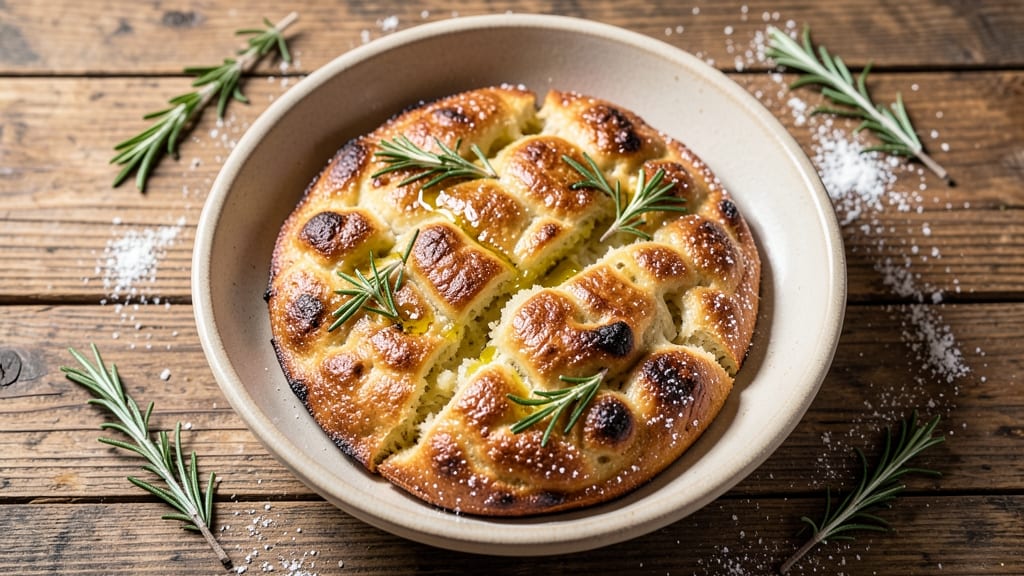
This authentic schiacciata bread recipe brings the rustic charm of Tuscany to your kitchen with its signature olive oil richness and crispy crust. The secret lies in a simple no-knead dough that develops deep flavor as it rests, creating that iconic airy yet sturdy texture.
I first discovered this technique while traveling through the Italian countryside, where bakers shaped dough with minimal effort but maximum tradition.
The beauty of schiacciata lies in its versatility—just flour, water, olive oil, and salt transform into a bread so flavorful it needs nothing more than a sprinkle of coarse sea salt or fresh rosemary.
This recipe delivers restaurant-quality results with minimal prep, perfect for pairing with soups, charcuterie, or simply enjoying warm from the oven. The dough's natural fermentation creates that signature open crumb structure without requiring yeast.
What makes this recipe truly special is how the olive oil infuses every bite, creating a tender yet slightly crisp exterior that gives way to an airy interior. The shaping technique—flattening the dough with your hands—gives schiacciata its name ("schiacciare" means "to flatten") and creates those beautiful irregular edges.
Baked to golden perfection, this bread becomes the star of any table.
Serve it fresh from the oven with olive oil drizzled over the top or use it to soak up sauces and gravies. The simplicity of this recipe belies its impressive results—once you try authentic schiacciata, store-bought bread will never compare again. Let's get started on this Tuscan classic!
Ingredients for authentic schiacciata bread
Four simple ingredients transform into Tuscan schiacciata with restaurant-quality texture and flavor.
| Ingredient | Amount | Notes |
|---|---|---|
| Bread Flour 🌾 | 3 ½ cups | High-protein for structure, not all-purpose |
| Extra-Virgin Olive Oil 🫒 | ¾ cup | Italian variety, fruity and peppery |
| Warm Water 💧 | 1 ½ cups | 105°F for optimal hydration |
| Diamond Crystal Kosher Salt 🧂 | 1 ½ tsp | Coarse grain preferred |
| Fresh Rosemary 🌿 | 2 tbsp | Finely chopped, stems removed |
| Semolina Flour 🌾 | 2 tbsp | For dusting and crust enhancement |
| Cornmeal 🌽 | 1 tbsp | Fine grind for even coverage |
| Coarse Sea Salt 🧂 | 1 tbsp | For final sprinkle |
The flour is non-negotiable—bread flour with its high protein content (12-14%) develops the signature open crumb structure. King Arthur or Caputo Tipo 00 are ideal, but any high-protein bread flour works. For the olive oil, Italian extra-virgin like Bertolli or Filippo Berio adds that authentic Tuscan flavor profile. The water temperature matters: too cold and the gluten won't activate properly; too hot and you'll kill the yeast (even though we're not using any). Aim for 105°F—just warm to the touch. Rosemary should be fresh from the market—Whole Foods or local Italian grocers carry the best varieties with vibrant green needles.
No bread flour? All-purpose plus 1 tbsp vital wheat gluten gets you close, though texture won't be identical. Olive oil substitutions? Avocado oil maintains neutrality, but lacks the fruity notes that define schiacciata. For rosemary, dried works at half the amount, though fresh is always superior. The semolina and cornmeal create that signature crisp crust—Bob's Red Mill brands are excellent choices. If you're short on time, you can use all-purpose flour for dusting, but the texture won't be as crisp. For the coarse sea salt, Maldon flakes are perfect, but any flaky sea salt will work in a pinch.
This dough ferments beautifully in the fridge for up to 24 hours, developing deeper flavor with each passing hour. For best results, shape and bake immediately after mixing. The dough is sticky—wet your hands when handling to prevent sticking. Once baked, schiacciata stays fresh for 2-3 days at room temperature when wrapped in a clean kitchen towel. For longer storage, freeze portions for up to 3 months. Reheat slices in a 350°F oven for 5-7 minutes to restore that fresh-from-the-oven texture.
Why You'll Love This Recipe
- No-Knead Magic: I swear by this dough—just flour, olive oil, and water. No stand mixer, no overworking, just a quick mix and a long rest. The olive oil keeps it tender while the rosemary infuses that bright, herby punch without extra effort.
- Crispy-Creamy Crunch: That golden crust with a soft, airy center? It’s all in the olive oil and salt. The rosemary adds a fresh bite, but the real star is how the bread stays warm and pillowy even after cooling—no sad, stale slices here.
- Weeknight Hero: Toss it in a basket, serve with soup, or tear it over pasta. It’s my go-to for lazy dinners, potlucks, or when I need something actually edible after a long day. Honestly, I’ve never met a meal it didn’t improve.
- Budget-Friendly Staple: A few dollars for flour and rosemary stretches to feed a family for days. Freeze leftovers for toast or croutons—no waste, just flavor. Plus, it’s cheaper than buying artisanal bread, but way more satisfying.
Step-by-step instructions for authentic schiacciata bread
Master this traditional Tuscan technique for a rustic, olive oil-rich loaf with crisp crust and tender crumb.
Create the Olive Oil-Infused Dough
In a large mixing bowl, combine the 3.5 cups bread flour and 1.5 tsp diamond crystal kosher salt. Make a well in the center and pour in the 0.75 cup extra-virgin olive oil and 1.5 cups warm water (105°F). Using a wooden spoon, gently mix until a shaggy dough forms.
Transfer the dough to a lightly floured surface and knead vigorously for 8-10 minutes until smooth and elastic. The dough should be slightly tacky but not sticky. I like to add the 2 tbsp finely chopped fresh rosemary during the last 2 minutes of kneading, pressing it into the dough for even distribution. This step develops gluten properly for that signature schiacciata texture.
First Rise and Shaping
Lightly oil a large bowl, place the dough inside, and cover with a damp towel. Allow it to rise in a warm place for 1-2 hours or until nearly doubled in size. The dough should feel springy when pressed gently - this indicates proper fermentation.
Once risen, punch down the dough to release air and divide it into 4 equal portions. Shape each portion into a rough oval about 1-inch thick. For authentic texture, I press my fingers into the dough to create dimples - this mimics traditional Tuscan shaping methods that create those beautiful air pockets.
Prepare the Baking Surface
Preheat your oven to 425°F with a baking stone or inverted baking sheet inside. This creates the ideal steam environment for proper crust development. While preheating, dust a baking sheet with 2 tbsp semolina flour and 1 tbsp cornmeal mixed together. This creates the signature crunchy crust.
Arrange the shaped dough pieces on the prepared baking sheet, spacing them about 2 inches apart. Sprinkle each piece generously with coarse sea salt - this enhances flavor and creates those beautiful salt crystals on the crust. The semolina-cornmeal mixture will give your schiacciata its iconic golden, crisp exterior.
Bake to Golden Perfection
Bake for 20-25 minutes until the crust is deep golden brown with crisp patches. The interior should read 190-200°F at the center. I recommend rotating the baking sheet halfway through for even browning - watch for color changes rather than relying solely on time.
Remove from oven and let cool on a wire rack for 10 minutes before slicing. The bread will continue to crisp as it cools. For maximum authenticity, serve warm with olive oil drizzled over the top - this is how it's traditionally enjoyed in Tuscany.
Pro Tips For Making Authentic Schiacciata Bread
- STRETCH AND FOLD: Use a bench scraper or your knuckles to press the dough into the pan—don’t just slap it down. The goal is to create tension in the dough so it springs back when baked, giving you that signature crackly crust. I used to fight this step, but after watching the dough puff up like a pro loaf, I never skipped it again.
- CHILL THE DOUGH: Let the shaped dough rest in the fridge for at least 2 hours—overnight is even better. Cold dough develops flavor and resists overproofing, which means no sad, flat schiacciata. I learned this the hard way when I rushed it and ended up with a dense brick instead of a crispy masterpiece.
- SALT THE WATER: Dissolve the kosher salt directly into the warm water before mixing it with flour. This ensures even distribution, so every bite has that bright, balanced flavor. Skipping this step means your bread will taste bland no matter how much you season later.
- ROSEMARY PLACEMENT: Tuck the rosemary sprigs into the dough after the first rise, not before. This way, the needles stay fragrant and aromatic instead of getting mushy from sitting in wet flour. Fresh is key—dried rosemary won’t give the same punch, and neither will overworking the dough once it’s in there.
Essential equipment for perfect results
Olive Oil Essentials
Invest in a high-quality extra-virgin olive oil like Filippo Berio or Bertolli—the fruity, peppery notes are essential for authentic schiacciata flavor. A glass decanter with a tight-sealing lid preserves freshness, while a small measuring cup ensures precision for the 0.75 cup required.
I also recommend a fine-mesh strainer to remove any sediment before measuring. 🫒
Flour and Dusting Tools
Use bread flour (not all-purpose) for that signature open crumb—King Arthur or Caputo Tipo 00 are my top picks. For dusting, semolina flour and fine-ground cornmeal create the crisp crust.
A small bowl for mixing these together and a pastry brush for lightly coating the baking sheet work perfectly. I keep these in a dedicated baking station for easy access.
Kneading and Shaping
A wooden dough scraper helps transfer sticky dough without sticking, while wet hands prevent tearing during shaping. For traditional dimpling, I use my fingertips—no special tools needed!
A large mixing bowl with a damp towel keeps the dough from drying out during the 1-2 hour rise. The bowl should be oiled to prevent sticking.
Baking Stone and Tools
A baking stone or inverted baking sheet mimics a professional oven’s steam environment for that crisp crust. Preheat it alongside your oven for at least 30 minutes before baking. A lightweight metal spatula helps transfer dough to the hot surface without tearing.
For even browning, I use a baking sheet rotation trick—just swap the top and bottom racks halfway.
Cooling and Serving
A wire cooling rack keeps schiacciata from getting soggy, while a small bowl holds extra coarse sea salt for finishing. For serving, a ceramic platter enhances presentation, and a fine-mist spray bottle helps refresh stale slices.
I also keep a small pitcher of olive oil on hand to drizzle over warm bread—it’s a Tuscan tradition! 🌿
Nutrition facts
Frequently asked questions
Why does schiacciata have such a crispy crust?
The signature crisp crust comes from two key techniques: dusting with semolina flour and cornmeal before baking creates a protective barrier that promotes browning, while baking on a hot stone or sheet generates steam that locks in moisture while crisping the exterior. The high olive oil content also contributes to that irresistible crunch!
Can I make schiacciata without yeast?
This recipe relies on natural fermentation from the flour's gluten and warm water, creating that signature open crumb without any yeast. The dough develops flavor as it rises, just like traditional sourdough methods. The 1-2 hour rise is crucial for proper texture development.
What's the best way to store leftover schiacciata?
Wrap cooled schiacciata in a clean kitchen towel (not plastic) to prevent sogginess and store at room temperature for 2-3 days. For longer storage, freeze portions for up to 3 months. To revive stale slices, brush with olive oil and warm in a 350°F oven for 5-7 minutes until crisp again.
How do I adjust this recipe for a larger batch?
Double all ingredients and bake two pans simultaneously for even results. Use the same 425°F temperature but increase baking time by 5 minutes to account for the extra dough. Shape each piece slightly thinner (3/4 inch instead of 1 inch) to ensure proper browning in the center. The dough should still be tacky but manageable.
What if my schiacciata turns out dense instead of airy?
Dense schiacciata usually results from under-kneading or insufficient rise time. Next time, knead for the full 8-10 minutes until elastic, and ensure the dough nearly doubles in size during the 1-2 hour rise. Also verify your flour type—bread flour (not all-purpose) is essential for proper gluten development. Check oven temperature with an oven thermometer too!