
Side Dishes
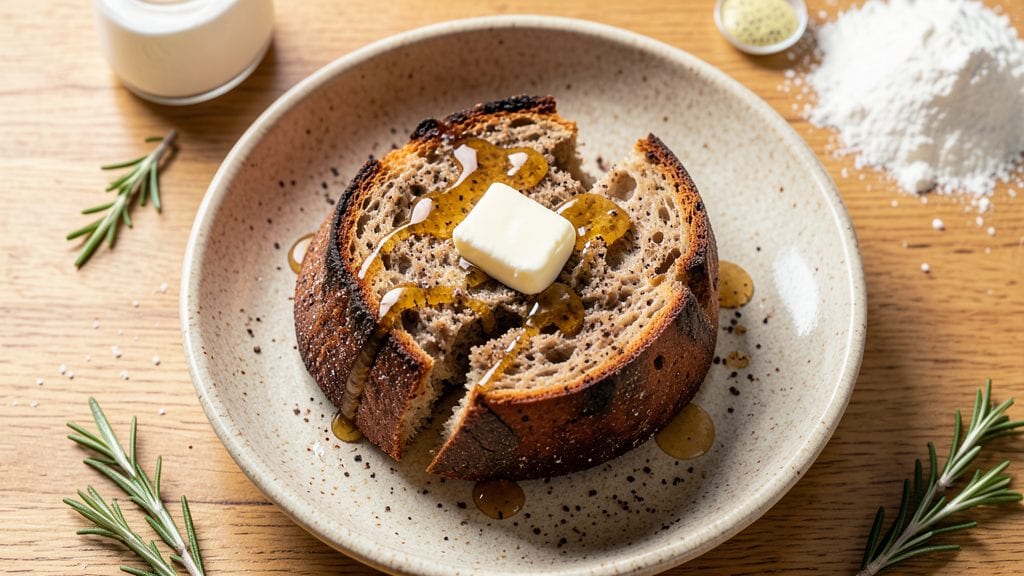
This Polish bread recipe delivers the same hearty, tangy flavor that makes traditional chleb polski a staple at Polish tables. The secret lies in a long fermentation process that develops deep, caramelized notes and a satisfyingly crisp crust—just like your favorite bakery loaf.
I perfected this version after years of testing different rye blends and fermentation times, ensuring every slice has that signature chewy interior and golden exterior.
The dough requires patience but rewards with a bread that's far superior to store-bought versions. With simple ingredients—flour, rye, yeast, and a touch of honey—this recipe builds complex flavor through proper fermentation and baking techniques.
The result is a loaf with a crusty exterior and tender crumb, perfect for sandwiches or serving alongside soups and stews.
What sets this recipe apart is the tangy caramelized flavor that develops during baking, thanks to a precise balance of rye flour and honey. The bread stays fresh for days, making it ideal for meal prep or gifting.
Whether you're serving it with cold cuts, cheese, or simply slathered with butter, this Polish bread brings authentic European flavor to your table.
For those with dietary preferences, variations include whole wheat or sourdough options while maintaining the traditional taste. The shaping technique—forming a round loaf with a decorative cross—adds both visual appeal and even baking. Let's get started on creating your homemade Polish bread.
Ingredients for polish bread
Simple ingredients that transform into a hearty, tangy loaf with crisp crust and chewy crumb.
| Ingredient | Amount | Notes |
|---|---|---|
| All-Purpose Flour 🌾 | 3 cups | White bread flour preferred |
| Dark Rye Flour 🌾 | 1 ½ cups | For authentic tangy flavor |
| Active Dry Yeast 🍞 | ¼ oz | 1 packet, fresh or active |
| Granulated Sugar 🍚 | ½ tbsp | For yeast activation |
| Unsalted Butter 🧈 | ½ cup | Cold, cubed for dough |
| Honey 🍯 | ¼ cup | Light amber for sweetness |
| Warm Water 💧 | 1 ½ cups | 110°F for yeast activation |
| Diamond Crystal Kosher Salt 🧂 | 1 ½ tsp | Fine grain preferred |
| Cornmeal 🌽 | ¼ cup | For dusting bread pan |
| Egg 🥚 | 1 whole | For egg wash |
| Sesame Seeds 🌻 | 1 tbsp | Optional, for topping |
The rye flour is non-negotiable for that signature tangy flavor—Bob's Red Mill or King Arthur make excellent dark rye. If you can't find dark rye, pumpernickel flour works in a pinch, though the color will be lighter. The yeast needs to be fresh; if your packet is old, toss it. For the butter, Plugrá or Land O'Lakes are solid choices, but any unsalted will do. The honey? Local raw honey adds subtle floral notes, but any light amber variety works. Warm the water to 110°F—too hot and you'll kill the yeast, too cold and it won't activate properly.
No dark rye flour? Substitute with whole wheat flour at half the amount, but expect a slightly denser loaf. Running short on honey? Maple syrup or agave in equal measure keeps the sweetness balanced. The sesame seeds are optional but add a nice crunch—toasted before sprinkling makes them even better. For a sourdough twist, replace half the yeast with 1 cup active sourdough starter. If you're baking in a humid climate, reduce the water by 0.25 cup to avoid a gummy dough.
This dough needs time—at least 2 hours of fermentation at room temp, then another 12 hours in the fridge for best flavor. Shape the loaf into a round, then score a cross on top with a sharp knife before baking. The bread keeps well for 4-5 days at room temperature wrapped in a cloth, or 1 week in the fridge. For longer storage, freeze slices wrapped in parchment—toast straight from frozen for freshness.
Why You'll Love This Recipe
- No-Knead Magic: I swear by this dough—just mix, let it rise, and it does all the work. The rye flour gives it that deep, earthy backbone while the butter keeps it tender, so you’re not stuck fussing over a stiff, dry loaf.
- Crusty-Creamy Payoff: That first bite? Crispy exterior, soft inside—like a hug from your grandma’s kitchen. The sugar caramelizes just enough to give it a subtle sweetness that pairs perfectly with soups or butter.
- Weeknight Workhorse: I make a batch every Sunday and freeze half. Toast it straight from frozen for breakfast or use it to soak up gravy all week—no one notices (or cares) if it’s not fresh-baked.
- Budget-Friendly Staple: Dark rye is cheap, yeast lasts forever, and butter stretches further than you’d think. Honestly, this bread costs pennies per slice but tastes like you spent hours on it—my wallet and taste buds both win.
Step-by-step instructions for Polish bread recipe
This bread delivers that signature rye crumb and caramelized crust—here's how to nail it every time.
Activate the Yeast with Honey and Warm Water
In a small bowl, combine the 1.5 cups warm water (around 110°F) with the 0.25 oz active dry yeast and 0.5 tbsp granulated sugar. Let it sit for 5-10 minutes until it becomes frothy—this confirms your yeast is alive and ready to work. The honey adds subtle sweetness that balances the rye's tang, and the sugar jumpstarts fermentation.
I always test my water temperature first with a thermometer—too hot and you kill the yeast; too cold and it won't activate. If nothing happens after 10 minutes, your yeast might be old. Here's where it matters: the yeast should create a noticeable foam that doubles in volume.
Mix the Dough with Butter and Flours
In a large bowl, whisk together the 3 cups all-purpose flour and 1.5 cups dark rye flour with the 1.5 tsp diamond crystal kosher salt. Create a well in the center and pour in the yeast mixture along with the 0.5 cup cold cubed unsalted butter and 0.25 cup honey. Using a wooden spoon, stir until a shaggy dough forms.
The rye flour gives that signature dense crumb, but it's also thirstier than all-purpose flour. You might need an extra splash of water if the dough feels too dry. I like to press the dough together with my hands—it should hold but still feel slightly tacky. This is where the butter starts melting just enough to create pockets for that signature crusty exterior.
Knead Until Elastic and Smooth
Turn the dough onto a lightly floured surface and knead for 8-10 minutes until smooth and elastic. You'll know it's ready when it springs back slowly when poked. The dark rye flour makes this dough heavier than regular bread dough, so don't be surprised if it feels denser.
I knead by folding the dough in thirds and pressing down firmly—this develops gluten without overworking it. If the dough sticks too much, wet your hands slightly instead of adding more flour. The goal is a cohesive mass that holds its shape when pressed. This step ensures your bread rises properly and develops that open crumb structure.
First Rise and Shape the Loaf
Lightly grease a large bowl, place the dough inside, and cover with a damp towel. Let it rise in a warm place for 1-2 hours or until it has nearly doubled in size. The rye flour slows fermentation, so be patient—rushing this step leads to dense bread. You'll see bubbles forming on the surface and the dough will feel airy when pressed gently.
Once risen, punch down the dough to release air, then shape it into a round loaf. For extra flavor, I like to make a small well in the center and add a pat of softened butter before shaping. This creates steam during baking that contributes to that signature crust. Dust a baking sheet with 0.25 cup cornmeal to prevent sticking—this also adds a subtle crunch to the bottom crust.
Proof, Score, and Bake to Golden Perfection
Let the shaped loaf rise again for 30-45 minutes until it puffs noticeably. Preheat your oven to 375°F with a baking stone inside (or use a heavy baking sheet). Brush the loaf with beaten 1 whole egg for a golden finish, then sprinkle with 1 tbsp sesame seeds for texture. Score the top with a sharp knife in a crosshatch pattern—this prevents over-expansion and gives that classic artisan look.
Bake for 30-35 minutes until deep golden brown and the internal temperature reaches 190°F. The crust should be crisp with caramelized edges, and the bread should sound hollow when tapped on the bottom. If the top browns too quickly, tent with foil. Let it cool on a wire rack for at least 30 minutes—this prevents a gummy interior. The sesame seeds will toast beautifully, adding nutty crunch to each bite.
Pro Tips For Making Polish Bread
- Bloom the Yeast First: Skip mixing yeast directly into flour—it’s a waste of time and often means underproofed bread. Instead, dissolve the yeast in warm water (about 110°F) with a pinch of sugar first, then let it sit for 5-10 minutes until frothy. This guarantees your yeast is alive and ready to work, especially since dark rye flour can dull its activity.
- Soften the Butter Properly: Cold butter makes tough bread, but melted butter ruins texture. Instead, cut the unsalted butter into small cubes and let it sit at room temperature for 30 minutes until it’s soft enough to press into the dough with your fingers. This keeps the crumb tender without making it greasy.
- Don’t Over-Knead the Dough: Polish bread dough with rye flour is trickier than all-purpose—it’s got less gluten, so it won’t bounce back like regular bread. Knead just until the ingredients come together (about 5-7 minutes by hand), then stop. Overworking it turns the loaf dense, and nobody wants a brick for dinner.
- Steam the First 10 Minutes: Polish bread needs that crisp crust, but it’s easy to burn the bottom before the top is done. Boil a small pot of water on the stove, then pour it into a heatproof bowl in the oven when you bake. The steam locks in moisture and gives you that perfect golden crust without waiting for a Dutch oven.
Regional styles of this recipe
Mazury Region Style
The Mazury region in northeastern Poland is famous for its dense, slightly sweet rye bread often baked in traditional clay ovens. Here, the dough includes 1 part rye to 2 parts wheat flour, with a touch of molasses instead of honey for deeper caramelization.
The bread is shaped into small round loaves and baked with barley malt sprinkled on top for a nutty finish. I love how the molasses adds a subtle depth that complements hearty Mazury dishes like pierogi or smoked fish. 🌾
Silesian Hearty Loaf
In Silesia, bread is baked with whole rye berries mixed into the dough for extra texture and nuttiness. This version uses 1 cup whole rye berries (soaked overnight) along with the standard rye flour. The loaves are traditionally baked in wood-fired ovens, giving them a smoky character.
For home bakers, I recommend using a cast-iron Dutch oven at 400°F for the first 20 minutes to mimic that smoky flavor. The result is a bread with chewy crumb and crisp edges, perfect for open-faced sandwiches. 🔥
Pomeranian Sweet Rye
Pomeranian bread stands out for its sweet-tart balance, achieved by adding ½ cup dried apricots (chopped) to the dough. The loaves are often shaped into braided designs and baked with poppy seeds instead of sesame.
I find that the dried fruit adds moisture, making the bread slightly softer while keeping that signature tang. For an authentic touch, brush the baked loaf with melted butter mixed with a pinch of cinnamon. This version pairs beautifully with Polish herring or smoked sausage. 🍯
Lublin Sourdough Variation
Lublin’s version replaces commercial yeast with 1 cup active sourdough starter, giving the bread a tangier, more complex flavor. The dough ferments longer—up to 24 hours—for a lighter crumb. I recommend using half rye, half whole wheat flour for this style.
The bread is baked in individual small loaves (about 6 inches wide) and scored with a deep cross pattern. The slow fermentation develops rich lactic acid notes, making it ideal for open-faced sandwiches with cold cuts. 💫
Warmia’s Seed-Encrusted Bread
Warmia’s bread is topped with a mix of flaxseeds, sunflower seeds, and caraway seeds before baking, adding a nutty, aromatic crunch. The dough includes 1 tbsp caraway seeds mixed directly into the flour.
This version is baked in long, narrow loaves (similar to French baguettes) but with a denser crumb. For extra flavor, I brush the baked loaf with garlic-infused oil before serving. It’s a fantastic accompaniment to Polish soups like żurek or barszcz. 🌻
Nutrition facts
Frequently asked questions
What makes this Polish bread different from regular rye bread?
The key difference lies in the long fermentation and rye-to-wheat flour ratio (1.5:3 cups). The honey and butter create a caramelized crust, while the dark rye flour delivers that signature tangy depth. Regular rye bread often skips the honey and uses more rye, resulting in a denser, less sweet loaf.
Can I make this bread without dark rye flour?
Yes! Substitute with whole wheat flour (1:1 ratio) or pumpernickel flour for a similar dense texture. The flavor will be slightly less tangy, but still delicious. For extra depth, add 1 tbsp molasses to the dough. The crust may be less golden, but the crumb will remain satisfyingly chewy.
Why does my Polish bread turn out dense?
Dense bread usually means the dough didn't ferment long enough or was over-kneaded. Let the dough rise for the full 2 hours (or overnight in the fridge), and avoid adding extra flour during kneading. The rye flour also absorbs more moisture—if your dough feels dry, add 1 tbsp warm water at a time until it's tacky but not sticky.
How do I store Polish bread to keep it fresh?
Wrap the cooled loaf in a clean kitchen towel or beeswax wrap and store at room temperature for 4-5 days. For longer storage, slice and freeze individual portions—thaw and toast straight from frozen for freshness. Avoid plastic bags, as they trap moisture and make the bread soggy.
Can I add seeds or nuts to this recipe?
Try sesame, poppy, or flaxseeds (1 tbsp) for extra crunch. For nuts, chopped walnuts or almonds work well. Toast them first to enhance flavor, then sprinkle on top before baking. Just reduce the sesame seeds to ½ tbsp if adding extras to avoid overcrowding.