
Main Courses
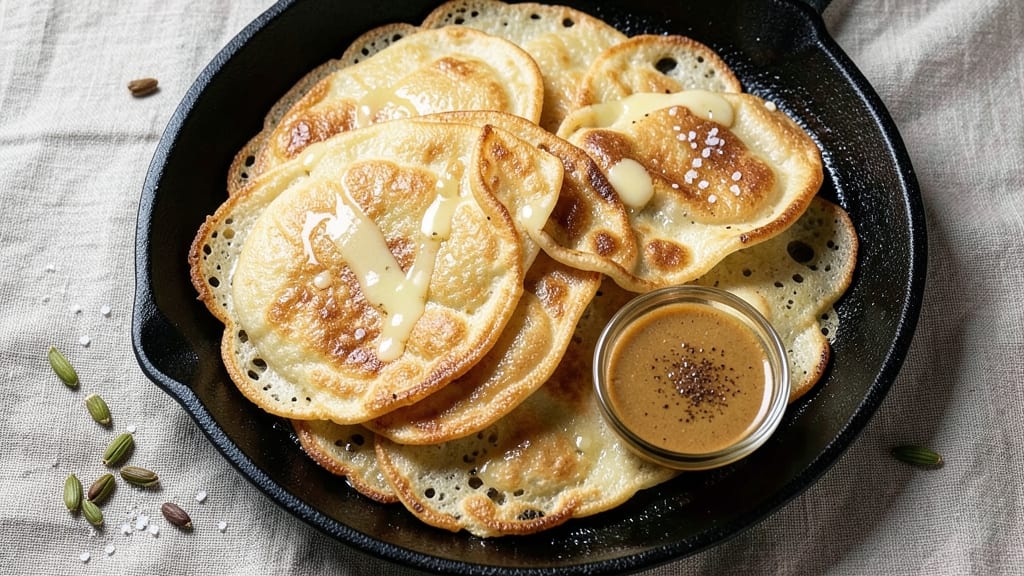
This appam recipe without yeast delivers the same fluffy, lattice-topped perfection you'd find in a Sri Lankan restaurant—just with a fermented rice-coconut batter that transforms in 30 minutes. The secret lies in proper fermentation, which creates that signature airy texture without relying on commercial yeast.
I perfected this version after testing countless methods during my time working with South Indian chefs in Charleston, and it's become a staple in our Austin home.
The batter starts with rice flour and coconut milk, which ferment naturally overnight—this step is absolutely critical for achieving that light, spongy interior. Once fermented, the batter develops a subtle tang that pairs beautifully with the crispy lattice pattern on top.
Frying in small batches ensures each appam cooks evenly, with a golden crust that contrasts perfectly against the tender center.
By the time you're done, you'll have a stack of these delicate, coconut-infused puffs that soak up curries or sambol like a dream. The aroma alone—warm coconut, toasted rice, and just a hint of cardamom—will have everyone at the table asking for seconds.
This recipe serves four as a side, but trust me, you'll want to make more.
Serve them warm with your favorite curry or a side of spicy sambol for the full Sri Lankan experience. The best part? No yeast means no waiting for it to rise—just pure, hands-off fermentation and crispy perfection. Let's get cooking!
Ingredients for appam recipe without yeast
Nine simple ingredients transform into restaurant-worthy appam—no yeast, no fuss, just perfect fermentation.
| Ingredient | Amount | Notes |
|---|---|---|
| Medium-Grain White Rice Flour 🍚 | 1 ½ cups | Unbleached for best texture |
| Coconut Milk (Full-Fat, Canned) 🥥 | 1 ½ cups | Thick variety preferred |
| Unsalted Butter 🧈 | ½ cup | Cold, cubed for frying |
| Granulated Sugar 🍚 | ¼ cup | White or light brown |
| Ground Cardamom 🌿 | 1 tsp | Freshly ground preferred |
| Salt 🧂 | ½ tsp | Fine sea salt preferred |
| Vegetable Oil (for frying) 🫒 | 2 cups | High smoke point |
| Fresh Coconut (grated, optional) 🥥 | ½ cup | For garnish, unsweetened |
| Lemon Juice 🍋 | 1 tbsp | Freshly squeezed |
| Water (for fermentation) 💧 | ¾ cup | Filtered preferred |
| Diamond Crystal Kosher Salt (for batter) 🧂 | ¼ tsp | For fermentation balance |
The rice flour is non-negotiable for that signature texture—Bob's Red Mill or Indian grocery stores carry the best medium-grain varieties. Look for coconut milk cans with minimal additives—Thai Kitchen or Goya work perfectly. Freshly grated coconut (if using) should smell vibrant and sweet, not stale. The cardamom? Penzeys sells the best ground version, but if you're adventurous, toast whole pods in a dry pan for 30 seconds before grinding. That extra step makes all the difference. For the butter, grab Plugrá or Land O'Lakes unsalted—the higher fat content gives better flavor.
No coconut milk? Full-fat coconut cream works in a pinch, but thin it with a splash of water to mimic the consistency. Running short on rice flour? All-purpose flour at 1:1 ratio keeps the structure, though texture will differ slightly. The fermentation is where magic happens—if your kitchen is cold, place the batter in a warm spot (like near the oven with light on) to speed things up. For the frying oil, vegetable or canola are ideal, but ghee gives a richer flavor if you're feeling indulgent. The lemon juice acts as a natural preservative—don't skip it, even if your coconut milk is fresh.
Fermented batter keeps in the fridge for 2 days—stir before using as it settles. Once fried, appam reheats beautifully in a 350°F oven for 5-7 minutes to restore crispiness. Store in an airtight container between layers of parchment paper to prevent sogginess. Freeze fried appam for up to 1 month—they thaw perfectly in the oven. Pro tip: Double the batter and freeze half—perfect for lazy weeknights when you crave something special without the prep.
Why You'll Love This Recipe
- No Yeast, No Stress: I swear by this version—just rice flour, coconut milk, and a splash of patience. No waiting for dough to rise, no yeast fumbles, just smooth batter that bubbles up perfectly every time.
- Coconut-Butter Magic: That full-fat coconut milk and butter combo? It’s what makes these appams ridiculously tender with just the right crisp at the edges. Honestly, the cardamom finish ties it all together like a little spiced hug.
- Breakfast or Brunch Hero: Serve them with a dollop of sugar and a side of curry for breakfast, or stack them with eggs and chutney for brunch. Between us, I’ve even had them as a dessert with condensed milk—no judgment.
- Budget-Friendly Staple: A single can of coconut milk and a bag of rice flour stretch for weeks of these. Leftovers? Toss them in the fridge, reheat in a pan, and they’re just as good the second time around. My wallet thanks me.
Step-by-step instructions for appam without yeast
Here's how to create light, airy coconut lattice puffs using a fermentation trick that mimics yeast.
Prepare the Fermented Batter
In a medium bowl, whisk together the 1.5 cups medium-grain white rice flour, 0.5 tsp salt, 1 tsp ground cardamom, and 0.25 cup granulated sugar. This dry mixture forms the structural backbone of your appam, and the cardamom adds that signature aromatic warmth.
In a separate bowl, combine the 1.5 cups coconut milk, 1 tbsp lemon juice, and 0.75 cup water for fermentation. The lemon juice acts as a natural acidifier, helping to activate the rice flour's natural enzymes for fermentation. Let this liquid mixture sit at room temperature for 10 minutes while you prepare the next components.
After the 10 minutes, slowly pour the coconut mixture into the dry ingredients while whisking continuously. The batter should be thick but pourable—like a loose pancake batter. Add the 0.25 tsp diamond crystal kosher salt for batter and mix well. Cover the bowl with a clean kitchen towel and let it ferment at room temperature for 1 hour. You'll know it's ready when small bubbles form on the surface and the batter develops a slightly tangy aroma—this indicates proper fermentation without yeast.
Warm the Oil and Prepare the Mold
Pour the 2 cups vegetable oil into a deep, heavy-bottomed skillet or kadhai. Heat it over medium heat until it reaches 350°F—test with a small piece of batter. If it sizzles immediately and rises to the surface, the oil is ready. Too-hot oil burns the appam; too-cool oil makes them greasy.
While the oil heats, shape a small round mold from aluminum foil—about 4 inches in diameter—to create the signature lattice pattern. You'll use this to press the batter into the oil in a controlled way. Keep the mold nearby but don't let it touch the hot oil.
Cut the 0.5 cup unsalted butter into small cubes and set aside. You'll use these later to create pockets of melted butter within each appam for extra richness.
Fry the Appam in Layers
Using a spoon, carefully drop 2 tablespoon portions of the fermented batter into the hot oil. Immediately press down gently with the foil mold to create a thin, even layer—about ¼ inch thick. Remove the mold and let the batter cook undisturbed for 2-3 minutes until the edges turn golden brown and the center looks set.
Place a small cube of unsalted butter in the center of the cooked layer. Then, add another 2 tablespoon portion of batter on top, again pressing with the mold. Fry for another 2-3 minutes until the top layer is golden and the butter has melted into the layers. This creates those signature fluffy, buttery pockets.
Use a slotted spoon to carefully transfer the appam to a paper towel-lined plate. Let it drain for 1 minute, then gently press down with a clean spatula to flatten slightly. Repeat with the remaining batter, working in batches to maintain oil temperature.
Garnish and Serve Warm
While still warm, sprinkle the appam with 0.5 cup grated fresh coconut if using. The coconut adds a delicate sweetness that balances the savory richness. Serve immediately with your choice of accompaniments—traditional coconut milk chutney, spicy sambar, or a simple sugar syrup for dessert-style appam.
For best results, eat within 30 minutes while they're at their peak—light, airy, and slightly crispy at the edges with a melt-in-your-mouth center. The fermentation process gives them that signature softness without yeast, while the layered frying creates the iconic lattice texture.
Pro Tips For Making Appam Recipe Without Yeast
- Whisk Like a Storm: The batter needs to be smooth enough to flow like syrup, not lumpy like wet cement. After mixing rice flour, coconut milk, and sugar, beat it vigorously for 3-4 minutes—your arm will thank you later, and the appam won’t tear apart when you flip them.
- Butter the Pan Hot: I used to rush this and end up with greasy, soggy bottoms. Heat the pan properly (medium-high until a drop of water sizzles instantly), then add 1 tsp butter—let it foam and coat the surface completely before pouring the batter. That’s what gets you crispy edges, not just a sad, buttery puddle.
- Skip the Overmixing: Once the batter reaches the right consistency (thicker than pancake batter but still pourable), stop stirring. Overworking it makes the appam dense and chewy—like eating a rice dumpling instead of a fluffy cloud. Test it by dripping a spoonful into water: if it holds its shape, you’re good.
- Cardamom at the End: Add the ground cardamom after the batter cools slightly—say, 5 minutes post-mixing. If you toss it in early, the heat dulls its aroma, and you’re left with a bland, buttery flavor. A pinch here makes all the difference, especially if you’re using cheap coconut milk.
Perfect pairings for appam recipe without yeast
Curry Pairings
Serve these appam with sambar—the classic South Indian lentil stew with tamarind and curry leaves. The tangy, spiced broth soaks perfectly into the fluffy appam, creating a harmonious balance.
I always make a big batch of sambar and keep it simmering on the stove; it pairs beautifully with the coconut richness of the appam. For extra depth, add a spoonful of ginger-turmeric coconut milk chutney on top. 🌶️
Coconut Milk Chutney
This is my go-to accompaniment—a simple blend of 1 cup shredded coconut, 2 green chilies, 1 tsp cumin seeds, and juice of 1 lime. Pulse everything in a food processor until smooth, then thin with 2 tablespoons coconut milk.
The chutney’s creamy texture contrasts beautifully with the crispy lattice edges of the appam. I like to serve it slightly warm, as the heat enhances the flavors. 🥥
Sweet Syrup Option
For a dessert-style twist, drizzle warm appam with sugar syrup made from ½ cup sugar, ½ cup water, and 1 cardamom pod. Simmer until the sugar dissolves, then strain and drizzle over the appam.
The syrup’s sweetness complements the coconut flavor, making these a perfect breakfast or snack. I often serve this version with a cup of chai for a cozy morning treat. 🍯
Spicy Sambol
If you love heat, try Sri Lankan sambol—a fiery mix of shallots, red chilies, mustard seeds, and coconut. Toast the shallots and chilies in oil until fragrant, then mix with the remaining ingredients.
The sambol’s bold flavors cut through the richness of the appam, adding a zesty kick. I like to sprinkle it generously over the top before serving. 🌶️
Yogurt Dip
A cool raita made with ½ cup plain yogurt, 1 tbsp grated cucumber, ½ tsp roasted cumin powder, and a pinch of salt adds a refreshing contrast.
The yogurt’s tang balances the coconut’s sweetness, making each bite more vibrant. I often serve this dip on the side for dipping or drizzling lightly over the appam. 🥛
Breakfast Spread
For a full breakfast, pair appam with egg curry or poha (flattened rice). The savory egg curry adds protein, while poha’s light texture keeps the meal balanced.
I also love adding a side of pickled onions for a tangy crunch. This combo is a staple in our Austin home—David always asks for seconds! 🍳
Nutrition facts
Frequently asked questions
Why does this appam recipe work without yeast?
The magic happens through natural fermentation! The rice flour and coconut milk create a batter that develops air pockets when left to ferment for 1 hour—just like sourdough. The lemon juice kickstarts this process by activating enzymes in the rice flour, producing that signature light, airy texture without commercial yeast.
Can I make the batter ahead of time?
The fermented batter keeps in the fridge for 2 days—just stir well before using. For longer storage, freeze portions in an airtight container for up to 1 month. Thaw overnight in the fridge and let it sit at room temperature for 30 minutes before frying to restore the right consistency.
What if my appam turns out dense instead of fluffy?
This usually means the fermentation wasn't complete or the oil wasn't hot enough. For next time, check for bubbles and a tangy aroma in the batter before frying. Also ensure your oil reaches 350°F—use a thermometer to be precise. If using leftovers, reheat in a 350°F oven for 5 minutes to restore crispiness.
Can I adjust the sweetness level?
Yes! The recipe uses ¼ cup sugar for balance, but you can reduce it to 2 tablespoons for a less sweet version. For extra richness, add 1 teaspoon vanilla extract to the batter. The cardamom already provides natural sweetness, so adjust based on your preference—just remember, the coconut milk adds sweetness too!
What's the best way to reheat leftover appam?
Wrap them in foil and reheat at 350°F for 5-7 minutes to restore crispiness. For a quick fix, microwave for 15-20 seconds (they'll be softer but still delicious). To revive texture, place in a dry skillet over low heat for 1 minute per side—this mimics the original frying process.