
Side Dishes
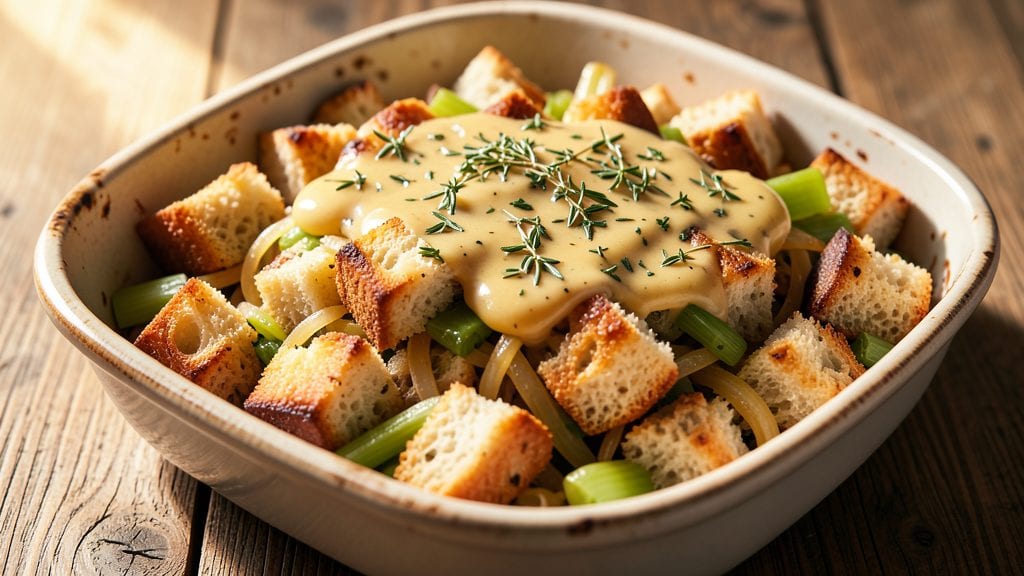
Betty Crocker's bread stuffing recipe delivers that perfect balance of buttery-crispy edges and a fluffy, moist heart that makes every holiday table unforgettable. The secret lies in carefully toasting the bread cubes and building layers of savory flavor through precise sautéing of onions, celery, and herbs.
This method has been refined over generations to create stuffing that's rich, aromatic, and just the right texture—never dry or greasy.
What sets this recipe apart is the attention to detail during preparation: using the right amount of butter for crispy edges without overwhelming the bread, and incorporating enough broth to keep the center tender.
The result is a dish that's both impressive and approachable, perfect for Thanksgiving or any special occasion. With just a few key ingredients and a methodical approach, you'll achieve restaurant-quality stuffing at home.
By the time it emerges from the oven, your stuffing will have a golden, crackling top that gives way to perfectly fluffy, savory layers beneath. The aromatics—onions, celery, and sage—infuse every bite with warmth, while the herbs add bright, fresh notes that balance the richness.
This is the kind of dish that transforms a simple side into the centerpiece of your meal.
Serve it alongside roasted turkey, gravy, or even as a standalone dish with a crisp green salad. The versatility of this recipe makes it ideal for both holiday feasts and everyday gatherings. Let's get started on creating your perfect stuffing.
Ingredients for betty crocker bread stuffing
The secret to perfect stuffing lies in these simple, quality ingredients that create buttery-crispy edges and a fluffy heart.
| Ingredient | Amount | Notes |
|---|---|---|
| Day-Old Bread Cubes 🍞 | 8 cups | Stale bread preferred, crusts removed |
| Unsalted Butter 🧈 | ¾ cup | Cold, cubed for even browning |
| Yellow Onions 🧅 | 2 medium | Diced, about 1.5 cups total |
| Celery Stalks 🥬 | 6 whole | Diced, about 1.5 cups total |
| Fresh Sage Leaves 🌿 | 1 ½ tbsp | Chopped, stems removed |
| Fresh Thyme Leaves 🌿 | 1 ½ tsp | Chopped, or 1 tsp dried |
| Garlic Cloves 🧄 | 4 cloves | Minced, peeled |
| Chicken Broth 💧 | 2 ½ cups | Low-sodium preferred |
| Eggs 🥚 | 2 large | Lightly beaten |
| Salt 🧂 | 1 ½ tsp | Adjust to taste |
| Black Pepper 🌶️ | 1 tsp | Freshly ground |
| Dried Parsley 🌿 | 1 tbsp | For garnish |
The bread is non-negotiable—day-old works best for that ideal texture (the good stuff, not the pre-sliced loaves). Sourdough or French bread gives the best flavor, but any crusty bread will work. Toast the cubes low and slow until golden—don't rush this part. For the aromatics, Trader Joe's has pre-diced onions and celery that save time, but fresh is always better. The butter? Plugrá or Land O'Lakes work perfectly here—just make sure it's cold when you cube it. Fresh herbs make all the difference: grab them from the produce section—they should smell vibrant, not wilted.
No fresh sage? Dried works at one-third the amount, but it won't have that same earthy punch. Short on butter? Olive oil works in a pinch, though it won't give you that classic buttery flavor. Using low-sodium broth? Add extra salt at the end—this stuffing needs to be savory. For the eggs, room temperature beats cold straight from the fridge. And if you're making this ahead? Assemble everything except the eggs—add them just before baking to keep it light.
This stuffing reheats beautifully—350°F for 20-25 minutes covered with foil. Keeps 4-5 days in the fridge, freezes for 3 months. I always make an extra batch—it's perfect for sandwiches or toast the next day. Store leftovers in an airtight container with a paper towel on top to keep it crispy. Trust me, the second day is just as good as the first.
Why You'll Love This Recipe
- No-Chop Trick: I swear by this—just tear that day-old bread into chunks (no knife required). The onions and celery get a quick sauté in butter until soft, then the sage leaves wilt right in. Honestly, the only real work is stirring, and even my kids can do that.
- Buttery Sage Magic: That rich butter melting into the bread cubes? Life-changing. The onions caramelize just enough to add depth, while the sage leaves release their earthy perfume—like a warm hug in every bite. (Yes, even on a Tuesday night.)
- Holiday or Weeknight: This stuffing works for Thanksgiving and my lazy Sunday brunch. Toss it in a skillet for a crispy edge, or bake it slow for a soft center. I’ve even used it to soak up gravy for a quick soup fix—because why not?
- Leftovers That Don’t Suck: Most stuffing turns into sad, dry bricks. Not this one. The bread cubes stay tender, and the flavor only gets better the next day. I freeze half the batch for future meals—because nobody should waste good stuffing.
Step-by-step instructions for betty Crocker's bread stuffing recipe
Get ready for the ultimate stuffing—crispy golden edges and a moist, flavorful center that'll wow your Thanksgiving table.
Toast the Bread Cubes for Maximum Crispiness
Preheat your oven to 350°F and spread the 8 cups day-old bread cubes evenly on two rimmed baking sheets. Toast for 10-12 minutes, stirring halfway, until the edges are light golden brown and the cubes are completely dry. This step is non-negotiable—dry bread absorbs more moisture and creates that perfect crispy texture we're after.
Here's the thing—don't skip toasting. The bread needs to lose its moisture first, or your stuffing will end up soggy. I like to spread them in a single layer so they toast evenly. If you're using a bread with a thick crust, you might want to remove those first—they'll just turn into chewy bits.
Sauté the Vegetables Until Soft and Fragrant
In a large skillet, melt 0.75 cup unsalted butter over medium heat. Add the 2 medium yellow onions and 6 whole celery stalks (diced), cooking for 8-10 minutes until softened and the onions turn translucent. Stir in the 4 cloves minced garlic, 1.5 tbsp chopped fresh sage leaves, and 1.5 tsp chopped fresh thyme leaves, cooking for another 1 minute until fragrant.
This is where all the flavor happens. The butter should foam but not brown—if it gets too dark, you've burned the garlic. You'll know it's done when the vegetables release easily from the pan and the kitchen smells like a holiday feast. Don't rush this step; those aromatic compounds need time to develop.
Mix Everything Together for Perfect Texture
In a very large bowl (this stuffing expands!), combine the toasted bread cubes, sautéed vegetable mixture, 2.5 cups chicken broth, 2 large beaten eggs, 1.5 tsp salt, and 1 tsp black pepper. Gently fold everything together with a wooden spoon until the bread is evenly moistened but not mushy. The mixture should hold its shape when pressed lightly—if it crumbles too easily, add 1-2 tablespoons more broth.
I always use two spoons for this—one to scrape the bottom of the bowl and another to fold. This ensures even distribution of the broth and butter throughout the bread. You want every bite to have that perfect balance of crispy and moist. If you're worried about the stuffing being too wet, err on the side of less liquid—you can always add more later.
Bake Until Golden and Bubbly
Transfer the stuffing mixture to a greased 9x13-inch baking dish and spread it evenly. Bake at 350°F for 30-35 minutes until the top is golden brown and the center reaches 165°F on an instant-read thermometer. If the top browns too quickly, tent it loosely with aluminum foil to prevent over-browning while it finishes cooking.
This is the moment that matters: the stuffing should be golden on top with crispy edges, but still moist inside. If it looks dry, you can add a splash of broth and let it sit for 5 minutes before serving. Real talk: the stuffing will continue cooking slightly after you take it out of the oven, so it's better to pull it out when it's just barely done than risk overcooking it.
Rest and Garnish for the Perfect Finish
Remove the stuffing from the oven and let it rest for 10 minutes before serving. This resting time allows the juices to redistribute, ensuring every bite is moist and flavorful. While it rests, sprinkle the top with 1 tbsp dried parsley for a pop of color and freshness.
Serve immediately with warm gravy for dipping—this is where the magic happens. The crispy edges contrast beautifully with the fluffy interior, and the herbs add a bright finish to all that rich, buttery goodness. Trust me, your guests will think you've been stuffing for hours, not minutes!
Pro Tips For Making Betty Crocker Bread Stuffing
- Toast the Bread Right: Spread your day-old bread cubes in a single layer on a baking sheet and toast them at 350°F for 10-12 minutes until they’re golden and crisp at the edges. I learned this the hard way—skipping the toasting leaves stuffing that’s soggy no matter how much butter you add. (Yes, even if you’re impatient like me.)
- Sweat the Veggies Low: Cook the onions and celery over medium-low heat for 8-10 minutes until they’re soft and most of the moisture has evaporated. High heat turns them mushy, and you’ll end up with a watery stuffing. Sounds boring, but it makes a real difference.
- Don’t Overmix the Sage: Tear the fresh sage leaves by hand—don’t chop them—and fold them in gently at the very end. Overworking them releases bitterness, and chopping them too small turns the stuffing into a green sludge. My grandmother swore by this, and she was right.
- Butter in Stages: Add half the butter when you sauté the veggies, then drizzle the rest over the bread mixture before baking. This keeps the stuffing moist without making it greasy. (Your future self will thank you.)
Regional styles of these flavors
Southern Classic
In the South, bread stuffing gets a hearty upgrade with additions like andouille sausage or bacon. I like to cook ½ lb andouille until crispy, then crumble it into the mix with the sautéed veggies.
Add ½ cup chopped pecans for texture and a touch of sweetness that balances the savory flavors. This version is especially popular in Louisiana and Texas, where it’s often served alongside gumbo or fried chicken. 🌶️
New England Herb
Up north, the focus shifts to bold herbs and a touch of warmth. I swap the sage for rosemary and thyme, adding 1 tbsp chopped rosemary to the sautéed veggies. A splash of dry sherry or apple cider (about ¼ cup) replaces some of the broth for depth.
This style is common in Massachusetts and Vermont, where it pairs perfectly with roasted turkey or cranberry sauce. The herbs give it a fresh, aromatic kick that’s refreshing after a heavy meal.
Italian-Inspired
For a Mediterranean twist, I use ciabatta or focaccia bread and swap the herbs for fresh parsley, basil, and oregano. Add ½ cup diced pancetta instead of sausage, and finish with grated Parmesan cheese (about ¼ cup) mixed into the stuffing before baking.
This version is inspired by Tuscan traditions and works beautifully alongside roasted chicken or as a standalone appetizer. The pancetta adds a salty, smoky depth that elevates the dish.
Vegetarian Version
Skip the meat entirely and boost the veggies with mushrooms and walnuts. Sauté 8 oz cremini mushrooms with the onions and celery, then stir in ½ cup chopped walnuts for crunch. Use vegetable broth instead of chicken broth and add 1 tsp smoked paprika for warmth.
This version is just as satisfying and works well for holiday gatherings with vegetarian guests. It’s a great way to keep the dish rich and flavorful without relying on meat. 🌱
Crispy Top Trick
No matter the regional style, achieving that perfect crispy top is key. For extra crunch, spread ¼ cup breadcrumbs mixed with 2 tbsp melted butter over the stuffing before baking. Or, top it with thin slices of bread (like sourdough) arranged in a lattice pattern for a rustic, bakery-style finish.
This works especially well for the Southern or Italian versions, where texture is a priority. 💫
Nutrition facts
Frequently asked questions about classic bread stuffing
Why does my stuffing always turn out dry?
Dry stuffing usually means the bread absorbed too much liquid or baked too long. Start with day-old bread (not fresh) and toast it thoroughly to remove excess moisture. Use 2.5 cups broth for 8 cups bread, and check doneness at 325°F—it should reach 165°F internally. If it looks dry, add 2-3 tablespoons extra broth before serving.
Can I make this stuffing ahead of time?
Assemble everything except the eggs, then refrigerate for up to 24 hours. Add eggs and bake as directed. For freezing, bake first, cool completely, then wrap tightly in foil. Reheat at 350°F for 20-25 minutes with a splash of broth to restore moisture. The texture stays perfect!
What's the best bread for stuffing?
Sourdough or French bread are ideal—their sturdy texture holds up to baking. Avoid soft breads like brioche (they'll turn mushy) or pre-sliced loaves (they lack structure). For extra flavor, use a mix of crusty bread and day-old dinner rolls. Always cube uniformly (about 1-inch pieces) for even toasting.
How do I get crispy edges without burning the top?
Spread the stuffing in a 9x13-inch dish and bake at 350°F for 30 minutes. If the top browns too fast, tent loosely with foil. For extra crunch, top with buttered breadcrumbs or thin bread slices before baking. Remove from oven when the center hits 165°F—it'll crisp further while resting.
Can I substitute chicken broth with something else?
Yes! Use turkey broth for a richer flavor or vegetable broth for a vegetarian version. For depth, replace ½ cup broth with dry white wine or apple cider. Never use water—it lacks the savory base needed for perfect texture. Adjust seasoning if using low-sodium broth.