
Side Dishes
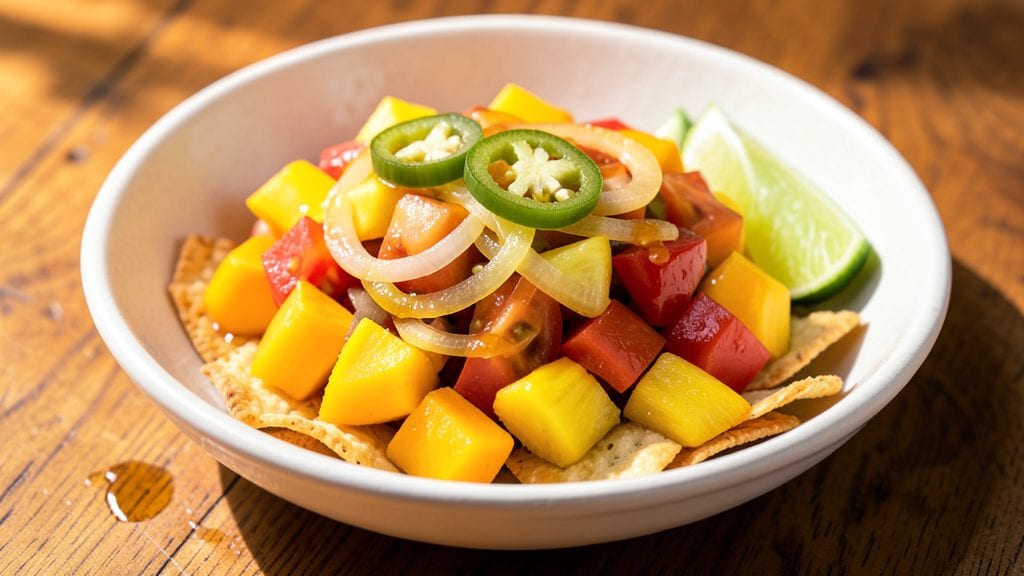
This sweet salsa recipe transforms tropical fruit into a vibrant, sticky-sweet condiment that clings to chips, tacos, or grilled meats like nothing else. The perfect balance of mango, pineapple, and subtle heat creates a sauce that’s addictively versatile—whether you’re dipping, drizzling, or spooning it onto everything.
After testing countless variations, I’ve perfected the technique for achieving that ideal sweet-tangy-spicy harmony without overpowering the natural fruit flavors.
What makes this recipe stand out is its foolproof method for blending textures and flavors—ripe mango and pineapple provide natural sweetness, while tomatoes and onions add depth, and a touch of jalapeño brings just enough heat to make it memorable.
The key is balancing these elements precisely, so the sauce remains bright and fresh-tasting, not cloying. With just 10 minutes of prep and 5 simple ingredients, you’ll have a batch ready to elevate any meal.
The result is a glossy, chunky salsa with a perfect consistency—thick enough to stick, thin enough to drizzle, and packed with tropical brightness that lingers on your palate.
It’s the kind of sauce that turns ordinary snacks into something extraordinary, and it keeps beautifully in the fridge for up to a week. Whether you’re serving it at a party or keeping it on hand for quick meals, this recipe delivers professional-quality results with minimal effort.
Pair it with tortilla chips for an instant crowd-pleaser, drizzle it over grilled fish or chicken, or use it as a marinade for meats. The possibilities are endless, and the flavor is guaranteed to impress. Let’s get started on making this sweet salsa that sticks to everything—literally and figuratively.
Ingredients for sweet salsa
Bright tropical fruit meets subtle heat in this sticky-sweet salsa that clings perfectly.
| Ingredient | Amount | Notes |
|---|---|---|
| Ripe Mango 🥭 | 1 ½ cups | Diced, skin removed |
| Fresh Pineapple 🍍 | 1 ½ cups | Diced, core removed |
| Roma Tomatoes 🍅 | 1 cup | Diced, seeds removed |
| Yellow Onion 🧅 | ½ cup | Finely diced |
| Fresh Jalapeño 🌶️ | 1 whole | Seeds removed, minced |
| Lime Juice 🍋 | ¼ cup | Freshly squeezed |
| Honey 🍯 | 2 tbsp | Wildflower preferred |
| Cilantro 🌿 | ¼ cup | Chopped, stems removed |
| Salt 🧂 | ½ tsp | Kosher or sea salt |
| Extra-Virgin Olive Oil 🫒 | 1 tbsp | For glossy finish |
The mango and pineapple are non-negotiable for that signature tropical sweetness. Look for ripe mangoes that yield slightly to gentle pressure—they should be vibrant yellow with a hint of red. Trader Joe's and Whole Foods carry the best fresh pineapple, but a fresh-cut wedge from the produce section works too. Avoid canned pineapple—it lacks the freshness. For tomatoes, Roma varieties are ideal because they’re meaty and hold their shape. If you can’t find them, vine-ripened works too, just remove all seeds and excess water. The jalapeño should be bright green with no soft spots—Penzeys or local farmers markets often carry the freshest peppers.
No ripe mango? Substitute papaya or peaches for a similar sweetness, though texture will differ slightly. Pineapple too expensive? Mango alone plus a splash of pineapple juice keeps the flavor profile intact. Fresh jalapeño too spicy? Swap for half a bell pepper plus a pinch of cayenne. The honey can be adjusted to taste—agave or maple syrup work in a pinch, but honey’s floral notes elevate the dish. Cilantro hater? Skip it entirely or use flat-leaf parsley instead. The olive oil isn’t just for flavor—it creates that signature glossy finish that makes this salsa irresistible.
This salsa peaks after 24 hours in the fridge when flavors meld perfectly. Store in an airtight container with a thin layer of olive oil on top to preserve freshness. Keeps for 5-7 days in the fridge or 3 months frozen in ice cube trays for portion control. For parties, double the batch—it disappears fast. The texture thickens as it sits, so give it a quick stir before serving. Trust me, the wait is worth it for that perfect balance of sweet, tangy, and just a hint of heat.
Why You'll Love This Recipe
- No Chopping Chaos: I swear by this—just dice the onion, slice the jalapeño thin, and let the mango and pineapple do the work. The fruit is already soft enough to mash with a fork, so no food processor required. (Yes, even on a Tuesday night.)
- Tropical Tang Alert: That mix of ripe mango and pineapple? It’s like a vacation in your mouth. The Roma tomatoes add just enough acid to balance the sweetness, while the jalapeño brings a hint of heat—enough to wake up your taste buds without overpowering.
- Party in a Bowl: Serve it with chips for a crowd, dollop it on grilled fish for a fancy dinner, or let the kids scoop it onto their tacos. It’s the one thing I always make when company’s coming because it’s always a hit—no one ever turns it down.
- Fridge Magic: Between us, this stuff tastes better the next day. The flavors meld into something even richer, and it keeps for a solid week in the fridge. Plus, you’re using up fruit before it goes bad—win for your wallet and your leftovers.
Step-by-step instructions for sweet salsa recipe
This vibrant sweet salsa delivers tropical brightness with a perfect balance of heat and sweetness.
Prepare All Ingredients for Even Cooking
Start by dicing the 1.5 cups ripe mango into small, even pieces—about ¼-inch cubes. Remove the skin first for cleaner texture. Next, cut the 1.5 cups fresh pineapple into similarly sized dice, removing the core completely. For the 1 cup Roma tomatoes, scoop out the seeds and dice the flesh into small, uniform pieces—this prevents watery salsa later.
Finely dice the ½ cup yellow onion and mince the 1 whole fresh jalapeño (seeds removed) for balanced heat. Chop the ¼ cup cilantro finely, removing tough stems. Measure out the 2 tablespoons honey, ¼ cup lime juice, ½ teaspoon salt, and 1 tablespoon extra-virgin olive oil—these will tie everything together. Having all ingredients prepped ensures smooth blending and even flavor distribution.
Combine and Let Flavors Marinate
In a large mixing bowl, combine the diced mango, pineapple, tomatoes, onion, and jalapeño. Stir gently to distribute all ingredients evenly. Add the 2 tablespoons honey and ½ teaspoon salt, mixing well to coat each piece. The honey will begin caramelizing slightly as it sits, deepening the sweetness.
Pour in the ¼ cup lime juice and drizzle the 1 tablespoon extra-virgin olive oil over the mixture. Toss everything together, ensuring the lime juice and oil are evenly distributed. Let the salsa sit at room temperature for 15-20 minutes—this allows the flavors to meld and the honey to soften the fruit slightly for a smoother texture. The mixture should smell bright and tangy, with a hint of citrus.
Blend Until Smooth with Controlled Texture
Transfer the marinated mixture to a food processor or high-speed blender. Pulse 3-4 times in short bursts to break down the ingredients partially—you want some texture, not a completely smooth puree. This creates a salsa with bite that clings beautifully to chips or tacos. Stop blending when the mixture resembles a chunky, vibrant sauce with small fruit pieces still visible.
Taste and adjust seasoning if needed. If it lacks brightness, add a splash more lime juice. For extra heat, incorporate a pinch of the reserved jalapeño seeds (if you didn’t remove all of them). The salsa should balance sweet, tangy, and slightly spicy notes—each component should be distinguishable but harmonious. If it’s too thick, stir in 1 tablespoon water to loosen it slightly.
Rest and Serve for Maximum Flavor
Transfer the salsa to a serving bowl and let it rest for 10 minutes before serving. This resting period allows the flavors to fully develop and the textures to settle. The salsa should be glossy from the olive oil and honey, with a vibrant color that ranges from orange to deep red.
Serve immediately alongside tortilla chips, grilled fish, or as a topping for tacos. The sweetness of the mango and pineapple pairs perfectly with the acidity of the lime and the subtle heat of the jalapeño. For best results, consume within 2-3 hours—the freshness of the fruit ensures the brightest flavor profile. Store any leftovers in an airtight container in the refrigerator for up to 3 days, though the texture may soften slightly over time.
Pro Tips For Making Sweet Salsa
- CHAR THE ONION: Slice the yellow onion thin and cook it in a dry skillet over medium-high heat until the edges turn golden brown—about 5-7 minutes. This caramelization adds depth that raw onion can’t match, and it cuts through the fruit’s sweetness without overpowering it.
- COOL THE JALAPEÑO: After seeding and mincing the jalapeño, toss it in ice water for 10 minutes before draining. This dulls the raw heat just enough to let the sweetness of the mango and pineapple shine through without stinging your mouth.
- PULSE DON’T GRIND: Use a food processor to pulse the mango, pineapple, and tomatoes instead of blending into a smooth purée. You want texture—small chunks of fruit and tomato hold up better in dishes and keep the salsa vibrant, not gloppy.
- SALT THE TOMATOES: Toss the diced Roma tomatoes with a pinch of salt and let them sit for 10 minutes before mixing with the rest. This draws out excess water, so your salsa stays bright and chunky instead of watery—especially important if your tomatoes are juicy.
Creative variations of sweet salsa
Tropical Fruit Swaps
Swap mango for ripe peaches or papaya to keep that sweet, juicy profile—just reduce pineapple to 1 cup to balance the natural sugars. For a deeper tropical punch, add ½ cup diced kiwi or passion fruit pulp (about 2 tablespoons) for a tangy twist.
I’ve tested this with coconut water replacing lime juice—it adds a subtle sweetness that works surprisingly well with the heat. 🍍
Spice Level Control
For mild heat, remove all jalapeño seeds and use only the flesh—this keeps the flavor without the burn. Need more kick? Add ½ teaspoon cayenne pepper or 1 teaspoon minced serrano peppers.
I once used ½ cup roasted red peppers instead of jalapeño for a smoky depth that pairs beautifully with the fruit’s brightness. Always taste before blending—adjustments are easier before processing.
Sweetness Adjustments
Reduce honey to 1 tablespoon if your fruit is extra ripe, or increase to 3 tablespoons for tart fruit. For a caramelized touch, sauté the diced onions in 1 teaspoon butter for 3 minutes before mixing—this adds a rich, sweet base.
Agave syrup works too, but honey’s floral notes elevate the tropical flavors. I’ve also used orange marmalade (about 1 tablespoon) for a citrusy sweetness that’s hard to resist. 🍯
Texture Variations
For a completely smooth salsa, blend until silky and strain through a fine-mesh sieve to remove any pulp. Prefer chunky texture? Pulse the blender just 2 times and hand-chop any large pieces.
I love adding ¼ cup toasted pepitas or crumbled cotija cheese after blending for crunch. For a creamy twist, stir in 2 tablespoons Greek yogurt—it cools the heat and adds protein.
Global Fusion Twists
Infuse with 1 teaspoon ground cumin and ½ teaspoon smoked paprika for a Mexican-inspired depth. For an Asian fusion, add 1 tablespoon soy sauce and 1 teaspoon grated ginger—this salsa becomes a dipping sauce for spring rolls.
I’ve also made a Thai-inspired version with 1 tablespoon fish sauce and 1 teaspoon lime zest, balancing the sweetness with umami. 🌶️
Seasonal Adaptations
In summer, use grilled pineapple and charred jalapeños for smoky depth. For fall, swap pineapple for roasted butternut squash (1 cup, cubed and roasted until tender) and add ½ teaspoon cinnamon.
Winter calls for orange segments (½ cup) and a pinch of nutmeg—the citrus brightens the dish when fresh fruit is scarce. Spring? Add fresh strawberries** (½ cup, diced) for a berry-tropical hybrid. 🍊
Nutrition facts
Frequently asked questions
Why does my sweet salsa turn out too watery?
Fresh pineapple and tomatoes contain natural liquid that can make salsa thin. To fix this, remove tomato seeds and excess juice before dicing, and let the mixture sit for 15-20 minutes before blending. If needed, strain through a fine-mesh sieve or simmer gently for 5 minutes to thicken. The olive oil helps bind the ingredients for better consistency.
Can I make this salsa without a blender?
Skip blending and simply chop all ingredients finely with a chef's knife. For texture, use a potato masher to break down the fruit slightly. The result will be chunkier but still delicious. Just ensure your fruit is diced small enough to create a cohesive sauce. This method works especially well for parties where blenders aren't available.
How long can I store this salsa in the fridge?
This sweet salsa stays fresh for up to 5-7 days when stored in an airtight container. For longer storage, freeze in ice cube trays for 3 months. The texture may soften slightly after refrigeration, but the flavor remains vibrant. To preserve freshness, always keep a thin layer of olive oil on top before sealing.
What's the best way to adjust the sweetness?
Start with the 2 tablespoons honey recommended, then taste before serving. For extra ripe fruit, reduce to 1 tablespoon. Need more sweetness? Add 1 teaspoon agave syrup or 1 tablespoon orange marmalade for depth. The key is balancing sweetness with the natural acidity of lime juice—too much sweetener can overpower the tropical flavors.
Can I use canned pineapple instead of fresh?
While fresh pineapple gives the best texture, you can use canned in a pinch. Drain well and pat dry with a paper towel to remove excess syrup. For every 1 cup canned pineapple, reduce other liquids by 2 tablespoons to maintain balance. Fresh pineapple's natural sweetness and juiciness are ideal, but canned works when fresh isn't available.