Snacks
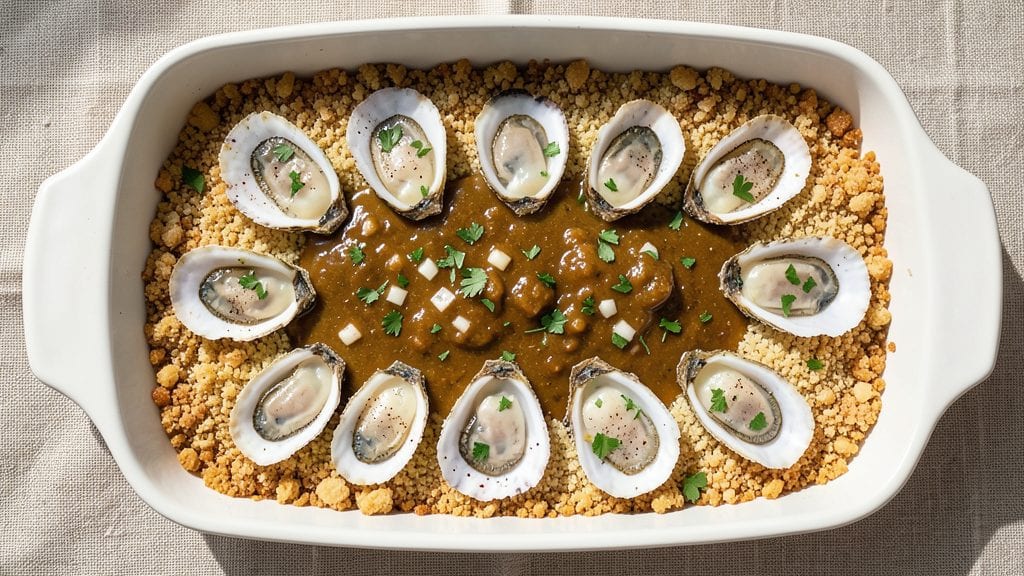
Creating an oyster bake recipe that delivers a perfectly crispy breadcrumb topping over tender, buttery oysters is an art I’ve perfected after countless trials in my kitchen. The key lies in balancing the richness of fresh oysters with a golden, cheesy crust that shatters at every bite—no soggy middles here.
This dish transforms a simple seafood snack into a restaurant-worthy centerpiece that’s surprisingly easy to master at home.
The foundation of this recipe starts with high-quality oysters, lightly steamed just until they plump but remain tender. A buttery breadcrumb mixture—enhanced with sharp cheddar, fresh herbs, and a touch of paprika—forms the crispy topping that’s the star of the show.
The secret? Baking at the right temperature ensures the crust stays golden and crunchy while keeping the oysters underneath warm and succulent.
What you’ll end up with is a dish that’s as visually impressive as it is delicious: a golden, bubbling crust that cracks open to reveal glossy oysters bathed in melted butter and cheese.
Serve it with a squeeze of lemon to cut through the richness or pair it with toasted bread for dipping. This oyster bake is perfect for seafood lovers, pescatarians, or anyone craving a dish that feels indulgent yet straightforward.
Ready to elevate your snack game? Let’s get started with a recipe that delivers crispy perfection every time—no shortcuts, just proven technique. The best part? It’s ready in under an hour, making it ideal for weeknight dinners or impressing guests with minimal effort.
Ingredients for oyster bake
Fresh oysters, crispy cheese breadcrumbs, and buttery richness—this is your cheesy oyster bake essentials.
| Ingredient | Amount | Notes |
|---|---|---|
| Fresh Oysters 🦪 | 24 whole | Shucked, liquid reserved |
| Unsalted Butter 🧈 | ½ cup | Cold, cubed for topping |
| Sharp White Cheddar Cheese 🧀 | 1 cup | Freshly grated from block |
| Panko Breadcrumbs 🍞 | 1 cup | For extra crunch |
| Fresh Parsley 🌿 | ¼ cup | Chopped, stems removed |
| Smoked Paprika 🌶️ | 1 tbsp | For color and depth |
| Garlic Powder 🧄 | 1 tsp | Freshly ground preferred |
| Sea Salt 🧂 | ½ tsp | Fine grain for seasoning |
| Ground Black Pepper 🌶️ | ¼ tsp | Freshly cracked |
| Heavy Cream 🥛 | ½ cup | Full-fat for richness |
| Lemon Juice 🍋 | 2 tbsp | Freshly squeezed |
| All-Purpose Flour 🌾 | 1 tbsp | For thickening sauce |
| Fresh Chives 🌿 | 2 tbsp | Chopped, for garnish |
Oysters are the star, so pick the freshest you can find—look for ones that are tightly closed or snap shut when tapped. Local seafood markets often have the best selection, but grocery stores with good turnover work too. I always grab Pacific or Kumamoto oysters if I'm splurging, but any variety will do. Store them in the fridge in their shell until ready to shuck—keep the liquid (brine) to steam them in later. Pro tip: if they're open, they're fine, but tap them closed and they should stay that way. If not, toss 'em. The sharp white cheddar is non-negotiable here—it melts perfectly and adds that tangy bite. Kraft or Cabot are solid choices, but grab the block and grate it yourself.
No panko? Regular breadcrumbs toasted in the oven work in a pinch—just spread them on a baking sheet and dry them out at 350°F for 5-10 minutes. Short on parsley? Fresh chives or basil add a nice brightness. The smoked paprika gives that gorgeous color—substitute regular paprika if you're out, but you'll lose some depth. For the heavy cream, half-and-half in a bind? It'll dilute the richness a bit, but still tasty. The lemon juice can be bottled, but fresh is always better—just a squeeze to brighten everything up. And if you're feeling fancy, add a dash of hot sauce to the topping mix for a little kick.
This dish is all about timing—bake it, then broil it for that perfect crisp. Serve immediately so the crust stays golden and shattery. Leftovers? 3 days max in the fridge, but honestly, it's so good you won't have any. To reheat, cover with foil and warm in the oven at 350°F for 10-15 minutes. The oysters won't be as crispy after reheating, but the cheesy topping is still delicious. For extra indulgence, make a double batch—freezes beautifully for up to 2 months. Just thaw in the fridge overnight before reheating.
Why You'll Love This Recipe
- One-Pan Magic: I swear by this recipe—just oysters, butter, and cheese on a sheet pan, then crunchy panko on top. No chopping, no fuss, and the oven does all the work while I sip wine and watch.
- Cheese Pulls Hard: That sharp white cheddar melts into a gooey blanket, while the butter keeps everything rich and buttery. The parsley adds a bright finish that cuts through the richness—like a hug from a coastal grandma.
- Weeknight Crowd-Pleaser: Between us, this feeds six but costs half the price of takeout. My roommates fight over seconds, and I always save leftovers for lazy mornings with toast.
- Budget Seafood Win: Oysters are cheaper than you think, especially in season, and this recipe stretches them further than shucking them raw. The panko adds texture without breaking the bank—just don’t skip the fresh parsley.
Step-by-step instructions for oyster bake recipe
Here's how to make this rich, cheesy oyster bake with a golden, crispy topping.
Prepare the Oysters and Sauce Base
Start by shucking all 24 whole fresh oysters carefully, reserving the briny liquid in a measuring cup. You'll need about ½ cup of that liquid for the sauce. Place the oysters in a single layer in a 9-inch oven-safe skillet—they should fit snugly but not overlap.
In a small bowl, whisk together ½ cup heavy cream, 2 tablespoons lemon juice, 1 tablespoon all-purpose flour, ½ teaspoon sea salt, and ¼ teaspoon ground black pepper. Pour this mixture evenly over the oysters, making sure each one is coated. The liquid should come about halfway up the sides of the oysters. Let this sit for 5 minutes while you prep the topping.
Make the Crispy Cheese Topping
In a medium bowl, combine 1 cup freshly grated sharp white cheddar cheese, 1 cup panko breadcrumbs, 1 tablespoon smoked paprika, 1 teaspoon garlic powder, ½ teaspoon sea salt, and ¼ teaspoon ground black pepper. Mix well with your hands until the cheese is evenly distributed—this ensures every bite gets that perfect cheesy crunch.
Cut ½ cup unsalted butter into small cubes and fold them into the breadcrumb mixture. The butter will melt slightly from your hands, which helps bind the topping together. Sprinkle ¼ cup chopped fresh parsley over the mixture and toss again. This topping should look dry but crumbly—if it seems too wet, add a few more breadcrumbs.
Assemble and Bake to Perfection
Preheat your oven to 375°F. Carefully spoon the cheese topping evenly over the oysters in the skillet, pressing down gently with the back of a spoon to help it stick. The topping should cover the oysters completely—this is what creates that beautiful golden crust.
Place the skillet on the middle rack of your oven and bake for 18-20 minutes until the topping is deep golden brown and bubbly. You'll know it's ready when the edges pull away slightly from the pan and the cheese is fully melted. If the topping browns too quickly, tent the skillet loosely with foil for the last 5 minutes to prevent burning.
Finish and Serve Warm
Remove the skillet from the oven and let it rest for 2-3 minutes—this allows the cheese to set slightly and makes it easier to serve. The oysters should be tender and the sauce thickened, with a glossy sheen from the melted butter and cream.
Garnish each serving with 2 tablespoons chopped fresh chives right before serving. The chives add a bright contrast to the rich, cheesy topping. Serve immediately while the topping is still crispy and the oysters are warm—this dish doesn't wait! The combination of briny oysters, creamy sauce, and crispy cheese topping makes every bite unforgettable.
Pro Tips For Making Oyster Bake
- Preheat Your Pan: I learned this the hard way—cold pans make soggy oyster bakes. Get your oven rack in the middle position, preheat to 375°F (190°C), and let the pan sit for 5 minutes before adding the oysters. The cheese needs that initial heat to melt smoothly, not pool at the bottom like a sad, greasy mess.
- Shuck Oysters Just Before Baking: Fresh oysters release liquid fast, and no one wants a watery bake. Shuck them 10 minutes before baking, pat the top of each oyster dry with a paper towel, and arrange them in the pan immediately. That extra drying step makes all the difference—your crust won’t turn into a sad, gluey paste.
- Butter the Oysters, Not the Pan: Drizzle melted butter directly over the oysters, not the pan. This ensures every shell gets that rich, buttery flavor instead of the cheese sticking to the bottom like it’s auditioning for a bad casserole. A light brush with a pastry brush works best—no need to drown them.
- Press the Crust Firmly: The panko-cheese topping is where lazy bakers fail. Press it down hard with the back of a spoon or your palm—no gaps, no crumbs floating loose. I used to skim this, and the result was a half-baked, uneven crust. Spend 30 seconds now to avoid disappointment later.
Essential equipment for oyster bake
Oven-Safe Skillet
You’ll need a 9-inch oven-safe skillet—I recommend a cast iron skillet like Lodge for even heat distribution and durability. Cast iron retains heat beautifully, ensuring the oysters cook evenly while the topping gets perfectly crispy.
If you don’t have cast iron, a stainless steel skillet with oven-safe handles works too, but preheat it for 5 minutes to prevent temperature shock. Avoid non-stick pans—they can’t handle the high heat needed for that golden crust. 🔥
High-Quality Thermometer
A digital instant-read thermometer (like ThermoWorks ThermoPop) is essential for checking the internal temperature of the oysters and ensuring the oven stays at 375°F. Oysters should reach 145°F internally—this guarantees they’re cooked but still tender.
Place the thermometer probe near the center of the skillet to monitor the sauce and topping temperature too. No thermometer? Use the toothpick test: insert a clean toothpick into the topping—it should come out with a few moist crumbs but no wet sauce.
Sharp Knives and Shucking Tools
Shucking oysters requires precision, so invest in a high-quality oyster knife (like Victorinox Fibrox) and a sturdy cutting board. A shucking fork (or a butter knife) helps pry the oyster from its shell safely.
I also keep a small bowl of ice water nearby to clean the knife between cuts—this prevents cross-contamination and keeps your workspace tidy. Never use dull tools; they slip and can cause injuries. 🦪
Mixing Bowls and Measuring Tools
Use a medium mixing bowl (at least 2-quart capacity) for the cheese topping—it needs room for hands and ingredients. A fine-mesh grater (like Microplane) ensures sharp white cheddar is freshly grated and melts smoothly.
For measuring, a liquid measuring cup (for the oyster brine) and a dry measuring cup (for breadcrumbs) keep things accurate. A spoonula helps spread the topping evenly without breaking it apart. Precision here means a perfectly golden, crackly crust.
Oven Thermometer
Your oven’s temperature display isn’t always accurate—use an oven thermometer (like Thermoworks Oven Thermometer) to confirm it hits 375°F. Oyster bakes rely on consistent heat to avoid soggy toppings or undercooked oysters. Place the thermometer on the middle rack where your skillet will sit.
If your oven runs hot, reduce the temperature by 25°F to prevent burning. This small step makes a huge difference in texture and flavor. 🌡️
Optional: Broiler Pan
For an extra-crispy finish, transfer the baked oyster bake to a broiler pan (or a baking sheet lined with foil) and broil for 1-2 minutes on high. This step adds a deep caramelization to the topping without overheating the oysters.
Just watch closely—broilers can turn cheese golden brown in seconds. If you don’t have a broiler pan, a wire cooling rack on a baking sheet works too. This final touch elevates the dish from "delicious" to "restaurant-quality."
Nutrition facts
Frequently asked questions
Can I use frozen oysters for this recipe?
Fresh oysters are ideal for the best texture, but you can use frozen oysters in a pinch. Thaw them overnight in the refrigerator and drain any excess liquid before using. Frozen oysters may have a slightly softer texture after baking, but they'll still be delicious. For optimal results, look for high-quality frozen oysters that were previously shucked and packed in their own brine.
How do I prevent the breadcrumb topping from getting soggy?
The key is baking at the right temperature and ensuring your ingredients are dry. Preheat your oven to 375°F and bake for 18-20 minutes—don't overcrowd the skillet. If your topping starts browning too quickly, tent it with foil for the last 5 minutes. Also, make sure your breadcrumbs are dry and your butter is cold when mixing. For extra insurance, toast your breadcrumbs in the oven for 5 minutes before adding them to the cheese mixture.
Can I make this recipe ahead of time?
This dish is best served immediately after baking, but you can assemble it ahead of time and bake later. Prepare the oysters and sauce, then refrigerate the skillet (covered) for up to 4 hours. When ready to bake, bring to room temperature first. For the topping, mix the ingredients but don't add them to the oysters until just before baking. The topping won't be as crispy if made ahead, but it will still be delicious. For freezing, assemble completely (including topping), then freeze for up to 2 months. Thaw overnight in the fridge before baking.
What's the best way to serve oyster bake?
Serve this rich dish immediately with classic accompaniments like toasted sourdough bread, lemon wedges, or a simple arugula salad. The crispy topping pairs beautifully with a cold beer or chilled white wine like Sauvignon Blanc. For a heartier meal, add steamed asparagus or roasted potatoes on the side. The briny oysters and creamy sauce make this perfect for sharing—consider serving it family-style in the skillet for maximum enjoyment.
Can I substitute other seafood in this recipe?
While oysters are the star, you can adapt this recipe for other seafood like scallops, shrimp, or clams. For scallops, use 12 large and reduce baking time to 12-15 minutes. For shrimp, use 1 pound (peeled and deveined) and add 1 teaspoon Old Bay seasoning to the topping. The technique remains the same, but adjust seasoning to complement your seafood choice. The creamy sauce works beautifully with any briny seafood.