Soups & Stews
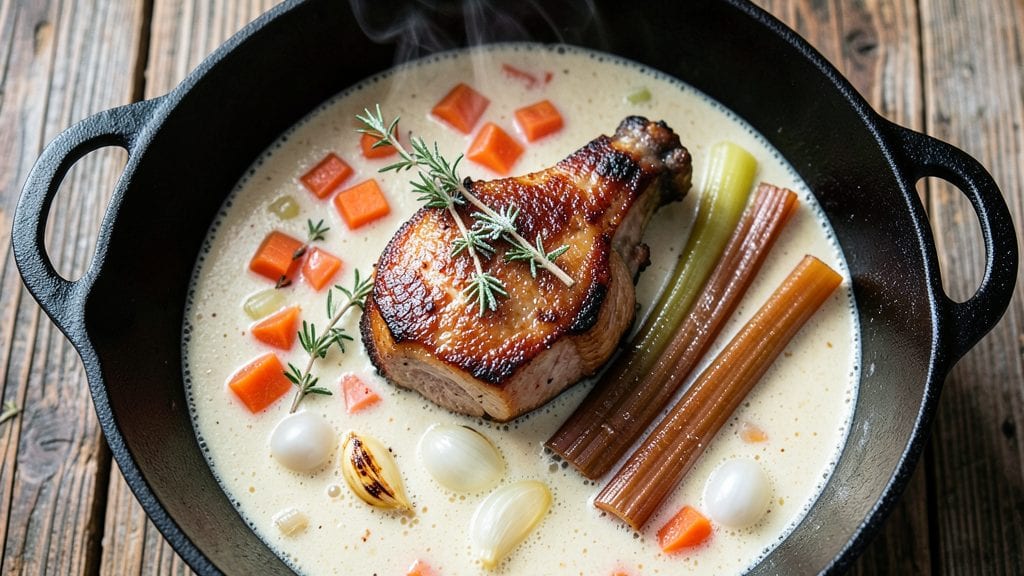
The old-fashioned ham hock soup recipe delivers the kind of deep, savory comfort that transforms any meal into a hearty tradition. This time-tested method transforms tough cuts into a collagen-rich broth that coats every spoonful, while slow simmering unlocks flavors that store-bought versions simply can't match.
I've perfected this recipe over years of Southern kitchens and family gatherings, where it's always the centerpiece dish that disappears first.
What sets this soup apart is the ham hock itself—a flavor powerhouse that dissolves into the broth, infusing it with smoky, meaty depth while adding body through natural collagen.
The secret lies in proper preparation: browning the ham hock first to develop rich fond, then simmering it low and slow for hours until the broth becomes velvety and the vegetables melt into perfect tenderness. This isn't just soup; it's a multi-course experience in one bowl.
By the time you're done, you'll have a steaming pot of soup with rich, amber broth that practically sings with flavor—each spoonful delivering layers of ham, vegetables, and herbs in perfect harmony.
The aroma alone will bring everyone to the table, and the first taste will have them asking for seconds before you even finish serving. This is the kind of soup that becomes a family heirloom recipe, passed down through generations.
The beauty of this recipe lies in its versatility—serve it with warm cornbread to soak up every last drop, or pair it with fresh greens for a complete Southern meal. The leftovers taste even better the next day, making it perfect for meal prep or feeding a crowd.
Let's get started on creating this timeless classic that brings comfort and tradition to your kitchen.
Ingredients for old fashioned ham hock soup
The secret to this legendary soup lies in these time-honored ingredients—each playing its part in that rich, amber broth.
| Ingredient | Amount | Notes |
|---|---|---|
| Ham Hock 🍖 | 2 whole | Smoked or unsmoked, bone-in |
| Yellow Onion 🧅 | 2 whole | Large, roughly chopped |
| Carrots 🥕 | 3 whole | Medium, peeled and chopped |
| Celery Stalks 🌿 | 4 whole | Fresh, chopped (bottoms included) |
| Garlic Cloves 🧄 | 6 cloves | Fresh, peeled and smashed |
| Fresh Thyme Sprigs 🌿 | 4 whole | Or 1 tbsp dried thyme |
| Fresh Bay Leaves 🍃 | 2 whole | Dried works too |
| Tomato Paste 🍅 | 2 tbsp | Squeeze tube preferred |
| Apple Cider Vinegar 🍎 | 2 tbsp | For brightness |
| Kosher Salt 🧂 | 1 ½ tbsp | Adjust to taste |
| Black Peppercorns 🌶️ | 1 tbsp | Freshly cracked |
| Dry Red Wine 🍷 | 1 cup | Cabernet or Merlot |
| Chicken Broth 💧 | 6 cups | Homemade if possible |
| Potatoes 🥔 | 2 lb | Yukon gold, peeled and cubed |
| Parsley 🌿 | ¼ cup | Fresh, chopped for garnish |
The ham hock is non-negotiable here—look for bone-in, smoked hocks at your butcher or the meat department. Costco often carries them pre-packaged, but ask for the freshest cut possible. The difference between a good hock and a great one? Good marbling and a deep pink color. If you can't find smoked, unsmoked works too—just add a splash of liquid smoke at the end. The celery, onion, and carrots should be fresh (that classic 'holy trinity' combo), but frozen works in a pinch—just thaw and drain well. The thyme and bay leaves? Fresh is ideal, but dried will get you there if you're in a hurry.
No red wine? Substitute extra chicken broth with 1 tbsp balsamic vinegar for depth. The tomato paste can be skipped if you're sensitive to acidity, but it's worth the 2 tablespoons for that umami punch. Swapping Yukon gold potatoes for russets? They'll hold up better to long cooking, but Yukons add that creamy texture. Short on parsley? Fresh chives or basil work beautifully for garnish. And if you're feeling adventurous, add a smoked paprika pinch to the broth for extra smokiness—trust me on this one.
This soup tastes even better the next day, so make a double batch if you can. Store in the fridge for up to 5 days, or freeze portions for 3 months. The broth thickens as it cools, so add a splash of water or broth when reheating. For serving, garnish with extra parsley and a crack of black pepper—it makes all the difference. Leftovers? Perfect for lunches or turning into a quick bisque by blending the broth.
Why You'll Love This Recipe
- One-Pot Magic: I swear by this—just toss in the ham hock, chop the onion, carrots, and celery (no fancy dicing needed), add the garlic, and let it simmer. The ham hock does all the work while you stir in a few herbs and let the flavors meld. Honestly, the only tool you’ll need is a big pot and a wooden spoon.
- Deep Umami Bomb: That ham hock? It’s the secret weapon—slow-cooked until the meat falls off the bone, infusing the broth with a rich, savory depth. The garlic and celery stalks caramelize just enough to give it a little bite, while the carrots add natural sweetness. Between us, it’s the kind of soup that makes you reach for a second bowl without thinking.
- Weeknight Workhorse: This isn’t just a Sunday dinner. I make it when I’m running late, when guests drop by unannounced, or when I need something hearty but effortless. The leftovers? Even better the next day—just reheat and serve with crusty bread. It’s my go-to for feeding the family without stress.
- Budget-Friendly Feast: A single ham hock stretches this soup for four servings, and the veggies are cheap staples. No fancy ingredients, no waste—just pure, satisfying comfort food. I’ll be real: it’s the kind of recipe that makes me feel like I’m feeding a crowd without breaking the bank. Plus, the ham hock’s gelatinous goodness means it reheats like a dream.
Step-by-step instructions for old fashioned ham hock soup
This hearty soup delivers deep, savory richness that comes from slow-cooked ham hock and aromatic vegetables.
Sear the Ham Hock for Maximum Flavor
Place the 2 whole ham hocks in a large Dutch oven or heavy pot. Heat over medium-high heat until the fat begins to render and the meat starts to brown, about 5-7 minutes. This step is crucial—it develops a deep, caramelized crust that infuses the broth with incredible depth of flavor.
Once the ham hocks are well-browned on all sides, remove them from the pot and set aside. You'll notice the bottom of the pot has developed a rich, golden fond—this is pure flavor that will dissolve into the soup. Don't clean it out; we'll deglaze it next with the vegetables.
Build the Aromatic Vegetable Base
In the same pot, add the 2 roughly chopped yellow onions, 3 peeled and chopped carrots, and 4 chopped celery stalks (including the bottoms). Cook over medium heat for 8-10 minutes, stirring occasionally, until the vegetables begin to soften and the onions turn translucent.
Add the 6 smashed garlic cloves, 2 whole fresh bay leaves, and 4 whole fresh thyme sprigs. Stir for 1 minute until the garlic becomes fragrant—this releases its oils and intensifies the flavor. The vegetables should be tender but not mushy at this point. This aromatic base forms the flavor foundation of your soup.
Deglaze and Simmer the Broth
Pour in the 1 cup dry red wine, scraping up all the browned bits from the bottom of the pot with a wooden spoon. This deglazing step captures all the concentrated flavors that would otherwise burn. Let the wine simmer for 3-4 minutes until it reduces by about half and the alcohol cooks off.
Add the 2 tbsp tomato paste and stir well to distribute it throughout the mixture. This adds a subtle sweetness and richness that balances the deep flavors. Pour in the 6 cups chicken broth, then return the ham hocks to the pot. Bring to a gentle boil, then reduce heat to low and cover partially. Simmer for 1 hour and 15 minutes, allowing the ham hock to render its collagen-rich gelatin into the broth.
Add Potatoes and Season
After the initial simmering, add the 2 lb peeled and cubed potatoes to the pot. Stir gently to distribute them throughout the broth. The potatoes will absorb some of the rich flavors while adding a satisfying heartiness to the soup.
Add the 1.5 tbsp kosher salt, 1 tbsp freshly cracked black peppercorns, and 2 tbsp apple cider vinegar. The vinegar brightens the flavors and cuts through the richness of the ham hock. Taste the broth and adjust seasoning as needed—this is where you'll notice the depth of flavor developing. Simmer uncovered for another 45-60 minutes, until the potatoes are fork-tender and the ham hock meat is easily pulled from the bone.
Finish and Serve with Fresh Herbs
Remove the ham hocks and let them cool slightly before pulling the meat from the bone. Discard the bones and any connective tissue. Shred the meat with two forks and return it to the pot. Stir well to combine with the broth.
Taste the soup one final time and adjust seasoning if needed. Ladle the soup into bowls and garnish each serving with 0.25 cup chopped fresh parsley. The parsley adds a fresh contrast to the rich, savory broth. Serve immediately with crusty bread to soak up every last drop of that collagen-rich goodness.
Pro Tips For Making Old Fashioned Ham Hock Soup
- BLANCH THE VEGETABLES: Toss chopped onions, carrots, and celery in boiling water for 2 minutes before adding to the pot. I learned this the hard way—raw celery turns to mush, and you’ll end up with a watery soup instead of rich, tender flavors.
- SCORE THE HAM HOCK: Use a sharp knife to make shallow cuts in the ham hock’s fat cap before browning. This renders the fat faster and gives the soup a deeper, smokier base—no one wants to wait 10 minutes for fat to melt when you can speed it up.
- SKIP THE BOIL: Simmer the soup at a gentle bubble, not a rolling boil, after the first 30 minutes. I used to push the heat, and the ham hock would turn rubbery. Low and slow keeps the meat falling off the bone.
- SAVE THE BROTH: Strain the soup through a fine-mesh sieve, but reserve the solids—crushed carrots, celery, and garlic add flavor without grit. Toss them back in at the end for a quick, foolproof upgrade.
Common mistakes when making this recipe
Skipping the Sear
This is the biggest flavor killer in ham hock soup—never skip searing the ham hocks before simmering. The caramelized crust (fond) that forms contains millions of flavor compounds that dissolve into your broth during cooking.
If you don't brown them first, you're missing that deep, meaty richness that makes this soup legendary. I've tasted versions where people just tossed in raw hocks, and the difference is night and day—like comparing a symphony to a kazoo. 🎵
Overcrowding the Pot
Using a pot that's too small causes the soup to boil too vigorously, which can break down the ham hock meat prematurely and create a cloudy, watery broth instead of a rich, gelatinous one. Your Dutch oven should have at least 2-3 inches of headspace above the liquid when full.
If you're using a smaller pot, consider simmering in batches—first the hocks and broth, then adding vegetables and potatoes later. This ensures proper cooking without overcrowding.
Rushing the Simmer Time
Ham hock soup requires patience—there's no shortcut. The collagen needs at least 2 hours of simmering to fully break down and create that signature velvety texture.
I've seen people cut the time to 1 hour or less, and the result is always a broth that's thin and flavorless compared to what it could be.
Set a timer and let it work its magic—the first 45 minutes might feel slow, but it's worth every minute. ⏳
Ignoring the Skimming
As the soup simmers, a foamy layer will rise to the top—this is impurities and fat that can make your broth taste bitter. Skim this foam off every 15-20 minutes using a fine-mesh skimmer or ladle.
I like to use a slotted spoon to scoop it out without disturbing the broth too much. Skipping this step leads to a cloudy, off-flavor soup that lacks clarity and brightness.
Over-Salting Early
It's tempting to salt the soup right at the beginning, but salt builds in intensity as the broth reduces. Start with half the salt (about ¾ tbsp) during the initial simmer, then add the remaining ¾ tbsp after the potatoes are cooked.
Taste the broth before adding all the salt—you can always add more, but you can't take it out. Trust the process, and adjust at the end for perfect seasoning. 🧂
Using Low-Quality Broth
Store-bought chicken broth is convenient, but it lacks the depth of homemade or high-quality brands.
If you're using bottled broth, look for low-sodium options (like Pacific Foods or Imagine) and boost the flavor by adding an extra ½ cup of water and 1 tbsp soy sauce to the broth mixture.
Homemade broth is ideal, but even a good-quality bouillon cube (like Knorr Homestyle) can elevate your soup if you're in a pinch. The broth is the soul of this dish—don't skimp on quality.
Nutrition facts
Frequently asked questions
Why does ham hock soup need such a long cooking time?
The extended simmering—at least 2 hours—is essential to break down the collagen in the ham hock, transforming it into a rich, gelatinous broth. This process creates that signature velvety texture and deep flavor that makes this soup so comforting. Patience here is key to achieving the traditional, restaurant-quality result.
Can I use pork bones instead of ham hocks?
Yes, but the flavor will be different. Pork bones (like neck or foot bones) will give you a lighter broth without the smoky depth of ham hocks. For a closer match, add 1 teaspoon smoked paprika or a dash of liquid smoke to compensate. The collagen-rich gelatin will still form, but the meaty richness will be more subtle.
How do I know when the ham hock meat is fully cooked?
The meat should pull away from the bone easily with minimal effort—it should shred like pulled pork. If you're unsure, check the internal temperature with a meat thermometer; it should reach 195°F in the thickest part. The broth will also be noticeably richer and more opaque when the collagen fully renders.
What's the best way to store leftovers?
Let the soup cool completely, then transfer to airtight containers. It keeps well in the fridge for 4-5 days or freezes for up to 3 months. The broth thickens as it cools, so add a splash of water or broth when reheating. For best texture, reheat gently on the stove—never microwave directly from frozen.
Can I make this soup in an Instant Pot?
Yes! Sear the ham hocks first in a skillet, then transfer everything to the Instant Pot. Use the "High Pressure" setting for 60 minutes (natural release), then add potatoes and cook another 10 minutes. The pressure cooker speeds up collagen breakdown, but you'll lose some of the traditional slow-simmered depth. For best results, finish with a 15-minute stovetop simmer to develop flavors further.