Sauces & Condiments
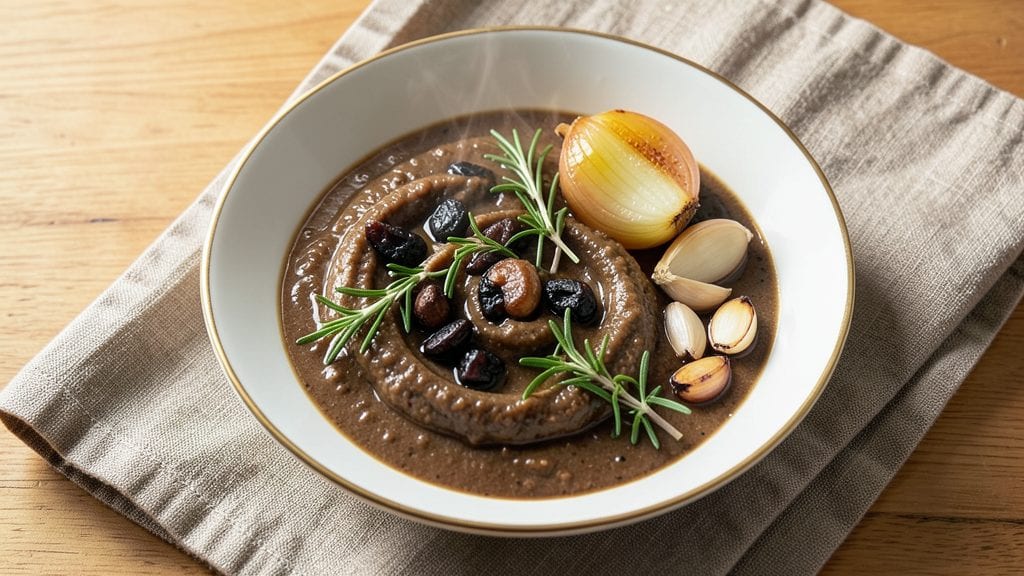
This vegan mushroom broth paste is the secret weapon I’ve been using to transform ordinary soups, stews, and sauces into umami-packed masterpieces.
Standing on a step stool in my grandmother’s kitchen in Sicily, I first learned how mushrooms could turn simple dishes into something extraordinary—now I’m sharing that magic with you.
The deep, earthy flavor develops as you simmer dried mushrooms and aromatics into a thick, concentrated paste that’s perfect for adding depth to any recipe.
What makes this recipe special is how versatile it is—just a spoonful transforms bland broths into rich, complex flavors, or elevates sauces with an instant umami boost. It’s foolproof, too: no fancy techniques, just dried mushrooms, onions, garlic, and a few pantry staples.
The best part? It keeps for months in the freezer, so you’ll always have a flavor powerhouse on hand for quick meals.
Imagine a restaurant-quality tomato soup with an extra layer of savory richness, or a risotto that tastes like it simmered all day. This paste does the work for you, delivering that professional touch without the effort.
Whether you’re whipping up a weeknight dinner or prepping for a big meal, this is the one ingredient that’ll make everything taste better.
Ready to level up your cooking? Let’s make this umami bomb—your pantry (and taste buds) will thank you.
Ingredients for mushroom broth paste
Nine simple ingredients transform into a flavor powerhouse for your pantry.
| Ingredient | Amount | Notes |
|---|---|---|
| Dried Porcini Mushrooms 🍄 | ½ cup | Rehydrated in hot water |
| Dried Shiitake Mushrooms 🍄 | ½ cup | Rehydrated in hot water |
| Yellow Onion 🧅 | 1 whole | Chopped into small pieces |
| Garlic Cloves 🧄 | 4 cloves | Peeled and smashed |
| Fresh Thyme Leaves 🌿 | 1 tbsp | Or 1 tsp dried thyme |
| Fresh Rosemary 🌿 | 1 tbsp | Chopped finely |
| Extra-Virgin Olive Oil 🫒 | ¼ cup | High-quality for richness |
| Vegetable Broth 💧 | 1 cup | Low-sodium preferred |
| White Wine Vinegar 🍷 | 1 tbsp | For brightness |
| Sea Salt 🧂 | 1 tsp | Fine grain preferred |
The mushrooms are the heart of this paste—porcini and shiitake give the deepest umami flavor, but any dried mushrooms (like cremini or oyster) work too. Trader Joe's and Whole Foods often have great bulk dried mushroom bins, but the tiny packages at the grocery store are fine too. Just make sure they're not stale—fresh mushrooms should smell earthy, not musty. I always soak mine in hot water for 20 minutes before using, but you can also rehydrate them directly in the pot. The extra-virgin olive oil matters here—skip the cheap stuff. A good quality oil makes the paste taste richer and more complex.
No porcini? Dried cremini mushrooms at double the amount work in a pinch. Fresh mushrooms? Use 1 cup chopped fresh mushrooms plus 1 tsp mushroom powder if you have it. Short on wine vinegar? Lemon juice or apple cider vinegar both work. The thyme and rosemary can be swapped for other herbs like bay leaves or sage—just adjust to taste. For extra depth, add a pinch of smoked paprika. This paste is so versatile that you can even blend it into hummus or pesto for a savory twist. The key is to taste as you go—this is where the magic happens.
Store the paste in an airtight container in the fridge for up to 2 weeks or freeze it for 6 months. I like to portion it into ice cube trays so I can grab just what I need for a recipe. It thickens as it cools, so add a splash of water or broth when you're ready to use it. A little goes a long way—start with 1 tsp per serving and adjust to taste. This paste is your new secret weapon for adding restaurant-quality depth to any dish.
Why You'll Love This Recipe
- No-Waste Magic: I swear by this trick—soak those dried mushrooms in hot water, then blend the liquid with the softened shiitakes. No scraps left behind, just pure umami gold in a jar.
- Deep Umami Bang: That porcini-soaked water? It’s like liquid sunshine for savory dishes. The shiitakes add meaty texture, while the thyme ties it all together—earthy, rich, and impossible to resist.
- Pantry Powerhouse: I keep this paste in my freezer for lazy days. Toss it into pasta, stir it into grains, or slather it on grilled meats—it’s my secret weapon for turning simple meals into something special.
- Budget-Friendly Luxury: Dried mushrooms last forever, and a little goes a long way. This paste costs pennies to make but tastes like a fancy restaurant’s secret—honestly, I’d pay double if I had to buy it.
Step-by-step instructions for mushroom broth paste
This rich, concentrated paste delivers deep umami flavor to any dish with minimal effort.
Rehydrate the Dried Mushrooms
Place the 0.5 cup dried porcini mushrooms and 0.5 cup dried shiitake mushrooms in separate heatproof bowls. Pour just enough hot water (not boiling) over each to cover completely—about 1 cup per bowl. Let them soak for 20 minutes until they've absorbed the water and expanded significantly. You'll notice they'll swell to about 3 times their original size, becoming soft and pliable.
Drain the mushrooms, reserving the soaking liquid for later use. The mushrooms should now be tender enough to handle easily with your fingers. If any pieces remain particularly tough, give them a quick chop with a knife. This rehydration step is crucial—it unlocks the mushrooms' concentrated flavor that will define your paste.
Sauté Aromatics in Olive Oil
Heat the 0.25 cup extra-virgin olive oil in a medium saucepan over medium heat. Add the chopped 1 whole yellow onion and cook for 5 minutes until softened and translucent. You'll see the onions release their moisture and begin to caramelize slightly at the edges.
Add the peeled and smashed 4 cloves garlic, 1 tbsp fresh thyme leaves, and 1 tbsp finely chopped fresh rosemary to the pan. Stir for 1 minute until the garlic becomes fragrant and the herbs release their aromatic oils. The kitchen should fill with a warm, earthy scent—this is your first indication that the flavor foundation is building.
Combine All Ingredients and Simmer
Add the rehydrated mushrooms (both porcini and shiitake), the reserved mushroom soaking liquid, 1 cup vegetable broth, and 1 tbsp white wine vinegar to the saucepan. Stir well to combine all ingredients. Bring the mixture to a gentle simmer over medium heat, then reduce to low heat and let it cook uncovered for 20 minutes.
During this time, you'll notice the mixture reduce slightly and develop a rich, earthy aroma. Stir occasionally to prevent sticking. The vinegar will add brightness that balances the deep umami flavors. When the mixture has reduced by about one-third and becomes quite thick, it's ready for the final step.
Blend and Season
Transfer the cooked mixture to a blender or food processor. Add the 1 tsp sea salt and blend until completely smooth. You may need to scrape down the sides once or twice to ensure everything is incorporated. The paste should have a thick, almost paste-like consistency—similar to hummus but with a more complex mushroom flavor profile.
Taste and adjust the seasoning if needed. You can add a pinch more salt or a splash of water if the paste is too thick. The finished product should be rich, earthy, and deeply flavorful. This concentrated paste will keep in the refrigerator for up to 2 weeks or can be frozen for longer storage—perfect for adding depth to soups, stews, and sauces.
Pro Tips For Making Mushroom Broth Paste
- Soak Mushrooms Separately: Porcini and shiitake release flavor at different speeds—soak the porcini first (20 minutes in hot water), then add shiitake (10 minutes). The porcini’s deep umami needs more time to wake up, while shiitake can get bitter if over-soaked. I learned this after a batch tasted one-note.
- Sweat Onions Low: Caramelize the onion until it’s almost golden—just shy of browning—then add garlic and thyme. Stopping early keeps the paste from tasting bitter, and the texture stays silky. My first few attempts burned the garlic, ruining the whole thing.
- Blend with Liquid: Never blend dried mushrooms straight—add at least ½ cup of their soaking liquid (or broth) to the food processor. Without moisture, you’ll end up with a gritty, uneven paste that won’t stick together. Trust me, your future risotto will thank you.
- Strain Twice: After simmering the aromatics, strain through a fine-mesh sieve twice—first to catch big bits, then a cheesecloth for the fine powder. The second strain removes the last of the fibrous texture that makes paste taste dull. It’s tedious, but the result is worth it.
Storing and reheating this mushroom broth paste
Refrigerator Storage
Store your mushroom broth paste in an airtight glass container with a lid—I love using Le Parfait glass jars for their tight seal. Keep it in the fridge for up to 2 weeks, but I always taste it before using after a week to ensure peak flavor.
The paste will thicken as it cools, so add a splash of water or broth when ready to use. Trust me, the first time you pull this out and stir it into a simple tomato soup, you'll wonder how you ever cooked without it. 💫
Freezer Storage
For long-term storage, portion the paste into silicone ice cube trays or small airtight containers. Freeze for up to 6 months—this is perfect for meal prep when you know you'll need it later.
When ready to use, thaw overnight in the fridge or quickly in a bowl of warm water. I've even microwaved frozen portions for 10 seconds to soften before adding to hot dishes. The texture might separate slightly after freezing, but a quick stir brings it back together beautifully.
Thawing Techniques
If you're in a hurry, place the frozen paste in a heatproof bowl and set it in a pot of simmering water for 3-5 minutes. This gentle heat method preserves texture better than microwaving.
For best results, always thaw in the fridge overnight—this gives the paste time to reabsorb moisture evenly. I've found that even partially thawed paste works well in soups and sauces, where it can simmer and blend seamlessly with other ingredients.
Reviving Thick Paste
If your paste has thickened too much after storage, simply add 1-2 teaspoons of water or vegetable broth and stir vigorously. The paste should return to its perfect spreadable consistency. For extra richness, I sometimes add a drizzle of extra-virgin olive oil—about ½ teaspoon—to restore that velvety texture.
This technique works wonders when you've stored the paste for its maximum shelf life and need to bring it back to life for a special dish.
Portion Control
Use 1 teaspoon of paste per serving as a starting point—this adds incredible depth without overpowering. For heartier dishes like stews or risottos, increase to 1-2 tablespoons. I keep a small jar in my fridge just for quick use, while the larger batches go in the freezer.
This way, I always have the perfect amount ready when inspiration (or hunger) strikes. The beauty of this paste is that a little goes a long way, making it incredibly economical too. 💡
Labeling Matters
Always label your containers with the date and contents—trust me, you'll forget what's in that jar after a few months! I use a whiteboard label maker for clear, smudge-proof labels. This paste is so versatile that you might forget which dish you used it in last time.
Keeping track helps you experiment with new recipes without worrying about what's lurking in your freezer. A well-labeled pantry makes cooking adventures much more enjoyable. ✨
Nutrition facts
Frequently asked questions
Can I use fresh mushrooms instead of dried ones?
Yes! For fresh mushrooms, use 1 cup chopped cremini or shiitake mushrooms plus 1 teaspoon mushroom powder (if available) to mimic the concentrated flavor. Fresh mushrooms won't have the same depth, but they'll still add great umami. Just simmer them for 10 minutes longer to intensify their flavor before blending.
How do I know when the paste is ready?
The paste is done when it reduces by about one-third and becomes thick enough to coat the back of a spoon. It should smell rich and earthy, with no raw mushroom taste. If it's still too thin, simmer uncovered for another 5 minutes. The texture should be smooth and spreadable, like a thick hummus.
What are the best dishes to use this paste in?
This paste shines in soups, stews, risottos, and sauces. Try adding 1 teaspoon to tomato soup or pasta sauce for instant depth. For risottos, stir in 1 tablespoon during the final cooking stage. It also works beautifully in vegan Bolognese or even as a base for gravies. The possibilities are endless!
Can I make this paste without vinegar?
Yes, but the vinegar adds brightness that balances the deep umami flavors. If you skip it, use ½ teaspoon lemon juice or ¼ teaspoon citric acid instead. Without acidity, the paste may taste slightly flat. For a richer alternative, add ½ teaspoon soy sauce or miso paste during blending.
Why did my paste separate after freezing?
Freezing can cause oils and water to separate, but this is normal! Simply stir vigorously to recombine. For a smoother texture, add 1 teaspoon warm water or broth and blend briefly. The flavor won't be affected—just the texture. This happens with all homemade pastes, so don't worry!