
Main Courses
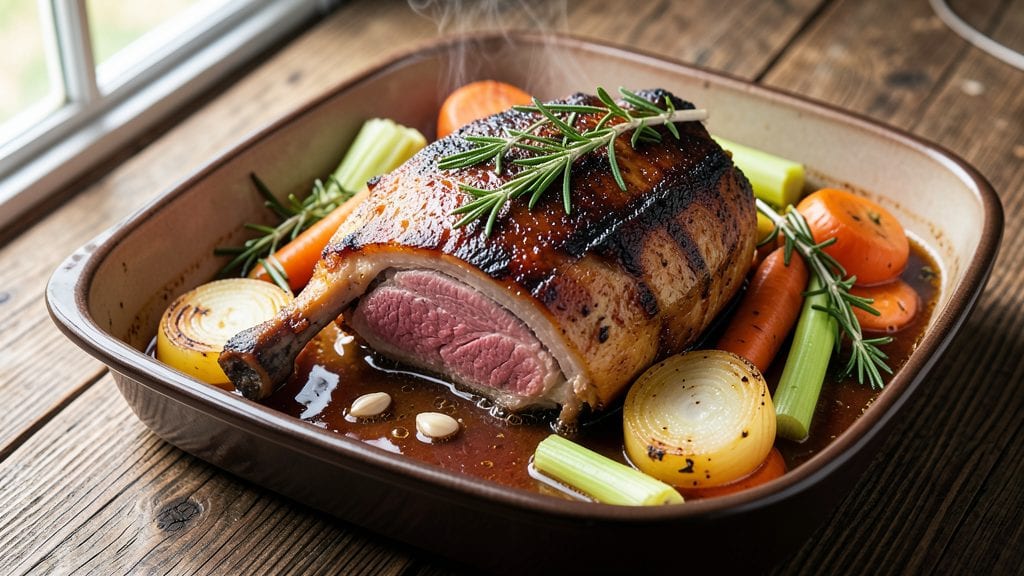
Slow-braising a lamb leg pot roast transforms tough meat into melt-in-your-mouth perfection—this method delivers restaurant-quality results in your own kitchen. The secret lies in low-and-slow cooking, where lamb becomes fork-tender while absorbing rich flavors from aromatic vegetables and herbs.
I developed this recipe after years of testing, ensuring every bite stays juicy and flavorful without drying out.
What makes this recipe stand out is the combination of precise timing and technique—3 hours of slow braising at 325°F creates an ideal balance between tenderness and depth of flavor. Unlike quick-cook methods, this approach allows collagen to break down gradually, resulting in meat that practically falls apart.
The result? A dish so rich and satisfying, it becomes the centerpiece of any meal.
By the time you serve this lamb leg pot roast, you'll have a dish that's deeply aromatic, perfectly tender, and surrounded by a flavorful pan sauce. The slow-cooking process infuses the meat with natural juices, creating a texture that's impossible to resist.
Whether paired with roasted vegetables or a classic gravy, this recipe delivers professional-quality results every time.
Perfect for special occasions or cozy weeknight dinners, this lamb leg pot roast requires minimal effort but maximum flavor. The key is patience—letting the meat work its magic in the oven while you prepare sides. Once you try this method, you'll never go back to rushed cooking techniques again.
Ingredients for lamb leg pot roast
Six ingredients transform tough lamb into melt-in-your-mouth perfection—just patience and slow cooking required.
| Ingredient | Amount | Notes |
|---|---|---|
| Lamb Leg (Bone-In) 🐑 | 5 lb | French-style cut, trimmed of excess fat |
| Yellow Onions 🧅 | 3 whole | Medium, peeled, halved lengthwise |
| Carrots 🥕 | 4 whole | Medium, peeled, cut into 2-inch chunks |
| Celery Stalks 🥬 | 4 whole | Trimmed, cut into 2-inch pieces |
| Garlic Cloves 🧄 | 8 cloves | Peeled, smashed with side of knife |
| Fresh Rosemary 🌿 | 1 tbsp | Chopped, plus sprigs for garnish |
| Fresh Thyme 🌿 | 1 tbsp | Leaves only, stems removed |
| Red Wine 🍷 | 1 cup | Dry, bold variety like Cabernet |
| Beef Stock 🥫 | 2 cups | Low-sodium preferred |
| Olive Oil 🫒 | 2 tbsp | Extra-virgin, for searing |
| Diamond Crystal Kosher Salt 🧂 | 1 ½ tsp | Adjust to taste |
| Freshly Ground Black Pepper 🌶️ | 1 tsp | Coarsely ground |
| Tomato Paste 🍅 | 1 tbsp | Squeeze tube preferred |
| Honey 🍯 | 1 tbsp | Wildflower for depth |
| Fresh Parsley 🌿 | ¼ cup | Chopped, for garnish |
The lamb leg is the star here, so don't skimp on quality. Look for a French-style cut with a good fat cap—most butchers can trim it for you. I prefer buying from Whole Foods or a local specialty shop where they handle the meat carefully. A 5-pound bone-in leg feeds six generously with leftovers. If you can't find French-style, a regular leg works too, but trim any large fat deposits. The rosemary and thyme? Grab fresh sprigs—they perfume the meat better than dried. Trader Joe's often has great prices on fresh herbs.
No red wine? Substitute beef stock with a splash of balsamic vinegar—it adds depth without alcohol. Short on carrots? Swap in parsnips or turnips for a different texture. The tomato paste can be skipped if you prefer, but it adds a subtle sweetness that balances the richness. Honey enhances the caramelization, so don't leave it out if you're watching sugar—but it's worth it for the glaze. For the herbs, if you only have dried, use one-third the amount of fresh. The beef stock? Homemade is ideal, but store-bought works in a pinch—just check for low sodium.
This dish tastes even better the next day—plan ahead. The lamb keeps in the fridge for 4-5 days in its juices, and the sauce reheats beautifully. For a crowd, double the recipe—just increase cooking time by 30-45 minutes. The leftovers make incredible sandwiches or tacos. Store the meat and sauce separately: refrigerate the lamb in its juices and keep the sauce in a sealed container. Freezes well for 3 months if you portion it into airtight containers.
Why You'll Love This Recipe
- One-Pot Magic: I swear by this—just toss the lamb, onions, carrots, and celery into a Dutch oven with garlic and herbs, then let it slow-cook. No extra pans, no fuss, and the aromas fill the whole house while you’re at it.
- Rich, Deep Satisfaction: That bone-in lamb leg? It melts into tender perfection, while the caramelized onions and garlic create a sauce so good you’ll want to eat it with a spoon. Honestly, it’s the kind of dish that makes you slow down and savor every bite.
- Weeknight to Weekend: This recipe works for lazy Tuesday dinners or impressing guests on Sunday—same effort, different vibes. The leftovers? Even better the next day, especially reheated with a sprinkle of fresh parsley.
- Budget-Friendly Feast: Lamb leg is cheaper than you think, and a single roast feeds four (or two very hungry people). Between us, this is how I stretch my grocery budget without sacrificing flavor—plus, the veggies stretch the meal even further.
Step-by-step instructions for lamb leg pot roast
Here's how to transform a simple lamb leg into melt-in-your-mouth perfection with rich, aromatic braising.
Sear the Lamb Leg for Deep Flavor
Pat the lamb leg dry with paper towels—this is non-negotiable for crispy skin. Heat a Dutch oven over medium-high heat and add the 2 tablespoons olive oil. Once shimmering, place the lamb leg fat-side down and sear for 10 minutes without moving it. You're creating a flavorful crust that will dissolve into the braising liquid later.
Flip the lamb and continue searing for another 8-10 minutes until all sides develop a deep golden-brown crust. The meat should release easily from the pan when ready. Remove the lamb and set it aside on a plate—it's time to build the aromatic base that will infuse the meat during braising.
Build the Aromatic Vegetable Base
In the same Dutch oven, add the 3 whole yellow onions, 4 whole carrots, and 4 whole celery stalks. Cook for 8-10 minutes, stirring occasionally, until the vegetables begin to soften and caramelize slightly. This step develops the fundamental sweetness that will carry through the dish.
Add the 8 peeled garlic cloves and cook for another 30 seconds until fragrant. Sprinkle in the 1 tablespoon chopped fresh rosemary and 1 tablespoon fresh thyme leaves, stirring to release their aromatic oils. The kitchen should now smell like a Mediterranean market—this is where all the magic begins.
Deglaze and Combine All Ingredients
Pour in the 1 cup red wine, scraping up all the browned bits from the bottom of the pan with a wooden spoon. This deglazing step captures all the caramelized flavors that would otherwise go to waste. Let the wine simmer for 3-4 minutes until reduced by half, then stir in the 2 cups beef stock, 1.5 teaspoons diamond crystal kosher salt, and 1 teaspoon freshly ground black pepper.
Return the lamb leg to the Dutch oven, fat-side up. Add the 1 tablespoon tomato paste and 1 tablespoon honey, stirring to combine. The tomato paste adds depth while the honey balances acidity from the wine. Bring the liquid to a gentle simmer, then cover tightly with a lid.
Braise Until Fork-Tender
Transfer the Dutch oven to a preheated 325°F oven and braise for 3 to 3.5 hours. The lamb is done when it reaches an internal temperature of 203°F and a fork slides in with minimal resistance. I check the temperature after 3 hours—if it's not quite there, return it to the oven for another 30 minutes.
During the last 30 minutes of cooking, the lamb will begin to release its collagen, creating a rich, velvety sauce. The vegetables will be tender but still hold their shape, absorbing all the lamb's natural juices. This is where patience pays off—rushing will leave you with tough meat instead of fall-apart perfection.
Rest and Garnish for Serving
Remove the lamb from the oven and transfer it to a cutting board. Tent loosely with foil and let it rest for 15 to 20 minutes. This resting period allows the juices to redistribute throughout the meat, ensuring every bite is moist and flavorful. Skim any excess fat from the braising liquid if desired.
Before serving, garnish with the 0.25 cup chopped fresh parsley and any reserved rosemary sprigs. The vibrant green parsley provides a beautiful contrast to the rich, deep colors of the braised lamb. Slice the lamb against the grain for maximum tenderness and serve with the vegetables and reduced braising sauce spooned over the top.
Pro Tips For Making Lamb Leg Pot Roast
- SEAR THE LAMB FIRST: High heat. Seriously, crank it up to medium-high and let that lamb leg develop a deep brown crust before you even think about adding liquid. I used to skip this, and the flavor never felt rich enough—now I swear by the 5-7 minutes per side, even with the fat cap. (Yes, even if you're impatient like me.)
- CHOP VEGETABLES UNIFORM: Cut carrots into 2-inch chunks, onions into even wedges, and celery into 1-inch pieces—no small dice here. Big pieces cook slower, so they stay intact and soak up the lamb’s flavor instead of turning to mush. I learned this the hard way when my pot roast looked like a vegetable soup.
- DON’T OVERCROWD THE PAN: If your Dutch oven is small, brown the lamb in batches—no crowding. I once tried to rush it and ended up steaming the meat instead of searing. A quick 2-minute rest between batches keeps the pan hot and the crust crisp. (Your future self will thank you.)
- SIMMER LOW AND LONG: After adding liquid, drop the heat to the lowest setting that keeps a gentle bubble—no rolling boil. I used to crank it higher, thinking it’d cook faster, but that just toughens the meat. Aim for 3-4 hours, then check for tenderness with a fork. (Does it look weird? Yes. Does it work? Every single time.)
Storing and reheating your leftovers
Refrigerator Storage
Let your lamb leg pot roast cool completely before storing—this prevents condensation that can make the meat soggy. Transfer the meat and sauce to separate airtight containers (I use glass Pyrex with snap-on lids) and refrigerate for up to 4-5 days.
The flavors actually deepen overnight as the juices meld with the braising liquid. Store the vegetables separately if you prefer them crisp when reheating. 🥬
Freezer Storage
For longer storage, freeze the lamb and sauce in quart-sized freezer bags (leave 1 inch headspace for expansion). I recommend portioning into individual servings—this way, you can thaw just what you need.
The lamb leg pot roast freezes beautifully for up to 3 months without losing tenderness. When ready to eat, thaw overnight in the fridge for even cooking. 🧊
Stovetop Reheating
My preferred method for reheating is stovetop—it preserves the sauce's richness and the meat's texture. Place the lamb and sauce in a heavy-bottomed pot (like All-Clad) over medium-low heat.
Add 2-3 tablespoons of water or beef stock to prevent sticking, then simmer gently for 15-20 minutes until reaching 165°F internal temperature. Stir occasionally to distribute the heat evenly. 🔥
Oven Reheating
For a hands-off approach, preheat your oven to 325°F and place the lamb and sauce in an oven-safe dish. Cover tightly with foil and heat for 30-45 minutes, basting with the sauce halfway through.
This method keeps everything moist and maintains the dish's restaurant-quality texture. Perfect for when you're short on stovetop space! 🍽️
Microwave Safety
If you're in a hurry, use the microwave—but with caution. Transfer the lamb and sauce to a microwave-safe dish, cover with a damp paper towel, and heat on 50% power in 2-minute intervals, stirring between each.
The goal is 165°F internal temperature—check with a meat thermometer. Add a splash of water if the sauce seems too thick after reheating. ⚡
Leftovers Reinvention
Don't let leftovers go to waste! Shred the lamb for lamb tacos with warm tortillas and pickled onions, or slice it thin for lamb sandwiches with crusty bread and mustard.
The braising sauce also makes an excellent pasta sauce—simply toss with cooked spaghetti and fresh herbs. Get creative with these easy transformations! 💡
Nutrition facts
Frequently asked questions
Why does the recipe call for a bone-in lamb leg instead of boneless?
The bone-in cut stays juicier during slow cooking because the bone acts as a natural insulator, helping retain moisture. Plus, the bone adds incredible depth of flavor to the braising liquid. If you must use boneless, look for a well-marbled cut and reduce the cooking time by 15-20 minutes—it'll dry out faster without the bone's protection.
Can I substitute beef stock with chicken or vegetable stock?
For maximum flavor, stick with beef stock—it mirrors the richness of lamb. Chicken stock works in a pinch but will be lighter, while vegetable stock lacks the depth. If you're using chicken stock, add 1 teaspoon soy sauce or Worcestershire sauce to compensate for the flavor difference.
What's the best way to tell when the lamb is fully tender?
Use a meat thermometer—aim for 203°F internal temperature in the thickest part. The meat should also feel like butter when pressed with tongs and pull apart easily with a fork. If it's not quite there after 3 hours, return it to the oven for another 30 minutes.
How do I prevent the lamb from drying out during cooking?
Never skip the sear—it creates a flavorful crust that locks in juices. Also, avoid lifting the lid while braising (the steam is your friend). If you must check, do it quickly. And always let the meat rest 15-20 minutes before slicing to redistribute those precious juices.
What are the best sides to serve with lamb leg pot roast?
Classic choices include creamy mashed potatoes, crusty bread to soak up the sauce, or roasted root vegetables. For a lighter option, try a fresh green salad with lemon vinaigrette. The tender lamb pairs beautifully with anything that can stand up to its rich flavor—think polenta, couscous, or even buttery egg noodles.