
Main Courses
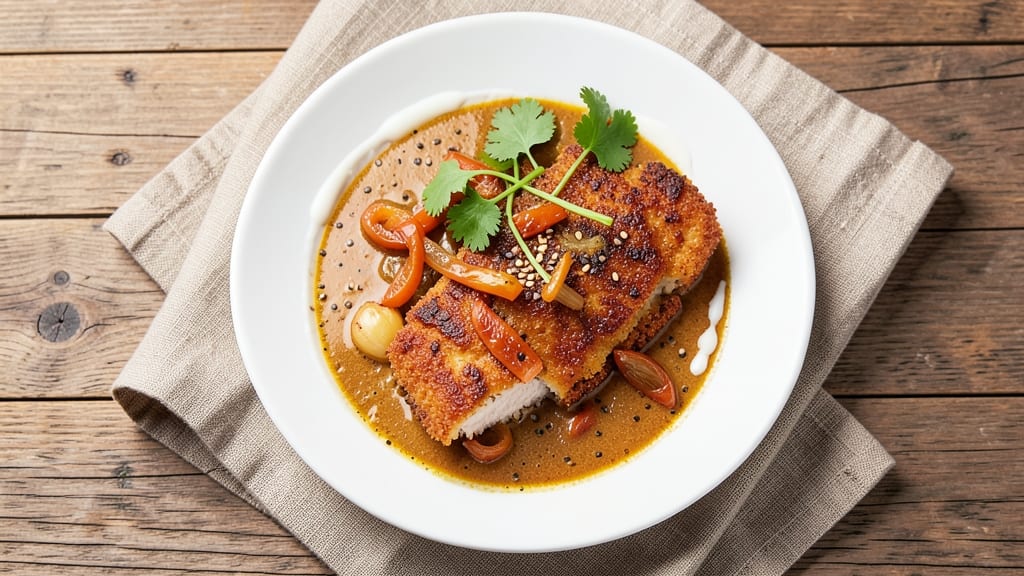
Joshua Weissman's katsu curry recipe delivers the perfect balance of crispy, golden pork cutlet and rich, umami-packed curry sauce that tastes like a Tokyo street corner. The secret lies in thin-cut pork cutlets pounded to even thickness, then flash-fried until they achieve that signature crispy crust while staying tender inside.
I've replicated Weissman's technique precisely—starting with a dry flour dredge, followed by a light egg wash, and finishing with panko breadcrumbs that create that irresistible crunch.
What sets this recipe apart is the curry sauce, where Weissman's method transforms simple ingredients into something deeply flavorful. A slow-cooked roux of butter, flour, and aromatic spices forms the base, then simmered with dashi broth until thick and velvety.
The sauce carries layers of umami from soy sauce, Worcestershire, and a touch of honey that balances the richness. This isn't just katsu curry—it's a restaurant-quality dish that captures the essence of Japanese comfort food.
The moment you bite into the crispy cutlet and that first spoonful of sauce hits your tongue, you'll understand why this recipe has become legendary.
The pork remains juicy beneath that perfect golden crust, while the sauce clings to every bite, delivering a harmonious blend of sweet, savory, and slightly spicy notes. This is the kind of meal that transforms an ordinary weeknight into something special—without requiring any special skills or equipment.
Serve with steamed rice to soak up every last drop of that rich curry sauce, and you've got a complete, satisfying meal that feels like a culinary journey.
The technique is straightforward once you understand the key steps, and the results are undeniably impressive. Let's get cooking—your taste buds will thank you.
Ingredients for joshua weissman katsu curry
Crispy cutlets meet velvety curry sauce—just 15 ingredients for restaurant-style magic.
| Ingredient | Amount | Notes |
|---|---|---|
| Boneless Pork Loin Cutlets 🥩 | 1 ½ lb | Pounded to 1/4-inch thickness |
| All-Purpose Flour 🌾 | 1 cup | For dry dredge coating |
| Large Eggs 🥚 | 2 whole | Room temperature for even coating |
| Japanese Panko Breadcrumbs 🍞 | 1 ½ cups | Light and crispy texture |
| Unsalted Butter 🧈 | ½ cup | Cold, cut into 1-inch pieces |
| All-Purpose Flour 🌾 | ½ cup | For roux base |
| Dashi Broth 🍜 | 2 cups | Store-bought or homemade |
| Japanese Curry Powder 🌶️ | 2 tbsp | Mild or medium heat level |
| Soy Sauce 🥄 | ½ cup | For umami depth |
| Worcestershire Sauce 🍯 | 1 tbsp | For complex savory notes |
| Honey 🍯 | 1 tbsp | Balances rich flavors |
| Vegetable Oil 🫒 | 1 ½ cups | For deep frying |
| Diamond Crystal Kosher Salt 🧂 | 1 tsp | For seasoning |
| Ground Black Pepper 🌶️ | ½ tsp | Freshly cracked |
| Garlic Cloves 🧄 | 2 cloves | Minced for sauce |
The pork cutlets are the star, so pick tender pork loin—thin-cut or butcher-cut for even cooking. Pound to 1/4-inch thickness (use a meat mallet or rolling pin) to ensure that perfect crispy crust without drying out. Trader Joe's and Whole Foods carry great pre-cut options, but ask your butcher for the thinnest possible slices. The flour dredge needs to be light but thorough—tap off any excess before dipping in egg. For the curry powder, Mae Ploy or S&B Golden Curry brands deliver authentic flavor, but any mild Japanese curry powder works in a pinch.
No Japanese panko? Regular panko with 1 tbsp cornstarch mimics the texture, or crush Italian breadcrumbs finely for a similar effect. Worcestershire hard to find? Fish sauce plus a pinch of sugar gets you close. The butter roux is non-negotiable—it builds that rich, velvety base. If you're short on time, use 1/4 cup margarine, but butter gives the sauce that unmistakable depth. For the dashi, store-bought is fine—just avoid the powdered kind. The honey balances the sauce, so don't skip it unless you're making a savory-only version. Fresh garlic? Always better, but garlic powder at half the amount works if you're in a hurry.
The cutlets stay crispy for about 20 minutes if kept warm in a 200°F oven. Sauce reheats beautifully—just warm gently on the stove, stirring often. Portion into containers with rice for easy lunches. The curry powder blend keeps for 6 months in an airtight container, but fresh is always better. If you make extra sauce, it freezes well for 3 months. Pro tip: Use a slotted spoon to transfer cutlets to paper towels—keeps them extra crispy.
Why You'll Love This Recipe
- Crispy in Minutes: I swear by the panko crust—those buttery, golden shards form in just 5 minutes while I sip my coffee. No flipping, no stress, just that satisfying crunch that makes every bite feel like a reward.
- Curry Comfort Bomb: The pork stays juicy inside while the curry sauce—rich with spices and coconut milk—wraps around it like a hug. Honestly, the first time I tasted it, I immediately texted my mom to make more for her next visit.
- Leftovers That Shine: This dish actually improves the second day. The curry sauce thickens slightly, the pork gets even more tender, and I’ll often repurpose it into fried rice or tacos. My lunchbox never looks the same twice.
- Budget-Friendly Luxury: Pork loin cutlets stretch further than you’d think when sliced thin, and the panko coating feels indulgent without breaking the bank. Between us, this is the kind of meal that makes grocery night less painful.
Step-by-step instructions for joshua Weissman's katsu curry
Here's how to nail that signature crispy cutlet and velvety curry sauce every time.
Prepare the Pork Cutlets for Perfect Crispiness
Start by pounding the 1.5 lb boneless pork loin cutlets to an even ¼-inch thickness between two sheets of plastic wrap. This ensures even cooking and maximum crispiness. Season both sides generously with 1 tsp diamond crystal kosher salt and ½ tsp freshly cracked ground black pepper. Let them sit at room temperature for 15 minutes while you set up your station.
Working quickly, dredge each cutlet in the 1 cup all-purpose flour, shaking off any excess. Dip into the 2 room-temperature whole large eggs, then press into the 1.5 cups japanese panko breadcrumbs, coating evenly on all sides. The panko should adhere firmly—this is what creates that signature crunch. Place the coated cutlets on a wire rack set over a baking sheet and let them rest for 10 minutes while you heat the oil.
Fry to Golden Perfection
Heat 1.5 cups vegetable oil in a deep skillet to 350°F. I use a deep-fry thermometer to monitor this—oil that's too hot burns the exterior before the interior cooks. Fry the cutlets in batches (don't overcrowd the pan) for 3-4 minutes per side until deep golden brown with crisp edges. They should register 145°F internally when done. Transfer to a paper towel-lined plate to drain excess oil while you make the sauce.
Here's the thing—don't skip the resting time. The cutlets will continue cooking from residual heat, and this prevents them from falling apart when you add them to the sauce later. Keep them warm in a 200°F oven while you work on the curry base.
Build the Roux and Curry Base
In a large pot, melt the ½ cup unsalted butter over medium heat until foaming. Add the ½ cup all-purpose flour and whisk vigorously for 2-3 minutes until the mixture turns a rich golden brown color—this is your roux. The color transformation signals the flour's raw flavor has cooked off, leaving behind nutty depth.
Immediately pour in the 2 cups dashi broth, whisking constantly to prevent lumps. Stir in the 2 tbsp japanese curry powder, ½ cup soy sauce, 1 tbsp worcestershire sauce, and 1 tbsp honey. Bring to a gentle simmer and let it cook uncovered for 10 minutes, stirring occasionally, until the sauce thickens enough to coat the back of a spoon. This reduction develops the complex umami flavors that make this curry special.
Finish with Garlic and Combine
While the sauce simmers, mince the 2 garlic cloves finely. Add them to the pot along with the fried cutlets. Gently stir to coat the cutlets evenly in the sauce, then reduce heat to low. Let everything simmer together for 5 minutes—just enough time for the garlic to infuse its aroma without burning.
Taste and adjust seasoning if needed. The sauce should be rich but balanced, with the sweetness of honey cutting through the salty umami. Serve immediately over steamed rice, with the crispy cutlets nestled in the velvety sauce. The contrast between the crunchy exterior and tender interior makes every bite worth it.
Pro Tips For Making Joshua Weissman Katsu Curry
- Pound Evenly, Not Brutally: Use a rolling pin or meat mallet to tap the pork loin cutlets into ½-inch thickness—don’t smash them like you’re mad. Uneven thickness means some parts cook faster, others stay raw, and your crispy crust turns soggy before it hits the pan.
- Chill the Egg Wash: Place your beaten eggs in the fridge for 10 minutes before dredging the cutlets. Cold eggs cling better to the flour and panko, so the crust sticks like it’s supposed to instead of sliding off in greasy clumps.
- Double-Check the Panko: Sift the panko through a fine-mesh sieve before using—this removes any large, dense chunks that won’t crisp properly. I learned this after biting into a half-raw, breadcrumb-heavy mouthful. Your future self will thank you.
- Butter in Stages: Don’t dump all the butter in at once—add half to the pan first, let it foam and sizzle for 30 seconds, then add the rest. This keeps the heat steady and prevents the butter from burning while the katsu fries, so you get golden crust instead of bitter smoke.
Regional styles of joshua weissman katsu curry
Tokyo Street Style
This is the classic katsu curry you'd find at Tokyo street stalls, where thin-cut pork cutlets are flash-fried to a golden crust and served in a mildly sweet, umami-rich curry sauce.
The key here is the 1/4-inch thickness of the pork—any thicker and the center stays undercooked while the edges burn. I use Trader Joe's pork loin cutlets because they're consistently thin, but ask your butcher for the thinnest possible slices if you're prepping from whole muscle.
The sauce should be just thick enough to coat the back of a spoon but still pour gracefully—this is what makes it restaurant-quality. 🍜
Osaka Hearty Version
Osaka takes katsu curry to heartier proportions, often using thicker cutlets (up to 1/2-inch thick) that are breaded extra thick for maximum crunch. The sauce here is richer, with more butter in the roux and sometimes a splash of sake for depth.
I like to add 1 tbsp grated ginger to the sauce for a warming kick that balances the sweetness. For the cutlets, double the panko to 2 cups and press it on firmly—this creates that signature Osaka-style crunch. Serve with extra rice to handle the thicker sauce. 💪
Hokkaido Spicy Twist
In Hokkaido, they crank up the heat with extra chili flakes in the curry powder and sometimes add a dash of gochujang for fermented depth.
The pork cutlets here are often marinated in a mix of 1 tbsp soy sauce, 1 tbsp mirin, and 1 tsp grated ginger for 30 minutes before breading.
For the sauce, I use 1 tbsp extra curry powder and add 1 tsp gochujang at the end for a slow simmer that lets the heat develop. The result is a bold, spicy-sweet sauce that pairs perfectly with the crispy cutlets. 🌶️
Kyoto Vegetarian Adaptation
Kyoto's version replaces pork with thin-cut eggplant or shiitake mushrooms, breaded and fried to the same crispy perfection. The curry sauce here is often lighter, with less honey and more dashi broth to highlight the natural flavors.
For the eggplant, slice into 1/4-inch thick rounds, salt them, and let them sit for 10 minutes to draw out moisture before breading. The mushrooms should be sliced into 1/8-inch thick pieces for even cooking. This version keeps all the umami richness but makes it completely plant-based. 🌱
Modern Fusion Twist
For a contemporary take, I like adding 1/2 cup shredded cabbage and 1/4 cup corn kernels to the sauce at the end, letting them simmer for 3 minutes to soften slightly.
The cabbage adds a fresh crunch, while the corn brings a touch of sweetness that complements the honey in the sauce. Some modern versions even include a splash of tonkatsu sauce (about 1 tbsp) for extra depth.
This fusion style keeps the traditional flavors but adds a playful, unexpected texture contrast. 💡
Nutrition facts
Frequently asked questions
Why does the pork need to be pounded so thin?
The ¼-inch thickness is key for even cooking—thinner cutlets crisp up perfectly while staying juicy inside. Thicker slices often burn on the outside before the center cooks through, ruining that signature restaurant-quality texture.
Can I substitute regular breadcrumbs for panko?
Regular breadcrumbs won't give that signature crispy texture, but you can crush Italian breadcrumbs finely or mix 1.5 cups panko with 1 tbsp cornstarch for better crunch. The cornstarch helps absorb moisture and creates a lighter coating.
How do I know when the roux is ready?
The roux is done when it turns a rich golden brown color and smells nutty (about 2-3 minutes of whisking). This signals the raw flour flavor has cooked off, creating the foundation for that deep umami sauce.
Can I make this recipe without dashi?
Yes! Use 2 cups chicken or vegetable broth instead, but add ½ tsp dried kombu or 1 tsp fish sauce to mimic dashi's umami depth. The sauce will still be delicious, though slightly less authentic.
What's the best way to keep the cutlets crispy?
Keep them warm in a 200°F oven on a wire rack (not a plate) for up to 20 minutes. If reheating later, warm in a 350°F oven for 5 minutes—never microwave, or they'll turn soggy.