Main Courses
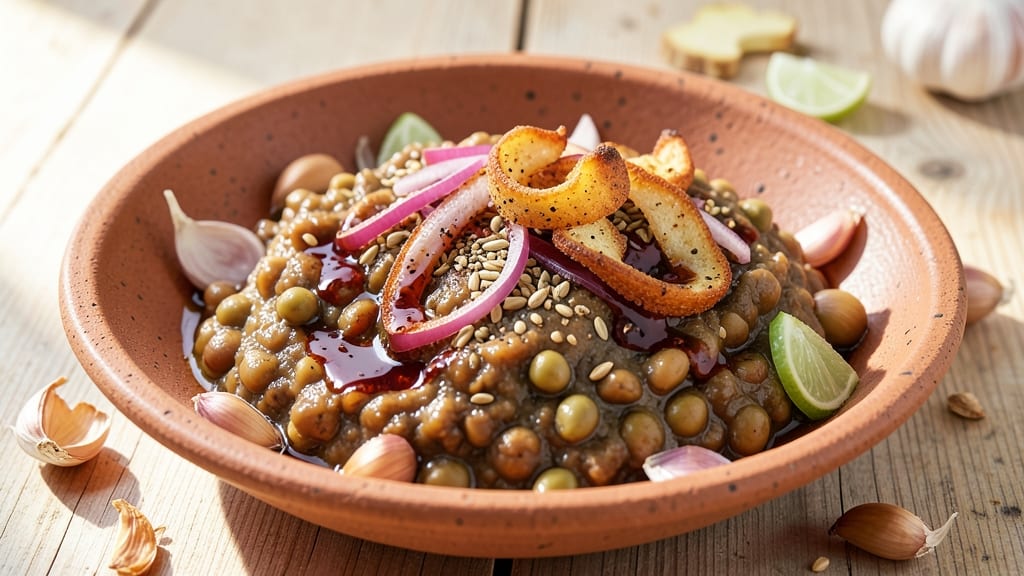
Creating an Ethiopian ful meda recipe with perfectly infused berbere transforms a simple lentil stew into a vibrant centerpiece of Ethiopian cuisine. This dish combines spiced fava beans with rich, aromatic berbere spice blend, creating a flavor profile that's both complex and deeply satisfying.
I first discovered this recipe during a visit to an Ethiopian restaurant, where the balance of spices and textures left a lasting impression.
The key to achieving authentic ful meda lies in the berbere spice blend, which requires precise toasting and grinding for maximum flavor. This recipe includes a traditional approach to preparing the fava beans—soaking, simmering, and blending—while maintaining their natural creaminess.
The dish pairs beautifully with injera, the spongy Ethiopian flatbread, but also works well with rice or crusty bread for those unfamiliar with traditional accompaniments.
What you'll end up with is a hearty, spiced lentil stew with tender fava beans, richly infused with berbere's signature blend of chili, garlic, ginger, and fenugreek. The stew's velvety texture and bold flavors make it a perfect main course for family gatherings or special occasions.
Each bite delivers layers of warmth and depth that reflect the soul of Ethiopian cooking.
This recipe includes tips for adjusting spice levels and preparing injera at home, ensuring you can fully experience the cultural richness of ful meda. Whether you're serving it to guests or treating yourself to a taste of Ethiopia, this dish delivers restaurant-quality results with a homemade touch.
Let's get started on creating this flavorful masterpiece.
Ingredients for ethiopian ful
Authentic Ethiopian flavors start with these carefully chosen ingredients for velvety ful meda.
| Ingredient | Amount | Notes |
|---|---|---|
| Dry Brown Lentils 🌾 | 1 ½ cups | Rinsed thoroughly before cooking |
| Dried Fava Beans 🌱 | 1 cup | Soaked overnight, peeled |
| Onion 🧅 | 1 whole | Yellow or red, chopped fine |
| Garlic Cloves 🧄 | 6 cloves | Peeled, minced for berbere blend |
| Fresh Ginger 🌿 | 2 tbsp | Grated finely for berbere blend |
| Red Chili Peppers 🌶️ | 4 whole | Dried, stemmed, for berbere blend |
| Fenugreek Seeds 🌾 | 1 tbsp | Toasted lightly for berbere blend |
| Ground Coriander 🌿 | 1 tbsp | Freshly ground preferred |
| Cardamom Pods 🌿 | 4 whole | Lightly crushed for berbere blend |
| Cinnamon Stick 🌿 | 1 whole | For simmering, removed before serving |
| Vegetable Oil 🫒 | ½ cup | For sautéing, neutral flavor preferred |
| Water 💧 | 6 cups | For soaking and cooking |
| Salt 🧂 | 1 ½ tsp | Diamond Crystal kosher preferred |
| Lemon Juice 🍋 | 2 tbsp | Freshly squeezed for finishing |
| Fresh Cilantro 🌿 | ¼ cup | Chopped, for garnish |
The berbere spice blend is the heart of this dish, so source ingredients thoughtfully. Ethiopian markets or specialty stores often carry pre-made berbere, but making it fresh ensures optimal flavor. For dried chilies, Penzeys or local spice merchants offer the best quality—look for vibrant red, not dull or faded. Fresh ginger and garlic should be firm and aromatic, while fenugreek seeds must be toasted lightly to avoid bitterness. The lentils and fava beans should be plump and free of debris; Bob's Red Mill or Trader Joe's carry excellent dried legumes. For the cinnamon and cardamom, Whole Foods bulk section provides the freshest options, and always buy whole spices whenever possible—they stay potent longer.
No Ethiopian market nearby? Substitute dried berbere with a blend of smoked paprika, cayenne, and coriander at a 1:1 ratio, but you'll lose some depth. Fresh ginger can be swapped for powdered ginger at half the amount, though texture will differ. For the fava beans, cannellini beans work in a pinch if soaked overnight, but texture won't be identical. The cinnamon stick can be omitted if unavailable, but it adds warmth that's hard to replicate. For the cilantro garnish, fresh parsley works equally well—just double the amount. If you're short on time, jarred berbere from Ethiopian specialty stores (like Berbere Spice Co.) is a reliable shortcut, though homemade always tastes superior.
Store dried spices in airtight containers away from light—they'll retain potency for up to 6 months. Cooked ful meda keeps well in the fridge for 4-5 days in an airtight container, though flavors deepen over time. For longer storage, freeze portions in glass containers with a layer of oil on top to prevent browning—thaw overnight in the fridge. The berbere blend itself can be made in advance and stored for 3 months in a sealed jar; grind fresh just before using for peak flavor. Always reheat gently on low heat to preserve the stew's velvety texture.
Why You'll Love This Recipe
- No-Soak Required: I’ll be real—soaking beans is a hassle. This ful skips it entirely. Just rinse the dried fava beans and lentils, toss them in a pot with onions, garlic, and ginger, and let them simmer. The lentils break down into that perfect creamy texture while the fava beans hold their shape—no waiting, no fuss.
- Earthy-Garlicky Magic: That first bite? Chef’s kiss. The ginger and garlic caramelize into something rich and warm, while the fava beans add a nutty depth. It’s not just a side—it’s the star, and honestly, I’ve seen grown adults fight over the last spoonful.
- Meal Prep MVP: Between us, this is my go-to for lazy Sundays. Make a big batch, and it keeps for days—better than day-old takeout. I’ll pack it in jars for work lunches or serve it cold over greens when I’m too tired to cook. The flavor only gets better as it sits.
- Pocketbook Hero: Lentils and fava beans are dirt cheap, and a single batch feeds four (or a very hungry me) for under $5. No fancy ingredients, no markups—just honest, satisfying food that doesn’t break the bank. My wallet and I both approve.
Step-by-step instructions for Ethiopian ful meda recipe
Master the art of this rich, spiced lentil stew with deeply infused berbere and tender fava beans.
Prepare the Berbere Spice Blend
In a dry skillet over medium heat, lightly toast the 1 tablespoon fenugreek seeds for 1 minute until fragrant. Remove immediately and set aside. In a clean spice grinder, combine the toasted fenugreek seeds with the 4 whole red chili peppers, 4 lightly crushed cardamom pods, 1 tablespoon ground coriander, 6 minced garlic cloves, and 2 tablespoons finely grated fresh ginger.
Grind into a fine powder, scraping down the sides as needed. The blend should resemble coarse sandpaper texture—this ensures proper flavor infusion without bitterness. Transfer to a small bowl and set aside. Real talk: don't skip the toasting step, as it deepens the nutty complexity of the fenugreek.
Sauté the Aromatics and Build the Base
Heat 0.5 cup vegetable oil in a large Dutch oven over medium heat until shimmering. Add the finely chopped whole onion and cook for 5-6 minutes until softened and translucent, stirring occasionally. You'll know it's ready when the onion releases its natural sweetness and begins to caramelize slightly at the edges.
Add the prepared berbere blend and stir vigorously for 1 minute to toast the spices and release their oils. This step develops the signature depth of ful meda. Immediately add the 1 whole cinnamon stick and continue cooking for another 30 seconds until the spices are fragrant and aromatic.
Cook the Lentils and Fava Beans
Add the 1.5 cups rinsed dry brown lentils and 1 cup peeled dried fava beans to the pot, stirring to coat evenly with the spice mixture. Pour in 6 cups water and bring to a boil over high heat. Once boiling vigorously, reduce heat to low, cover partially, and simmer for 45-50 minutes until the lentils are tender but still hold their shape.
The beans should be fork-tender with a slight resistance—this indicates perfect doneness. I check by tasting a lentil after 40 minutes to gauge doneness, adjusting time as needed. If the liquid reduces too quickly, add ½ cup water to maintain proper consistency. Stir occasionally to prevent sticking, especially during the first 15 minutes of cooking.
Season and Finish the Stew
Remove the cinnamon stick and stir in the 1.5 teaspoons salt and any accumulated cooking liquid. Taste and adjust seasoning—you may need an additional ½ teaspoon salt depending on your beans. The stew should be richly spiced with a balance of heat and earthiness from the berbere.
Simmer uncovered for another 10 minutes to allow flavors to meld and thicken slightly. Finish with 2 tablespoons freshly squeezed lemon juice, which brightens the dish and cuts through the richness. The lemon should be noticeable but not overpowering—this is the signature touch that makes ful meda shine.
Garnish and Serve
Remove from heat and stir in the 0.25 cup chopped fresh cilantro. Let the stew rest for 5 minutes to allow flavors to settle. Serve immediately with injera or crusty bread, ensuring each portion gets a generous spoonful of the aromatic sauce.
The perfect ful meda should have a velvety texture from the lentils and fava beans, with a complex spice profile that lingers. Each bite should deliver layers of heat, earthiness, and citrus brightness. The stew should be thick enough to coat the back of a spoon but still spoonable—this balance is what makes this dish truly exceptional.
Pro Tips For Making Ethiopian Ful
- SOAK BEANS OVERNIGHT: I learned this the hard way—skipping the soak makes your fava beans turn to mush and turn the ful into a gluey mess. Toss them in cold water for at least 8 hours (or quick-soak: 2 hours in boiling water, then cool). The lentils don’t need soaking, but the fava beans absolutely do.
- CRUSH GINGER COARSELY: My grandmother swore by this, and she was right: finely mincing ginger burns fast and turns bitter. Use the flat side of your knife to smash it into rough chunks—big enough to see, small enough to release flavor. No food processor here; you want texture, not paste.
- SIMMER LOW AND LONG: After burning three batches, I finally figured out: ful needs patience. Once the beans and lentils are tender, drop the heat to a bare simmer (you should barely see bubbles) and let it cook for 45 minutes. This lets flavors meld without turning the mix into a sad, watery purée.
- SALT IN LAYERS: Sounds weird, but it works: add half your salt at the start (with onions and spices), then sprinkle the rest after the beans are tender. This keeps the fava beans from toughening up—your future self will thank you when the ful isn’t rubbery. (Yes, even if you’re impatient like me.)
Pro cooking tips for this dish
Berbere Blend Mastery
Toast your fenugreek seeds for exactly 1 minute—any longer risks bitterness. I use a 10-inch cast iron skillet on medium heat, stirring constantly. The moment they release their aroma, remove them immediately.
For grinding, a spice grinder works best, but a clean coffee grinder in short bursts prevents overheating. The blend should resemble coarse sandpaper—this texture ensures even distribution without overwhelming heat. 🌶️
Lentil Texture Secrets
Your lentils should be tender but still hold shape—this takes 45-50 minutes of simmering. I check doneness at 40 minutes by tasting a lentil—it should be soft inside with a slight resistance. If the stew reduces too quickly, add ½ cup water in increments.
Never skip the partial lid—it allows steam to escape while preventing a boil-over. Stir gently during the first 15 minutes to prevent sticking.
Spice Toasting Technique
When adding the berbere blend, stir vigorously for 1 full minute—this releases the spices' essential oils and develops their full flavor. I use a wooden spoon to scrape up any browned bits from the bottom.
The moment you add the cinnamon stick, the aroma should fill your kitchen. This step is non-negotiable for authentic depth—don't rush it! The spices need time to bloom and meld with the onions.
Lemon Juice Timing
Add the lemon juice only in the final 10 minutes of cooking. This brightens the dish without overpowering the berbere's complexity. I use freshly squeezed juice from Eureka lemons—their tartness cuts through the richness beautifully.
If using bottled juice, add 1 extra tablespoon to compensate for the lack of acidity. The lemon should enhance, not dominate, the stew's flavor profile.
Resting Period Importance
Let your ful meda rest for 5 minutes before serving—this allows flavors to settle and thicken slightly. I cover the pot loosely with a clean kitchen towel during this time. The resting period also prevents the stew from being too loose when served.
This simple step transforms good ful meda into exceptional ful meda. Don't skip it, even if you're eager to eat! ✨
Equipment Shortcuts
No Dutch oven? Use a heavy-bottomed pot with a tight-fitting lid. A 6-quart enameled cast iron works perfectly. For grinding berbere without a spice grinder, pulse in a food processor in 10-second bursts. If you don't have fava beans, cannellini beans soaked overnight work in a pinch.
The texture won't be identical, but the flavor will still shine through. These adaptations keep the dish accessible without sacrificing quality.
Nutrition facts
Frequently asked questions
What makes Ethiopian ful meda different from other lentil stews?
The berbere spice blend is the game-changer! This signature Ethiopian mix combines chili, fenugreek, cardamom, and cinnamon for a bold, earthy heat that's far more complex than standard lentil stew seasonings. The fava beans add a creamy texture that sets it apart from other legume-based dishes.
Can I make ful meda without fava beans?
Yes, but the texture will differ. Use 1.5 cups cannellini beans instead, soaked overnight. The flavor remains similar, though the dish will be slightly less velvety. For best results, pulse the cooked beans lightly to mimic fava's creaminess. This substitution works well for beginners!
How do I adjust the spice level for sensitive eaters?
Start by reducing the dried chilies to 2-3 peppers and omit half the cayenne if using store-bought berbere. For homemade blends, toast the spices for 30 seconds less to mellow the heat. Always taste before serving—you can add more spice later, but you can't remove it!
What's the best way to serve ful meda at a dinner party?
Pair it with injera (Ethiopian flatbread) for authenticity, or serve with crusty sourdough and a simple cucumber salad. For a complete meal, add shiro (Ethiopian chickpea stew) on the side. The stew reheats beautifully, so you can prepare it ahead and keep it warm in a slow cooker.
Why did my ful meda turn out too thick or too thin?
Thin stew? Add 1-2 tablespoons flour or mashed beans to thicken. Too thick? Stir in ½ cup warm water or broth while simmering. The key is maintaining a partial lid during cooking—this controls evaporation. For perfect consistency, aim for a stew that coats the back of a spoon but isn't gluey.