
Side Dishes
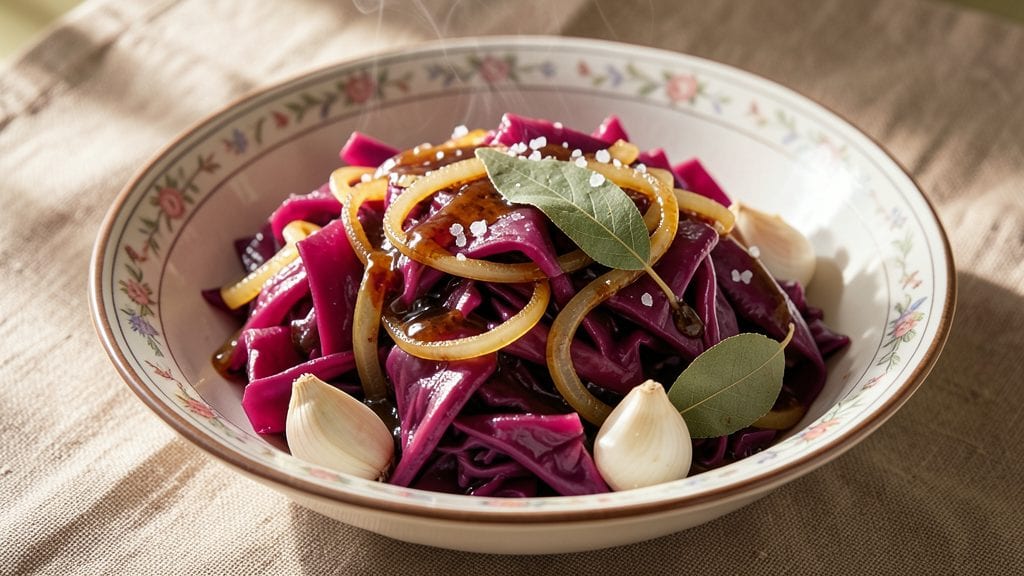
Transforming canned red cabbage into a sweet-tangy braised side that rivals fresh versions takes just 30 minutes of hands-on time—and the secret lies in balancing sugar, vinegar, and aromatics. I developed this recipe after discovering how canned cabbage could deliver restaurant-quality results without the prep of shredding or fermenting.
The key is simmering it with just enough liquid to soften the texture while concentrating those bright flavors.
This method preserves the cabbage’s natural crunch while infusing it with caramelized sweetness and a subtle acidity that cuts through rich main dishes. You’ll need basic pantry staples—brown sugar, apple cider vinegar, and bay leaves—to create a dish that’s equally at home alongside roasted pork or mashed potatoes.
The process is simple but precise, ensuring every bite delivers that perfect balance of tang and sweetness.
By the end, you’ll have a deeply flavorful, glossy cabbage with tender edges and just enough bite—no soggy texture here. The aroma alone will have everyone reaching for seconds, and the versatility means it works as a standalone side or a vibrant addition to holiday tables.
This is canned cabbage elevated to something special.
Ready in under 30 minutes, this recipe proves canned ingredients can deliver restaurant-quality results without the fuss. Whether you’re prepping for a weeknight dinner or a holiday feast, this braised red cabbage brings bold flavor and effortless elegance to your table.
Ingredients for canned red cabbage
Basic pantry staples transform canned red cabbage into restaurant-worthy side dish magic.
| Ingredient | Amount | Notes |
|---|---|---|
| Canned Red Cabbage 🥬 | 14 oz | Drained, with juice reserved |
| Light Brown Sugar 🍚 | ½ cup | Packed, for caramelization |
| Apple Cider Vinegar 🍎 | ¼ cup | For tangy brightness |
| Yellow Onion 🧅 | 1 whole | Thinly sliced, for aromatic base |
| Fresh Bay Leaves 🌿 | 2 whole | For herbal depth |
| Garlic Cloves 🧄 | 3 cloves | Minced, for aromatic punch |
| Water 💧 | ½ cup | For simmering liquid |
| Unsalted Butter 🧈 | 2 tbsp | Full-fat for richness |
| Salt 🧂 | ½ tsp | Diamond Crystal preferred |
| Black Peppercorns 🌶️ | ¼ tsp | Freshly cracked |
| Cinnamon Stick 🌿 | 1 whole | Optional, for warmth |
| Fresh Thyme 🌿 | ¼ tsp | Leaves only, chopped |
The canned red cabbage is the star here—look for brands like Libby's or Del Monte in the water-packed variety, not the vinegar kind. Those bright purple-red hues mean it's fresh-packed, not sitting on shelves forever. The brown sugar needs to be light, not dark—Domino or C&H work perfectly. Apple cider vinegar should smell tangy and fresh, not sharp or chemical. I always grab the Bragg brand from the organic section, but regular stuff works too. The yellow onion? Sweet Vidalias or yellow grocery store onions add natural sweetness that caramelizes beautifully—skip the red or white, they can make the dish too bitter.
No apple cider vinegar? White vinegar or lemon juice in a pinch, but you'll lose that subtle apple flavor. Running out of bay leaves? Dried works at half the amount, but fresh is better. The cinnamon stick is optional, but if you skip it, add an extra pinch of ground cinnamon at the end. Want more depth? Add a star anise pod while simmering—it disappears but leaves amazing flavor. The butter matters here—full-fat, unsalted melts beautifully and adds richness. If you're dairy-free, use olive oil instead, but the texture won't be quite as luscious. The thyme can be dried if needed, but fresh is ideal—Trader Joe's usually has great bundles.
This braise gets better as it sits—3-4 days in the fridge lets the flavors meld perfectly. Portion into containers for easy reheating. The cabbage reheats beautifully—just add a splash of water or broth and warm through. If you make extra, freeze portions for up to 3 months. The cinnamon stick and bay leaves can be removed before serving, but I usually leave them in for extra flavor infusion. Store in an airtight container, and trust me, the aroma alone will have everyone grabbing seconds.
Why You'll Love This Recipe
- No Chopping Needed: I swear by this recipe on days when I’d rather not stand at the cutting board for 20 minutes. The canned red cabbage is already prepped—just drain, slice the onion, and toss it all in one pot. That’s it. Honestly, it’s the kind of recipe that makes me question why I ever bought fresh cabbage for this.
- Sweet-Tart Magic: Between us, the light brown sugar and apple cider vinegar combo is chef’s kiss—like someone took all the best parts of a brussels sprout roast and a tangy slaw and mashed them together. The bay leaves add this earthy depth that makes it taste like a fancy holiday side, not just a side dish.
- Holiday Table Star: This is my secret weapon for Thanksgiving, Christmas, and even summer potlucks. It’s got that festive color, but it’s also weirdly great at room temperature—so it’s perfect for buffets or meal prep. My uncle once asked if I’d “borrowed this from a German grandmother,” and I had to laugh because I made it up in my tiny kitchen.
- Budget-Friendly Leftovers: A single can of red cabbage stretches into three meals here, and the ingredients cost less than $5 total. The flavor actually improves the next day, which is rare for me—I usually burn or forget leftovers. I’ll take this over takeout any day, especially when I’m feeding a crowd and don’t want to break the bank.
Step-by-step instructions for sweet-tangy braised red cabbage
Here's how to transform canned red cabbage into a rich, caramelized side dish with perfect balance.
Build the Flavor Base
In a medium saucepan, melt the 2 tablespoons unsalted butter over medium heat. Add the 1 whole yellow onion, thinly sliced, and cook until softened and translucent, about 5 minutes. Here's where the magic starts—you'll see the onions turn golden and sweet as they render their moisture.
Add the 3 cloves minced garlic and cook for 30 seconds until fragrant. The garlic should sizzle gently without browning. Stir in the 0.5 cup packed light brown sugar, letting it melt into the onions for 1 minute. This creates the foundation for your caramelized flavor profile. Don't rush this step—the sugar needs time to bloom and develop depth.
Add Aromatics and Acid
Pour in the 0.25 cup apple cider vinegar and scrape up any browned bits from the bottom of the pan. These fond bits pack serious flavor. Add the 0.5 cup water, 0.5 teaspoon salt, 0.25 teaspoon cracked black peppercorns, 2 whole fresh bay leaves, 1 whole cinnamon stick, and 0.25 teaspoon chopped fresh thyme. Stir everything together and bring to a gentle simmer over medium-low heat.
Let the mixture bubble softly for 3 minutes until the liquid reduces slightly and the aromatics meld together. You'll notice the vinegar's sharpness mellows as it cooks down, and the cinnamon releases its warm, woody notes. This is where the balance between sweet, tangy, and savory begins to develop.
Incorporate and Braise the Cabbage
Drain the 14 ounces canned red cabbage, reserving ¼ cup of the juice in a separate bowl. Add the cabbage to the saucepan and stir gently to coat it evenly in the flavorful liquid. The cabbage should be completely submerged—if not, add 1-2 tablespoons of water to help it cook properly.
Bring the mixture back to a gentle simmer, then reduce heat to low. Cover the pan with a lid and let it cook for 15 minutes, stirring occasionally. You're looking for the cabbage to soften while maintaining its shape—it should be tender but still hold together when pierced with a fork. The liquid should reduce to a glossy, syrupy consistency that clings to the cabbage.
Finish and Rest
Remove the lid and increase heat to medium to evaporate any remaining liquid. Cook uncovered for 5-7 minutes, stirring frequently, until the cabbage reaches your desired tenderness and the sauce thickens to a jammy consistency. The edges should look slightly caramelized, and the aroma should be rich with sweet, tangy, and herbal notes.
Once done, remove the bay leaves and cinnamon stick. Taste and adjust seasoning if needed—you might want to add a pinch more salt or a splash of apple cider vinegar for brightness. Let the cabbage rest for 5 minutes before serving. This resting period allows the flavors to fully meld and the cabbage to absorb all that delicious braising liquid.
Pro Tips For Making Canned Red Cabbage
- Simmer Slow: Canned red cabbage needs time to soften and marry with the flavors—don’t rush it. A gentle 15-20 minute simmer on medium-low heat lets the vinegar mellow and the sugar caramelize just enough to coat the cabbage without turning it mushy.
- Toast the Onion: I used to skip this, but now I swear by it: Sauté the onions in a dry pan for 3-4 minutes until golden before adding any liquid. That caramelized depth cuts through the cabbage’s sharpness and makes the whole dish taste richer.
- Drain, Don’t Rinse: The canned cabbage’s juice is part of the magic—it’s got acidity and sweetness already balanced. Drain it, but save that liquid; you’ll need it to keep the cabbage from drying out as it cooks.
- Vinegar First: Add the apple cider vinegar at the start, not the end. It needs time to dissolve the sugar and soften the cabbage evenly—if you toss it in last, you’ll end up with a harsh, tangy bite instead of a smooth, bright flavor.
Troubleshooting great canned red cabbage
Soggy Cabbage Fix
If your braised cabbage turns out too soft or mushy, it means it absorbed too much liquid. The solution is simple: reduce the water in your next batch by ¼ cup and simmer uncovered for the final 5-7 minutes to evaporate excess moisture.
I also recommend using a heavy-bottomed pot like a Le Creuset Dutch oven—it distributes heat more evenly and prevents uneven cooking that leads to soggy spots. 🌡️
Underseasoned Flavor
If your cabbage tastes bland, it’s likely because the braising liquid didn’t concentrate enough. Next time, reduce the water by 2 tablespoons and let it simmer uncovered for an extra 3-5 minutes after adding the cabbage.
For extra depth, add a pinch of smoked paprika or a splash of balsamic vinegar at the end. Taste as you go—seasoning builds gradually, so don’t hesitate to adjust mid-cook.
Uneven Cooking
If some pieces are still crunchy while others are overcooked, your heat might be too high or the cabbage wasn’t evenly distributed. For next time, cut the canned cabbage into 1-inch chunks before adding it to the pan.
Also, stir every 5 minutes during the braising phase to ensure even exposure to the liquid and heat. A wooden spoon works best—it won’t scratch your pot like metal utensils.
Vinegar Overpowering
The apple cider vinegar should add brightness, not dominate. If it’s too sharp, you likely added too much or didn’t cook it long enough to mellow. Reduce the vinegar to 2 tablespoons and simmer the base (onions, sugar, and water) for 5 minutes before adding the cabbage.
This lets the vinegar’s acidity soften and integrate with the sweetness. A pinch of sugar at the end can also balance any lingering tartness.
Sticky or Burnt Bottom
If your cabbage sticks or burns, your heat was too high or the butter wasn’t melted properly. Start by melting the butter over low heat until it’s fully liquid and foamy. Then, increase to medium for the onions.
Deglaze the pan with a splash of water or vinegar if browned bits form—this lifts the flavorful fond into the sauce. A nonstick pan helps, but a well-seasoned cast-iron skillet works even better for even heat distribution.
Flavor Mismatch
If the sweet-tangy balance feels off, your sugar-to-vinegar ratio might be unbalanced. Aim for a 2:1 ratio (e.g., ½ cup sugar to ¼ cup vinegar). For a smokier profile, add a ¼ teaspoon of chipotle powder or a crushed bay leaf while simmering.
If it’s too sweet, add a splash of lemon juice at the end. Trust your taste buds—adjust in small increments until it’s just right. 💡
Nutrition facts
Frequently asked questions
Can I use canned red cabbage straight from the can without cooking?
No, canned red cabbage should always be cooked to soften its texture and develop flavor. The canned version is pre-cooked but still firm—simmering it in the braising liquid transforms it into a tender, flavorful side. Simply draining and warming it won't achieve the same delicious result.
What's the best way to store leftover braised red cabbage?
Store in an airtight container in the fridge for up to 4 days. The flavors actually improve as it sits! For longer storage, freeze portions for up to 3 months. When reheating, add a splash of water or broth to prevent drying out.
Can I substitute white vinegar for apple cider vinegar?
Yes, but you'll lose some depth. Use the same amount of white vinegar, but add an extra pinch of sugar (½ teaspoon) to balance the sharper taste. For best results, stick with apple cider vinegar—its mild sweetness complements the cabbage perfectly.
How can I make this recipe vegetarian?
This recipe is already vegetarian! Just omit the butter if you need it vegan, and use olive oil instead. The dish gets its richness from the caramelized onions and sugar, not the dairy. For extra protein, serve with lentils or roasted chickpeas.
Why does my cabbage turn out too sweet?
Too much sugar or not enough cooking time can make the dish overly sweet. Next time, reduce the sugar to ⅓ cup and simmer uncovered for the final 5 minutes to evaporate excess liquid. A splash of apple cider vinegar at the end helps balance the sweetness.