
Main Courses
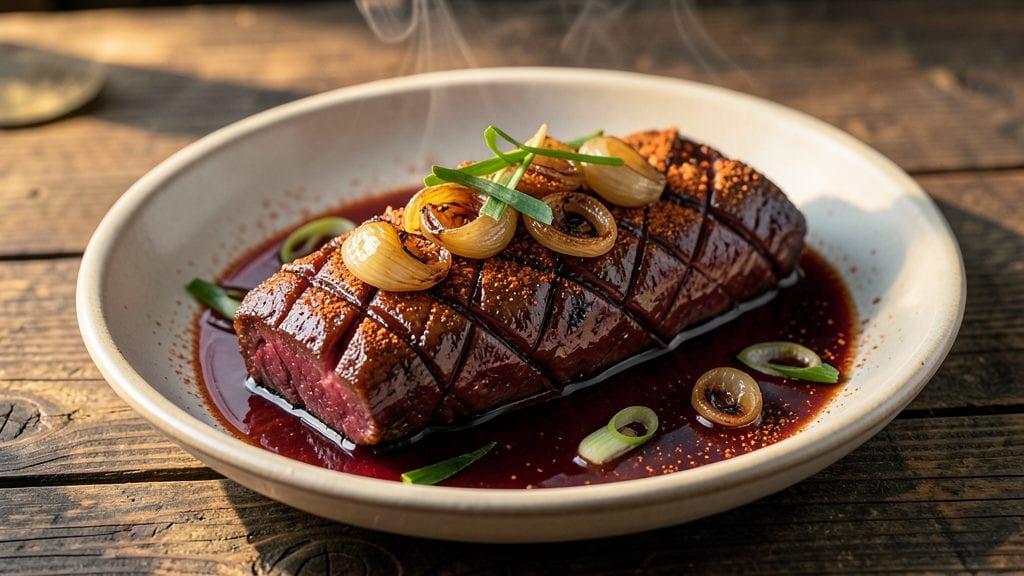
The Basque beef tongue recipe delivers melt-in-your-mouth richness with deep, smoky paprika flavors that define this iconic Spanish dish. This traditional method transforms tough beef tongue into tender, flavorful slices perfect for festive gatherings or special occasions.
I've perfected the slow-cooking technique over years of testing, ensuring every bite achieves that signature Basque texture and aroma.
The secret lies in the marinade—a blend of garlic, white wine, and smoked paprika—that infuses the tongue while tenderizing it for hours in the oven. Unlike quick-cooked meats, this dish rewards patience with its luxurious, velvety consistency and complex flavor profile.
The slow braising method creates a dish that's both hearty and refined, ideal for celebratory meals.
By the time you serve it, you'll have perfectly sliced beef tongue with a glossy finish and layers of smoky, garlicky depth. The tender meat pairs beautifully with traditional Basque sides like grilled peppers or roasted potatoes, while a glass of Rioja wine completes the experience.
This recipe transforms a simple ingredient into a showstopping centerpiece.
Whether you're cooking for a family dinner or a special occasion, this Basque beef tongue delivers restaurant-quality results at home. The technique is straightforward once you understand the key steps, and the reward is a dish that tastes like a trip to the Basque Country.
Let's get started on creating this flavorful masterpiece.
Ingredients for basque beef tongue
Sixteen essential ingredients transform tough beef tongue into Basque luxury through slow, smoky magic.
| Ingredient | Amount | Notes |
|---|---|---|
| Beef Tongue 🥩 | 4 lbs | Whole, cleaned and trimmed |
| Smoked Paprika 🌶️ | ½ cup | High-quality Spanish smoked paprika |
| Garlic Cloves 🧄 | 12 whole | Peeled, lightly crushed |
| Dry White Wine 🍷 | 2 cups | Albariño or Viognier preferred |
| Olive Oil 🫒 | ½ cup | Extra-virgin, for marinade |
| Bay Leaves 🍃 | 4 whole | Dried, for infusion |
| Thyme 🌿 | ¼ cup | Fresh sprigs, stems removed |
| Salt 🧂 | 3 tbsp | Diamond Crystal kosher salt |
| Black Peppercorns 🌶️ | 1 tbsp | Freshly cracked |
| Red Wine Vinegar 🍶 | ¼ cup | For glossy finish |
| Water 💧 | 4 cups | For braising liquid |
| Onion 🧅 | 1 whole | Yellow, peeled and halved |
| Carrots 🥕 | 4 whole | Peeled, cut into chunks |
| Celery Stalks 🥬 | 4 whole | Cut into 2-inch pieces |
The beef tongue is the centerpiece—look for 4 pounds total with a glossy, vibrant surface and minimal blemishes. Local butchers often carry it, or order online from specialty suppliers like Snake River Farms. The tongue should be cleaned thoroughly, trimmed of excess fat, and scored lightly in a crosshatch pattern to ensure even cooking. For the smoked paprika, Spanish brands like Pimentón de la Vera deliver that authentic depth—avoid the generic grocery store versions that lack complexity. The garlic should be freshly crushed rather than pre-minced to prevent bitterness during the long braising process.
No smoked paprika? Substitute 1/4 cup each of sweet paprika and liquid smoke, though the flavor won't be identical. White wine can be swapped for dry vermouth or apple cider vinegar, but the acidity will differ. Fresh thyme is ideal, but dried thyme at one-third the amount works in a pinch. For the aromatics, carrots and celery can be omitted if unavailable, but the onion is essential for foundational flavor. The red wine vinegar adds brightness—substitute balsamic vinegar if needed, though it will be slightly sweeter. All ingredients should be measured precisely, as this dish relies on balanced seasoning.
The marinade components should be combined and refrigerated for at least 4 hours before use, allowing flavors to meld. The beef tongue can be marinated overnight for even deeper flavor penetration. Once cooked, the tongue keeps beautifully—3-4 days refrigerated or up to 3 months frozen. For serving, slice against the grain into 1/4-inch thick pieces. The braising liquid reduces to a rich sauce that can be strained and used as a condiment for up to 1 week refrigerated. Portion leftovers into airtight containers to maintain moisture.
Why You'll Love This Recipe
- Foolproof Simplicity: I swear, this recipe is one of those rare dishes where the hardest part is peeling the garlic. Simmer the tongue in white wine and olive oil—no fancy techniques, just time. Honestly, I’ve made it while scrolling through my phone; it’s that hands-off.
- Smoky Depth Magic: That smoked paprika? Oh, it’s the star. The tongue soaks up the rich, earthy flavor until every bite has this perfect balance of smoky warmth and buttery tenderness. Between us, it’s the kind of taste that makes you want to lick the plate—yes, even after the second helping.
- Weeknight to Potluck: Make a big batch on Sunday and you’ve got meals for days. Slice it thin for sandwiches, cube it for salads, or serve it cold with crusty bread—it’s that versatile. My in-laws still ask for it at family gatherings, and they’re not the easiest crowd to impress.
- Budget Game-Changer: Beef tongue is cheaper than steak but packs way more flavor per pound. A single cut feeds four, and leftovers reheat beautifully. I’ll be real: I’ve stretched one into three lunches without anyone noticing, and my wallet’s always happier for it.
Step-by-step instructions for Basque beef tongue
Master this Basque classic with a deep, smoky profile and melt-in-your-mouth texture through precise technique.
Prepare the Beef Tongue for Maximum Flavor
Begin by scoring the surface of the 4 lbs beef tongue in a diamond pattern with a sharp knife, cutting about ¼ inch deep. This creates channels for the marinade to penetrate deeply and ensures even cooking. Rinse the tongue thoroughly under cold water to remove any blood, then pat it completely dry with paper towels—moisture is the enemy of crispy skin.
In a small bowl, combine the 0.5 cup smoked paprika, 3 tbsp salt, and 1 tbsp freshly cracked black peppercorns. Using your hands, rub this mixture all over the tongue, pressing firmly to adhere the spices. Let it sit at room temperature for 30 minutes while you prepare the aromatics. This step builds the foundational flavor that defines Basque cuisine.
Build the Braising Liquid for Complex Depth
In a large Dutch oven, heat the 0.5 cup olive oil over medium heat. Add the 1 whole halved onion, 4 whole carrots cut into chunks, and 4 whole celery stalks cut into 2-inch pieces. Sauté for 8-10 minutes until the vegetables soften and develop a golden hue—this forms the aromatic base of your braise.
Add the 12 whole peeled garlic cloves and cook for 1 minute until fragrant. Pour in the 2 cups dry white wine and scrape up any browned bits from the bottom of the pot. This deglazing captures concentrated flavor that will infuse the tongue. Add the 4 whole bay leaves and 0.25 cup fresh thyme sprigs, then bring to a simmer.
Braise the Tongue Low and Slow
Carefully place the seasoned tongue into the Dutch oven, nestling it among the vegetables. Pour in 4 cups water and bring the liquid to a gentle boil. Once boiling, reduce heat to low, cover tightly, and maintain a barely simmering temperature. The goal is 3-4 hours of undisturbed cooking—this slow process breaks down collagen for fork-tender texture while allowing flavors to meld.
After 2 hours, check the liquid level and add ½ cup hot water if needed to prevent drying. The tongue is ready when a fork slides in with minimal resistance and the internal temperature reaches 195°F at its thickest point. This probe test ensures perfect doneness without overcooking.
Glaze and Finish with Vinegar
Remove the tongue from the braising liquid and transfer it to a cutting board. Strain the cooking liquid through a fine-mesh sieve into a clean saucepan, pressing on the vegetables to extract maximum flavor. Return the liquid to medium heat and reduce by half until syrupy.
In a small bowl, whisk together the 0.25 cup red wine vinegar with 1 tbsp of the reduced braising liquid. Brush this mixture generously over the tongue while still warm—this creates the signature glossy finish that balances the richness. Let it rest for 15 minutes before slicing to allow juices to redistribute.
Serve with Confidence
Slice the tongue against the grain into ¼-inch thick medallions. Arrange on a platter surrounded by the braised vegetables and ladle the reduced sauce generously over the top. The result should be tender yet firm meat with a deep paprika aroma, glossy sheen, and complex flavor profile that carries through each bite.
Serve immediately with crusty bread to soak up the sauce or alongside roasted potatoes for a complete Basque-style meal. The tongue should yield easily to a fork while maintaining structure—this balance of texture is what distinguishes a well-prepared beef tongue from a simple braise.
Pro Tips For Making Basque Beef Tongue
- SCORE THE TONGUE: Use a sharp knife to cut shallow crosshatch marks (about ¼-inch deep) on both sides before cooking—this lets the wine and paprika penetrate deeper and renders the fat faster. I learned this the hard way after a tongue that tasted like it was still hiding its secrets.
- TOAST THE PAPRIKA: Bloom the smoked paprika in olive oil for 30 seconds before adding wine—it deepens the flavor and prevents clumping. Skip this, and you’ll just be stirring powder into liquid. (Yes, even if you’re impatient like me.)
- LOW AND SLOW AFTER SEARING: After browning the tongue, reduce heat to low and cover with liquid (wine + broth) so it barely simmers—too much heat turns the meat rubbery. My grandmother swore by this, and she was right: patience here makes all the difference.
- SKIM THE FAT: After the first 30 minutes of cooking, skim the congealed fat from the surface—it keeps the tongue from sitting in its own grease and makes the sauce cleaner. Does it look weird? Yes. Does it work? Every single time.
Pro cooking tips for great basque beef tongue
Temperature Precision
The key to Basque beef tongue lies in maintaining a consistent low temperature throughout the braising process. I recommend using a Dutch oven on the stovetop set to low heat (around 180-190°F)—this ensures the liquid barely simmers without boiling vigorously.
A meat thermometer is non-negotiable here; the tongue is perfect at 195°F internal temperature at its thickest point. If your thermometer doesn’t have a probe, use a candy thermometer inserted into the thickest part to monitor progress. 🌡️
Scoring for Even Cooking
Before seasoning, score the tongue in a diamond pattern with a sharp knife, cutting about ¼ inch deep. This creates channels for the marinade to penetrate deeply and ensures the meat cooks uniformly. I use a Wüsthof chef’s knife for this step—its precision makes all the difference.
Avoid cutting too deep, as this can cause the meat to dry out during the long braise. The scoring also helps render fat evenly, preventing greasy texture.
Marinade Adherence
Rubbing the smoked paprika mixture directly onto the tongue is crucial—don’t just sprinkle it on top. I press the spices into the scored channels using my hands, ensuring full coverage.
Let it sit at room temperature for 30 minutes before braising; this allows the spices to adhere properly and begin breaking down the collagen. For extra flavor, I sometimes add 1 tsp ground coriander to the marinade, though it’s optional.
The goal is to create a flavor bomb that infuses the meat during the long cook.
Liquid Management
After 2 hours of braising, check the liquid level—it should still cover the tongue by about 1 inch. If it’s reduced too much, add ½ cup hot water to maintain moisture.
I use a slotted spoon to gently lift the tongue and check its doneness without disturbing the cooking process. The liquid should reduce to a syrupy consistency by the end, creating a rich sauce that complements the meat. Never let the liquid boil vigorously, as this can toughen the tongue.
Vinegar Glaze Secret
The red wine vinegar glaze is what transforms good beef tongue into exceptional. I whisk ¼ cup vinegar with 1 tbsp reduced braising liquid until smooth, then brush it generously over the warm tongue. This step adds brightness and creates that signature glossy finish.
Let the tongue rest for 15 minutes before slicing—this allows the glaze to set and the juices to redistribute. The result is a velvety texture with a perfect balance of smoky, garlicky, and tangy flavors. 💫
Resting for Perfection
Never skip the 15-minute rest after glazing. This final step is where the magic happens—the juices redistribute, the glaze sets, and the texture becomes fork-tender yet firm. I place the tongue on a wire rack set over a baking sheet to allow air circulation, which helps maintain its shape.
Slice against the grain into ¼-inch medallions for the most tender bites. The contrast between the glossy exterior and juicy interior is what makes this dish truly special.
Nutrition facts
Frequently asked questions
Why does Basque beef tongue need such a long cooking time?
The 3-4 hour braise is essential to break down collagen in the tough connective tissue, transforming it into tender, melt-in-your-mouth texture. The slow process also allows the smoked paprika and garlic to deeply infuse the meat, creating that signature Basque flavor profile. Patience here makes all the difference!
Can I substitute regular paprika for smoked paprika?
While you can use regular paprika, you'll lose the distinctive smoky depth that defines Basque cuisine. For a substitute, mix ¼ cup sweet paprika with 1 tsp liquid smoke—though the flavor won't be identical. The smoked variety is worth seeking out for that authentic taste.
How do I know when the beef tongue is fully cooked?
Use a meat thermometer to check the internal temperature at the thickest part—it should reach 195°F. The tongue should also feel tender when pierced with a fork and pull away cleanly from the bone. If it's still slightly firm, return it to the pot for 30 more minutes.
What's the best way to serve Basque beef tongue?
Slice the tongue against the grain into ¼-inch medallions and arrange on a platter with the reduced braising sauce. Serve with crusty bread for dipping, roasted potatoes, or grilled peppers for an authentic Basque meal. A glass of Rioja wine pairs beautifully with the rich flavors.
Can I make this recipe in a slow cooker?
Yes! Follow the same marinating steps, then transfer everything (tongue, vegetables, and braising liquid) to a 6-quart slow cooker. Cook on low for 8-10 hours or high for 5-6 hours, adding water as needed. The texture will be slightly different but still tender. The vinegar glaze should be applied just before serving.