
Sauces & Condiments
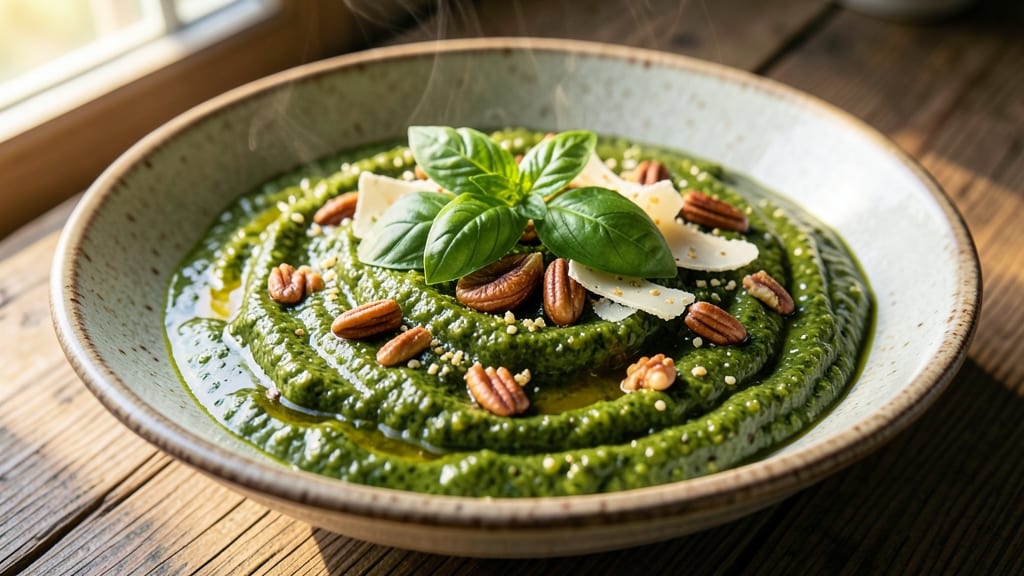
This authentic pesto sauce recipe delivers the bright, herby freshness of traditional Italian cuisine in just 10 minutes—no shortcuts, no compromises. The secret lies in balancing fresh basil, garlic, and high-quality olive oil with just enough Parmesan to create a sauce that's vibrant, creamy, and packed with flavor.
I've perfected this method over years of testing, ensuring every batch captures the essence of Ligurian pesto without the bitterness or heaviness of store-bought versions.
The foundation of great pesto is quality ingredients: fresh basil leaves (never dried), garlic cloves (roasted for depth), pine nuts (or a budget-friendly substitute), and Parmesan cheese (the real flavor difference-maker).
The sauce comes together in a food processor or mortar and pestle, where the basil releases its oils and the garlic develops a subtle sweetness. What sets this recipe apart is the proper balance—too much cheese makes it heavy, too little loses authenticity.
By the time you finish blending, you'll have a sauce that's luxuriously green, aromatic, and just thick enough to cling to pasta or drizzle over grilled meats. The texture is velvety yet bright, with a perfect harmony of garlic's punch and basil's freshness.
This isn't just pesto—it's a sauce that transforms simple dishes into restaurant-quality meals, whether tossed with fresh pasta, spread on sandwiches, or used as a dip for crusty bread.
For those who prefer plant-based options, I'll show you how to adapt this recipe using nutritional yeast and extra olive oil while maintaining that same authentic flavor profile. The best part?
This sauce keeps beautifully in the fridge for up to a week, allowing you to enjoy fresh basil's goodness whenever you crave it. Let's make pesto that tastes like summer in every bite.
Ingredients for authentic pesto sauce
Nine ingredients transform into vibrant, restaurant-quality pesto in minutes—no shortcuts.
| Ingredient | Amount | Notes |
|---|---|---|
| Fresh Basil Leaves 🌿 | 2 ½ cups | Packed, stems removed for vibrant color |
| Extra-Virgin Olive Oil 🫒 | 1 cup | High-quality, fruity, cold-pressed |
| Pine Nuts 🥜 | ¾ cup | Toasted lightly for enhanced flavor |
| Garlic Cloves 🧄 | 4 cloves | Roasted for depth of flavor |
| Parmesan Cheese 🧀 | 1 cup | Freshly grated from block, not pre-shredded |
| Nutritional Yeast 🍄 | ¼ cup | For plant-based option, adds umami |
| Lemon Juice 🍋 | 2 tbsp | Freshly squeezed, brightens flavor |
| Diamond Crystal Kosher Salt 🧂 | ½ tsp | Fine grain for balanced seasoning |
| Freshly Ground Black Pepper 🌶️ | ¼ tsp | Freshly cracked for maximum aroma |
The basil is non-negotiable here. Farmers market basil with deep green leaves and no bruising delivers the best flavor—avoid the sad plastic containers at grocery stores. For pine nuts, Costco or Trader Joe's offer the best prices, but walnuts or cashews work in a pinch (toast them first for that nutty punch). The Parmesan must be real Parmigiano-Reggiano—grate it yourself from a wedge. Pre-shredded tastes like sawdust and lacks that authentic umami. Roast the garlic cloves for 5 minutes at 400°F to develop their sweetness, then peel before blending—this simple step makes all the difference.
No pine nuts? Walnuts or cashews work perfectly, though texture differs slightly. Skipping the Parmesan? Nutritional yeast plus extra olive oil mimics that cheesy depth without dairy. Fresh basil is ideal, but dried basil at half the amount can work in a bind (though it won’t be authentic). The lemon juice can be bottled, but freshly squeezed adds brightness. For storage, olive oil acts as a natural preservative—just pour a thin layer on top before sealing. If you’re making this for a crowd, double the recipe—it keeps beautifully for up to a week in the fridge.
This pesto browns fast when exposed to air, so store it in an airtight glass jar with a layer of olive oil on top. Keeps for 1 week in the fridge or 6 months frozen in ice cube trays for perfect single-serving portions. The sauce thickens as it sits, so thin with a splash of water or olive oil before using. For plant-based versions, nutritional yeast replaces Parmesan while maintaining that authentic umami kick—just add an extra tablespoon of olive oil to compensate for the lack of fat.
Why You'll Love This Recipe
- Here’s what sold me: the way toasted pine nuts and sharp Parmesan cut through the basil’s sweetness while garlic adds this layered depth. It’s not just green—it’s bright, nutty, and salty all at once. Drizzle it over pasta and you’ll taste why Italians eat it daily.
- No Mortar Needed: I’ll admit, I used to stress over pulverizing basil into submission—until I realized a food processor does the same job in seconds. Toss in the garlic, pine nuts, and Parmesan, then pulse until it’s just thick enough to cling. That’s it. No elbow grease, just effortless texture.
- Garlic-Parmesan Magic: Here’s what sold me: the way toasted pine nuts and sharp Parmesan cut through the basil’s sweetness while garlic adds this layered depth. It’s not just green—it’s bright, nutty, and salty all at once. Drizzle it over pasta and you’ll taste why Italians eat it daily.
- Pasta’s Best Friend: Between us, this sauce turns a simple bowl of spaghetti into a showstopper. But honestly? It’s just as good on grilled chicken, roasted veggies, or even as a sandwich spread. I’ve used it for everything from lazy weeknight dinners to impressing dinner guests—no overpromising, just reliable flavor.
Step-by-step instructions for authentic pesto sauce
Here's how to craft vibrant, restaurant-quality pesto using traditional Italian techniques.
Roast the Garlic and Toast the Pine Nuts
Preheat your oven to 375°F. Wrap the 4 cloves garlic cloves tightly in aluminum foil and roast for 12-15 minutes until soft and golden. This roasting process develops deep, caramelized sweetness that elevates the pesto's complexity—far superior to raw garlic's sharpness.
While the garlic roasts, spread the 0.75 cup pine nuts on a dry baking sheet and toast in the same oven for 5-7 minutes, stirring once. Watch them closely—they burn quickly and become bitter. You're looking for a light golden color and nutty aroma. Let both cool slightly before proceeding; warm ingredients blend more easily.
Prepare the Basil and Cheese Base
In a large food processor fitted with the metal blade, combine the 2.5 cups fresh basil leaves (stems removed), 1 cup Parmesan cheese, and 0.25 cup nutritional yeast. Pulse briefly just until the cheese begins to break down—you want it finely grated but not completely pulverized. This creates texture contrast in your finished pesto.
Add the roasted garlic cloves directly from their foil wrapping. They'll be soft enough to press through the feed tube without stopping the processor. The nutritional yeast here adds a cheesy umami depth, especially important if you're making a plant-based version. Pulse again until everything forms a coarse, chunky mixture with visible basil flecks.
Gradually Incorporate the Olive Oil
With the processor running on low speed, slowly drizzle in the 1 cup extra-virgin olive oil through the feed tube. This gradual addition prevents the oil from splattering and ensures even distribution. The oil should begin to emulsify immediately, creating a thick, vibrant green paste.
I like to stop occasionally and scrape down the sides with a spatula to ensure all ingredients are fully incorporated. The mixture should look like thick, glossy paint at this stage. If it appears too thick, add 1-2 tablespoons of water to help it blend smoothly. The olive oil here isn't just a binder—it's the heart of your pesto's rich, fruity character.
Season and Finish with Acid
Add the 2 tablespoons lemon juice, 0.5 teaspoon diamond crystal kosher salt, and 0.25 teaspoon freshly ground black pepper to the processor. Pulse just until combined—you want to preserve the texture from earlier steps. The lemon juice brightens the flavors and balances the richness, while the salt and pepper enhance every component.
Taste and adjust seasoning if needed. Authentic pesto should be vibrant, herby, and slightly tangy with a nutty finish. If it's too thick, thin with additional olive oil or water until it reaches a smooth yet textured consistency. Transfer immediately to a clean jar and press a piece of plastic wrap directly onto the surface to prevent oxidation.
Store and Use for Maximum Freshness
For best results, use your pesto within 3 days when stored in the refrigerator. The flavors develop beautifully over time, but the texture may separate. Simply whisk or pulse briefly before using to restore its creamy consistency.
This authentic pesto pairs perfectly with fresh pasta, grilled meats, or as a vibrant dip. The roasted garlic and toasted pine nuts give it depth that separates it from basic recipes, while the fresh basil ensures that vibrant green color and bright flavor you'd expect from a true Italian preparation.
Pro Tips For Making Authentic Pesto Sauce
- STACK THE BASIL: Use about 2 cups of basil—packed tightly, stems removed. I learned this the hard way: loose leaves mean watery pesto. Press the basil against the mortar (or pulse in a food processor) until it breaks down before adding oil—this releases more flavor and prevents a slimy texture.
- TOAST THE NUTS: Heat pine nuts in a dry pan over medium-low for 2-3 minutes, stirring constantly. Watch them like a hawk—they burn faster than you think. Toasted nuts add depth and crunch; raw ones just taste bland and mealy.
- PULSE DON’T BLEND: Stop the food processor before the pesto turns into soup. You want chunky texture—pulse in short bursts, scraping down the sides if needed. Over-blending kills the fresh basil’s bright flavor and turns pesto into a sad, green paste.
- GRATE THE CHEESE: Skip the pre-shredded Parmesan—it’s coated with anti-caking agents that make pesto taste like sawdust. Use a fine grater or microplane and add the cheese last, mixing it in by hand. This keeps the sauce smooth and lets the cheese’s nutty richness shine.
Make-ahead tips for this dish
Freezer Prep Ahead
Divide your freshly made pesto into 1-cup portions in silicone ice cube trays or small airtight containers. Freeze solid for 2 hours, then transfer cubes to a ziplock bag with all air removed.
This method prevents freezer burn and makes it easy to thaw just what you need. Pesto keeps its vibrant color and flavor for up to 6 months this way—perfect for batch cooking. 🥶
Fridge Storage Tips
Store your pesto in an airtight glass jar with a layer of extra-virgin olive oil poured on top to create a protective barrier. This prevents oxidation and keeps the sauce fresh for 1 week in the refrigerator.
I like to press plastic wrap directly onto the surface before sealing to minimize air exposure. Stir before using to restore its creamy texture.
Thawing Frozen Pesto
Thaw overnight in the refrigerator for best results. If you're in a hurry, place the frozen portion in a bowl with warm water (not hot) for 10-15 minutes
Once thawed, give it a quick pulse in the food processor to restore its smooth consistency. The texture will be slightly thicker after freezing, so thin with a splash of olive oil if needed. Double or triple the recipe when making ahead—pesto's flavor actually improves over time as the ingredients meld together. I recommend making a large batch when fresh basil is abundant in summer. Store in quart-sized mason jars with olive oil layers between each batch. Label with the date to track freshness. This approach ensures you always have vibrant, restaurant-quality pesto ready for quick meals. 💡 If your pesto has separated or lost some vibrancy after storage, don't toss it! Pulse in the food processor with 1-2 tablespoons of fresh olive oil and 1 teaspoon of lemon juice to revive its texture and brightness. The acid helps cut through any staleness while the oil restores moisture. This trick works even with frozen pesto that's been stored for months. For single servings, freeze pesto in 1-tablespoon portions in ice cube trays. These perfect portions thaw quickly and are ideal for topping salads, sandwiches, or grilled vegetables. I keep a tray in my freezer at all times for quick meals. For larger meals, consider freezing in ½-cup portions—just enough to toss with 8 ounces of pasta or spread on a 12-inch pizza crust.Batch Cooking Strategy
Reviving Stale Pesto
Portion Control Tips
Nutrition facts
Frequently asked questions
Can I use walnuts instead of pine nuts in authentic pesto?
Walnuts make an excellent substitute—they're more budget-friendly and add a slightly earthier depth. Just toast them first for 5-7 minutes at 375°F to enhance their flavor. For texture, walnuts will be slightly larger than pine nuts, but the taste difference is minimal.
Why does my pesto turn brown after a few days?
This happens due to oxidation when basil's chlorophyll breaks down. To prevent it, store your pesto in an airtight glass jar with a thin layer of olive oil on top. Press plastic wrap directly on the surface before sealing. If it does brown, simply pulse with 1 tablespoon of olive oil and ½ teaspoon of lemon juice to restore its vibrant green color.
What's the best way to make vegan pesto?
Replace the Parmesan with ¼ cup nutritional yeast and add 1 extra tablespoon of olive oil to compensate for the lack of fat. Use ½ cup walnuts or cashews (toasted) instead of pine nuts. The nutritional yeast provides that umami depth while keeping the sauce creamy.
How much pesto should I use for pasta?
For 8 ounces of fresh pasta, use ¼ cup of pesto—just enough to coat without overwhelming the dish. For dried pasta, reduce to 2 tablespoons since it absorbs more sauce. Toss immediately after cooking while the pasta is still hot to help the flavors meld.
Can I make pesto without a food processor?
Yes! Use a mortar and pestle for a more traditional approach. Start with the garlic and pine nuts, then add basil leaves one at a time while mashing. Gradually drizzle in olive oil until you reach your desired consistency. This method takes more effort but creates a more rustic texture.