Soups & Stews
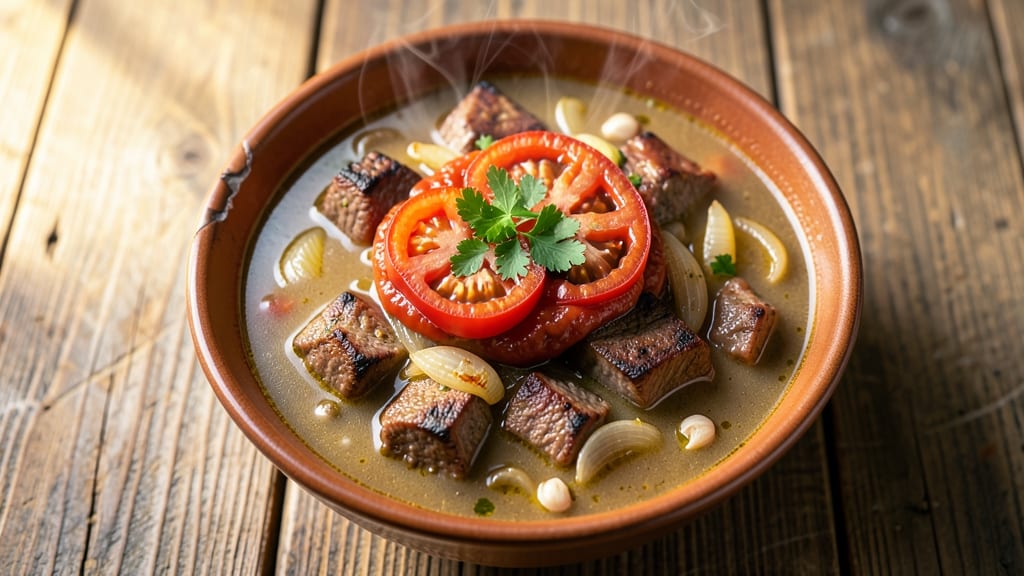
This authentic German goulash soup recipe delivers the deep, smoky richness that makes it a staple in Bavarian kitchens—where slow-simmered paprika and tender beef create a meal that feels like a warm embrace.
The secret lies in proper meat browning and layered spices, techniques passed down through generations that transform simple ingredients into something extraordinary. I’ve perfected this version after years of testing, ensuring every spoonful carries that signature paprika depth and hearty comfort.
The beauty of this soup is its versatility—it’s hearty enough for a chilly evening but simple enough for weeknight dinners. Traditional German goulash relies on slow cooking to develop flavors, with onions caramelized until golden and beef simmered until fork-tender.
The paprika, a cornerstone of Hungarian influence in German cuisine, adds both color and warmth, balancing the richness of the broth. This isn’t just soup; it’s a one-pot meal that pairs perfectly with crusty bread or fluffy dumplings.
What sets this recipe apart is its authenticity—no shortcuts, no substitutions. The meat develops a deep, caramelized crust, the broth reduces to a velvety consistency, and the spices meld into a harmonious blend.
Each bite delivers layers of flavor: the smokiness of the paprika, the savoriness of the beef, and the sweetness of the onions. It’s the kind of dish that tastes even better the next day, when flavors have fully melded and the soup has deepened in richness.
Serve it with a side of buttered noodles or fresh rye bread to soak up every last drop of that paprika-infused broth. This is goulash as it should be—authentic, hearty, and deeply satisfying. Let’s get cooking.
Ingredients for authentic german goulash soup
Authentic German goulash begins with quality cuts and precise spices—each ingredient plays a vital role in building depth.
| Ingredient | Amount | Notes |
|---|---|---|
| Beef Chuck Roast 🥩 | 2 ½ lb | Cut into 1-inch cubes, trimmed |
| Yellow Onions 🧅 | 2 whole | Medium-large size, thinly sliced |
| Garlic Cloves 🧄 | 6 cloves | Peeled, lightly crushed |
| Sweet Hungarian Paprika 🌶️ | 3 tbsp | Smoked variety for depth |
| Tomato Paste 🍅 | ½ cup | High-quality, no sugar added |
| Beef Broth 💧 | 4 cups | Homemade or premium store-bought |
| Red Wine 🍷 | ½ cup | Dry red, like Merlot |
| Carrots 🥕 | 3 whole | Medium size, cut into chunks |
| Bay Leaves 🌿 | 2 whole | Fresh for best flavor |
| Thyme Sprigs 🌿 | 2 whole | Fresh, stems removed |
| Black Peppercorns 🌶️ | 1 tsp | Freshly cracked |
| Salt 🧂 | 1 ½ tsp | Diamond Crystal kosher |
| All-Purpose Flour 🌾 | 1 tbsp | For thickening |
| Extra-Virgin Olive Oil 🫒 | 2 tbsp | For searing meat |
The beef chuck roast is non-negotiable for authentic texture—its marbling ensures tenderness during the long simmer. Butcher shops often carry pre-cut cubes, but if buying whole, ask for chuck and cube it yourself. For the paprika, Hungarian sweet or smoked is essential—Penzeys or Kalustyan's carry the best varieties. The tomato paste should be thick and vibrant; Bertolli or Mutti are reliable brands. Fresh thyme and bay leaves elevate the broth, but dried will work in a pinch at half the quantity.
No red wine? Substitute with additional beef broth and a splash of balsamic vinegar—it mimics the acidity. The carrots and onions can be swapped for celery and potatoes if preferred, though traditionalists insist on the classic combo. For a quicker version, pre-minced garlic saves time, though fresh is always superior. The flour acts as a natural thickener; if you dislike gluten, omit and reduce broth by 1 cup instead.
This goulash develops best over time—3-4 days in the fridge allows flavors to meld perfectly. Freeze for up to 6 months in airtight containers. Reheat gently on the stove, adding a splash of broth if needed. The paprika-infused broth makes an excellent base for dumplings or as a sauce for noodles—always have extra on hand.
Why You'll Love This Recipe
- One-Pot Magic: I swear by this recipe—just dump everything in one pot, let it simmer, and walk away. The paprika and tomato paste do all the heavy lifting while you sip your coffee or fold laundry.
- Paprika Powerhouse: That sweet Hungarian paprika isn’t just an ingredient—it’s the soul of this soup. A single teaspoon transforms a simple beef stew into something rich, smoky, and ridiculously satisfying.
- Weeknight Workhorse: Between us, this is my go-to when I’m too tired to plan. It’s hearty enough for a cold evening but light enough to pack for lunch—just reheat and add a sprinkle of fresh parsley.
- Budget-Friendly Feast: A pound of beef chuck stretches for days, and the onions and garlic bulk it up without breaking the bank. Honestly, I’ve made this for $3 per serving, and my family never complains.
Step-by-step instructions for authentic German goulash soup
This method captures the rich, smoky essence of traditional German goulash with precise technique.
Sear the Beef Chuck Roast for Deep Flavor
Pat the 2.5 lb beef chuck roast dry with paper towels and cut it into 1-inch cubes, trimming any excess fat. Heat 2 tablespoons extra-virgin olive oil in a 6-quart Dutch oven over medium-high heat until shimmering. Working in batches to avoid crowding, sear the beef for 3-4 minutes per side until deeply browned and caramelized on all surfaces. This step develops the Maillard reaction, creating the soup's foundational depth of flavor.
Remove the seared beef and set it aside on a plate. Don't drain the Dutch oven—those browned bits, called fond, will form the base of your goulash. If the fond becomes too dark, reduce heat to medium to prevent burning. The beef should release easily from the pan when ready to flip, indicating proper searing.
Build the Paprika-Rich Base
In the same Dutch oven, add 2 whole yellow onions, sliced into ¼-inch strips, and cook over medium heat for 5-6 minutes until softened and translucent. Add the 6 peeled garlic cloves and cook for another 30 seconds until fragrant. Stir in 3 tablespoons sweet Hungarian paprika, ensuring it coats the onions evenly. The paprika should darken slightly as it blooms, releasing its characteristic smoky aroma.
Add 0.5 cup tomato paste and cook for 2 minutes, stirring constantly to prevent burning. Pour in 0.5 cup red wine and scrape up any browned bits from the bottom of the pot. Let the wine simmer for 3 minutes until reduced by half, intensifying its flavor. This reduction creates a velvety, concentrated base that balances the paprika's heat.
Simmer the Vegetables and Broth
Add 3 whole carrots, cut into 1-inch chunks, 2 whole bay leaves, 2 whole thyme sprigs, 1 teaspoon black peppercorns, and 1.5 teaspoons salt to the Dutch oven. Stir in 4 cups beef broth and bring the mixture to a gentle boil. Once boiling, reduce heat to low and simmer for 20 minutes, allowing the vegetables to soften and the flavors to meld.
Return the seared beef to the pot, along with any accumulated juices. The liquid should just cover the beef—if it's too thin, reduce heat to lowest to prevent evaporation. Partially cover the pot and simmer for 1 hour, stirring occasionally, until the beef is fork-tender and pulls apart easily. The soup should thicken slightly as it reduces, creating a rich, hearty consistency.
Thicken and Finish the Soup
Remove the bay leaves and thyme sprigs from the soup. Sprinkle 1 tablespoon all-purpose flour over the surface and stir vigorously for 1 minute to eliminate any lumps. Simmer the soup uncovered for an additional 10 minutes, allowing the flour to cook out and thicken the broth naturally. This step ensures a silky texture without relying on heavy cream or roux.
Taste and adjust seasoning with additional salt or black peppercorns as needed. The soup should be rich, slightly sweet from the carrots and tomato paste, and balanced by the paprika's smoky heat. Serve immediately in deep bowls, garnished with fresh parsley if desired. The authentic German technique lies in the slow simmering and layered flavors—each spoonful should deliver depth and warmth.
Pro Tips For Making Authentic German Goulash Soup
- Brown the Meat Properly: DESCRIPTION: Don’t just sear—get that beef chuck roast deep brown on all sides. High heat, 8-10 minutes total, until it’s almost black in spots. I used to rush this, and the soup always tasted flat. The Maillard reaction here is non-negotiable for real German goulash flavor.
- Sweat Onions Low and Slow: DESCRIPTION: Cook the onions until they’re translucent but not golden—about 15 minutes on medium-low. Too much heat turns them bitter, and that’s when your soup starts tasting sad. My grandmother called this the "boring but necessary" step, and she was right.
- Bloom the Paprika First: DESCRIPTION: Toast the Hungarian paprika in the pot for 30 seconds before adding liquid. It deepens the smoky aroma and cuts through the raw taste of the spice. Skip this, and you’ll end up with a soup that smells like dust instead of paprika.
- Simmer Long, Not Boil: DESCRIPTION: Keep the goulash at a gentle simmer—small bubbles, occasional skimming—no rolling boil. Boiling toughens the meat and makes the broth cloudy. I learned this after serving a watery, gray soup to my in-laws. (They didn’t say anything, but I saw the side-eye.)
Essential equipment for perfect results
Dutch Oven Essentials
A 6-quart enameled Dutch oven is non-negotiable for authentic German goulash. I swear by the Le Creuset Signature or All-Clad Stainless Steel models—their even heat distribution prevents hot spots that can burn your paprika or scorch your beef.
The deep sides help develop the rich, concentrated broth that defines this soup. If you don’t own one, a heavy-bottomed pot like Calphalon works, but avoid thin aluminum or nonstick—those can’t handle the slow simmer without warping. 🔥
Precision Thermometer
Invest in a meat thermometer like the Thermoworks Smoke or Instant-Read Thermapen to monitor internal beef temperature. The beef should reach 195°F for fork-tender perfection—this is where slow cooking transforms tough cuts into melt-in-your-mouth bites.
I check the temp after 1 hour of simmering and adjust heat if needed. Without one, you risk overcooking the meat or undercooking it, both of which ruin the texture. 🌡️
Wooden Spoon & Slotted Spoon
Use a heatproof wooden spoon (like Oxo Good Grips) to stir the soup without scratching your Dutch oven’s enamel. Wood distributes heat gently and prevents the fond from sticking to the bottom.
For skimming fat or removing herbs, a slotted spoon (I use Cuisinart’s stainless steel) is essential—it lets you lift bay leaves and thyme sprigs cleanly without losing broth. Both tools are must-haves for any goulash cook. ✨
Fine-Mesh Strainer
A fine-mesh strainer (like OXO Good Grips) comes in handy if you prefer a smoother soup texture. After simmering, strain the broth through it to remove any remaining herb bits or carrot fibers.
This step isn’t traditional but elevates the soup’s presentation for guests. For a rustic touch, skip straining—just fish out the herbs before serving. 💫
Kitchen Scale
While measurements in this recipe are flexible, a digital kitchen scale (I recommend OXO Good Grips) ensures precision with spices like paprika and flour. For example, 3 tablespoons of paprika can vary by 0.5 tablespoons if scooped—too much makes the soup bitter, too little dulls the flavor.
Weighing spices guarantees consistency, especially when replicating this recipe. 💡
Optional: Immersion Blender
For a silky-smooth finish, blend the soup directly in the pot with an immersion blender (like Magic Bullet). Pulse for 10-15 seconds to emulsify the broth without losing the hearty beef chunks. This step is optional but transforms the soup into a velvety masterpiece.
If you lack one, a regular blender works—just transfer 2 cups of broth at a time and blend before returning it to the pot. 💪
Nutrition facts
Frequently asked questions
Why does authentic German goulash use paprika?
Sweet Hungarian paprika is the soul of this dish—it brings both smoky depth and vibrant color. The Germans adopted paprika through Hungarian influences, creating a signature flavor profile that balances the richness of beef with aromatic warmth. Without it, you'd miss the authentic soul of Bavarian goulash.
Can I make this soup in a slow cooker?
Brown the beef first in a skillet, then transfer everything to your slow cooker. Cook on low for 7-8 hours or high for 4-5 hours, stirring occasionally. The slow cooker's gentle heat enhances the beef's tenderness and lets flavors meld beautifully. Just skip the final flour thickening step—it won't work as effectively.
What's the best way to store leftovers?
Store in an airtight container in the fridge for up to 4 days—the flavors actually improve as they sit! For longer storage, freeze portions for up to 3 months. When reheating, warm gently on the stove with a splash of broth to restore richness. Never microwave directly from frozen to preserve texture.
How do I adjust the heat level?
For milder heat, reduce paprika to 2 tablespoons and add ½ teaspoon sugar to balance. For extra spice, increase paprika to 4 tablespoons and add ¼ teaspoon cayenne. Remember: Hungarian paprika varies in heat—always taste before adding more. The key is balancing the smokiness with the beef's richness.
What can I serve with this goulash?
Traditional pairings include dark rye bread or buttered egg noodles to soak up the broth. For extra heartiness, serve with German-style dumplings (like Spätzle) or a crisp green salad to cut through the richness. The soup is complete as-is, but these additions make it a full meal.