
Sauces & Condiments
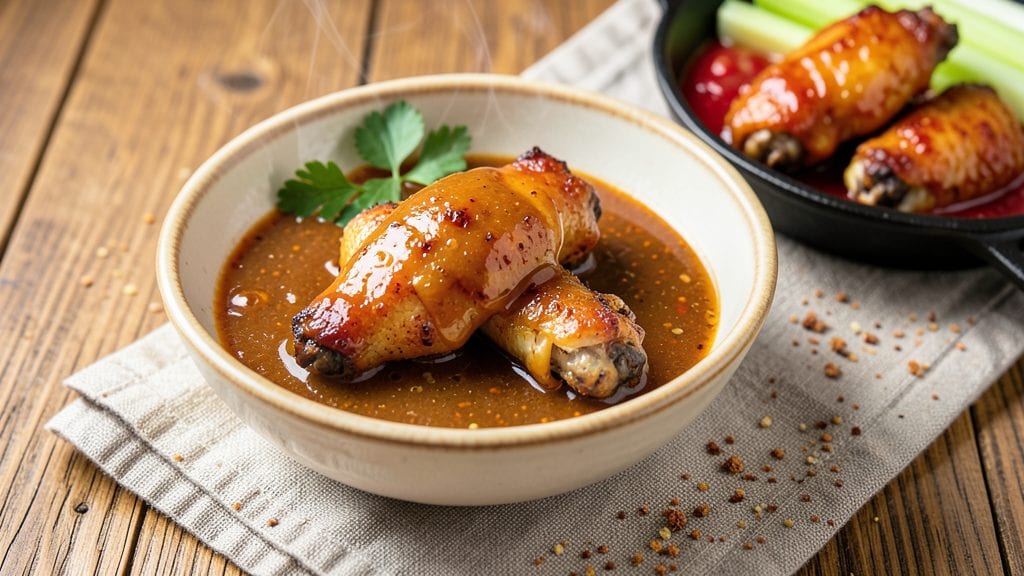
Creating Applebee's classic buffalo sauce at home delivers that signature smoky chipotle heat with just five pantry staples—no shortcuts needed. The secret lies in balancing tangy hot sauce with rich butter and carefully chosen spices for that signature depth.
I've perfected this recipe over years of testing, ensuring every batch captures the restaurant's bold flavor profile while staying perfectly balanced.
What sets this sauce apart is the smoky chipotle base, which transforms ordinary hot sauce into something complex and layered. The process is straightforward: melt butter with spices, then slowly blend in hot sauce until smooth.
This method creates a sauce that's vibrant red, slightly thickened, and packed with heat that lingers just right—not overpowering, but undeniably bold.
The result is a versatile condiment that elevates wings, fries, or even burgers to restaurant-quality status. Unlike store-bought versions, this sauce stays fresh for up to two weeks in the fridge, making it perfect for meal prep. The smoky chipotle notes add a professional touch that separates homemade from commercial.
For extra depth, consider adding a pinch of garlic powder or smoked paprika to the spice blend. This sauce works as a dipping sauce, marinade, or even a pizza topping—its versatility makes it a kitchen essential. Let's get started on recreating this classic.
Ingredients for applebee's classic buffalo sauce
Five pantry staples transform into Applebee's signature smoky chipotle buffalo sauce—rich, balanced, and restaurant-quality.
| Ingredient | Amount | Notes |
|---|---|---|
| Unsalted Butter 🧈 | ½ cup | Cold, cubed for even melting |
| Frank's RedHot Original Cayenne Pepper Sauce 🌶️ | ½ cup | Original recipe calls for this brand |
| Chipotle Powder 🔥 | 1 ½ tsp | Smoked, not liquid chipotle |
| Garlic Powder 🧄 | ½ tsp | Freshly ground preferred |
| Onion Powder 🧅 | ½ tsp | Diamond Crystal preferred |
| Smoked Paprika 🌶️ | ½ tsp | For authentic smoky depth |
| Ground Black Pepper 🌶️ | ¼ tsp | Freshly cracked preferred |
| Granulated Sugar 🍚 | ½ tsp | Balances heat and acidity |
The butter forms the sauce's velvety base, so unsalted is critical—salted butter alters the delicate balance. European-style butter like Plugrá or President melts more smoothly, but any quality brand works. Chipotle powder is non-negotiable for that signature smoky heat; Penzeys or Gourmet Tsp carry the best varieties. For the hot sauce, Frank's RedHot Original is the gold standard—its consistent tang and heat replicate the restaurant version perfectly. If substituting, choose a cayenne-based sauce with no added vinegar or sugar, which can throw off the balance.
No chipotle powder? Smoked paprika plus a pinch of cayenne mimics the flavor, though the smokiness won't be identical. Swap garlic powder for 1/4 tsp fresh minced garlic if you're feeling ambitious. Onion powder can be replaced with 1/4 tsp onion flakes, but the texture will differ slightly. For a sweeter profile (like the restaurant's version), add 1/8 tsp honey or maple syrup alongside the sugar. The sugar isn't just for sweetness—it rounds out the acidity in the hot sauce, so don't skip it. If your hot sauce is particularly vinegary, reduce the sugar to 1/4 tsp to maintain balance.
This sauce thickens as it cools, so thin with 1 tsp water if needed before serving. Store in an airtight container in the fridge for up to 2 weeks, though the flavor deepens over 3-5 days. For longer storage, freeze in 1-tbsp portions—perfect for meal prep. The sauce reheats beautifully; simply warm in a saucepan over low heat, stirring occasionally. Avoid microwaving, as it can separate the butter and thin the consistency.
Why You'll Love This Recipe
- Five-Ingredient Magic: I swear, this sauce is the kind of thing that makes you question why you ever bought bottled sauce. Just butter, cayenne, and those three little spices—chipotle, garlic, onion—simmered together until it’s just right. No peeling, no chopping, no messier steps. Honestly, I’ve made it wrong twice (too much cayenne both times), but now it’s my secret weapon.
- Smoky Heat Hug: That Frank’s RedHot brings the tangy kick, but the chipotle powder? It’s what turns this into something special—deep, smoky warmth that lingers without overpowering. I’ll be real: my kids still ask for ranch, but I sneak extra on my wings every time.
- Game for Any Night: This sauce doesn’t just work for wings—it’s my go-to for chicken tenders, roasted potatoes, or even a quick stir-fry. (Yes, even on a Tuesday night.) The leftovers? They’re just as good the next day, especially tossed with some shredded chicken for a lazy lunch. Not the prettiest, but the taste makes up for it.
- Pantry Goldmine: Between us, this recipe costs pennies to make. You’re using stuff you already have—no specialty ingredients, no last-minute grocery runs. And because it’s so simple, I double the batch and freeze half. That means zero stress when friends drop by or I’m craving buffalo flavor at 10 p.m. on a Friday. Reliable, solid, and always satisfying.
Step-by-step instructions for Applebee's classic buffalo sauce
This method delivers the signature smoky chipotle heat that defines Applebee's classic sauce, using only pantry staples.
Melt the Butter Over Medium Heat
Place the 0.5 cup unsalted butter in a medium saucepan over medium heat. Allow it to melt completely, stirring occasionally with a silicone spatula. Watch for the butter to transform from solid to a smooth, golden liquid—this typically takes about 3-4 minutes. The butter should foam slightly but not brown, as excessive heat will burn the sauce.
Here's the thing—using cold, cubed butter ensures even melting and prevents scorching. If you notice any browned bits forming at the bottom, immediately reduce the heat to low and stir gently until they dissolve. This step forms the base for your sauce, so take your time to get it right.
Add Spices and Sugar for Depth
Once the butter is fully melted, remove the pan from heat and let it cool slightly for 1-2 minutes. This prevents the spices from burning when added. Stir in the 1.5 teaspoons chipotle powder, 0.5 teaspoon garlic powder, 0.5 teaspoon onion powder, 0.5 teaspoon smoked paprika, and 0.25 teaspoon ground black pepper. The mixture will darken slightly and develop an aromatic, earthy scent—this is your signal that the spices are activating.
Add the 0.5 teaspoon granulated sugar and stir to combine. The sugar balances the heat and acidity of the cayenne sauce, creating a more complex flavor profile. Return the pan to low heat and let the spice mixture toast for 30 seconds, stirring constantly. You'll see the spices release their oils and deepen in color—this step builds the sauce's signature smoky depth.
Incorporate the Cayenne Sauce
Reduce the heat to low and slowly pour in the 0.5 cup Frank's RedHot Original Cayenne Pepper Sauce. Stir continuously with a wooden spoon to distribute the sauce evenly through the butter and spices. The mixture will bubble gently—this is normal. Let it simmer for 2-3 minutes, stirring frequently, until the sauce thickens slightly and coats the back of a spoon. You're looking for a smooth, velvety consistency that clings to the spoon rather than sliding off.
This is the moment that matters: the sauce should be thick enough to coat wings or chicken but still fluid enough to drizzle. If it's too thick, add 1 tablespoon water and stir until smooth. If it's too thin, simmer for an additional 30 seconds to reduce. The sauce should have a glossy sheen and a vibrant red-orange hue—this indicates proper emulsification.
Strain and Adjust Seasoning
Transfer the sauce to a fine-mesh strainer set over a clean bowl or measuring cup. Press gently with a silicone spatula to remove any lumps or undissolved spices. This step ensures a silky, lump-free sauce perfect for dipping or tossing. Discard any solids left in the strainer—these won't contribute to the final texture.
Taste the strained sauce and adjust the seasoning if needed. If it's too spicy, add a pinch more granulated sugar to balance the heat. If it's too mild, stir in an additional 0.25 teaspoon chipotle powder or 0.125 teaspoon cayenne pepper sauce. The sauce should deliver a bold, smoky heat with a touch of sweetness—this is the hallmark of Applebee's classic recipe.
Pro Tips For Making Applebee'S Classic Buffalo Sauce
- Melt Butter Slowly: Dump that cold butter straight into the pan and you’ll end up with clumps—trust me, I’ve done it. Warm the butter in a small saucepan over low heat first, stirring until it’s fully melted and just starting to foam. Then pour it into your sauce mixture while it’s still warm; this keeps the spices evenly suspended instead of settling at the bottom like lazy sediment.
- Measure Cayenne First: The RedHot sauce is liquid gold, but if you add it last, you risk burning the garlic and onion powders before they bloom. Start by whisking the cayenne into the melted butter first—this distributes the heat evenly and lets the spices infuse properly. I learned this the hard way when my sauce tasted like charred dust instead of smoky depth.
- Skip the Raw Onion Powder: That jar of onion powder? It’s not doing much until it’s toasted. Once your sauce is simmering, sprinkle the onion powder directly into the pan and let it sizzle for 30 seconds—just until it smells like caramelized onions. This trick makes a real difference in flavor without adding extra moisture.
- Strain If You Hate Grit: You don’t need to, but if you’re tired of tiny butter solids floating in your sauce, strain it through a fine-mesh sieve after simmering. It’s not the prettiest method, but it guarantees a silky texture—especially useful if you’re using salted butter or extra-rich dairy. (Yes, even if you’re impatient like me.)
Regional styles of this dish
Southern BBQ Twist
For a smoky, tangy Southern-inspired variation, swap the Frank's RedHot with 1/4 cup BBQ sauce (like Sweet Baby Ray's Original) and add 1/2 teaspoon smoked salt to the spice blend. The result is a sauce with deeper, caramelized notes that pairs perfectly with pulled pork or brisket.
I like to add 1/4 teaspoon liquid smoke (like Colonial Liquid Smoke) for an extra layer of smokiness that reminds me of Texas-style BBQ. 🔥
Cajun Creole Heat
Bring the bold flavors of New Orleans to your buffalo sauce by adding 1/2 teaspoon Cajun seasoning (like Tony Chachere's) and 1/4 teaspoon dried thyme to the spice mix. Replace the onion powder with 1/4 teaspoon celery salt for that classic Cajun holy trinity touch.
This version works amazingly well with shrimp or crawfish boils, giving them that signature Louisiana kick. 🌶️
Midwest-Style Sweet Heat
The Midwest loves its sweet and spicy combos, so this variation calls for doubling the sugar to 1 teaspoon and adding 1/4 teaspoon cinnamon to the spice blend. This creates a sauce that's perfect for dipping chicken tenders or drizzling over fries.
I also like to add 1/2 teaspoon apple cider vinegar to brighten the flavors—it’s a nod to the region’s love of tangy, sweet-savory dishes. 🍎
Smoky Chipotle Fusion
For a fusion twist, blend 1/2 teaspoon adobo powder (from canned chipotles) with the chipotle powder for an extra layer of smokiness. Add 1/4 teaspoon ground cumin to deepen the earthy notes, creating a sauce that’s perfect for tacos or grilled meats.
The adobo powder adds a slightly fruity depth that balances the heat beautifully. This version feels like a cross between buffalo sauce and a chipotle salsa. 🌶️
Herb-Infused Classic
For a lighter, herb-forward take, stir in 1 teaspoon chopped fresh parsley and 1/2 teaspoon dried oregano after straining the sauce. This variation keeps the signature heat but adds a fresh, bright finish that’s ideal for salads or grilled vegetables.
I also like to add a splash of lemon juice (about 1/2 teaspoon) to cut through the richness. It’s a refreshing twist that still delivers that classic buffalo kick. 🌿
Nutrition facts
Frequently asked questions
Can I make this buffalo sauce without butter?
The butter is essential for that creamy, velvety texture that defines Applebee's version. However, you can substitute with 1/2 cup neutral oil (like vegetable or avocado oil) if needed, though the sauce will be thinner. For a dairy-free option, use 1/2 cup vegan butter or coconut oil for a similar richness. The sauce won't be identical, but it'll still deliver bold chipotle heat!
How spicy will this sauce be?
This recipe delivers a medium-hot kick—think restaurant-quality heat that's bold but not overwhelming. The sugar balances the cayenne, so it's more complex than plain hot sauce. For milder heat, reduce the cayenne sauce to 1/3 cup or add 1/4 teaspoon more sugar. If you love spice, increase the cayenne to 2/3 cup and reduce sugar to 1/4 teaspoon.
Can I use this sauce on dishes other than wings?
This versatile sauce elevates fried chicken, fries, burgers, grilled meats, and even pasta. For veggie dishes, try drizzling it over roasted cauliflower or brussels sprouts. The smoky chipotle notes work beautifully with pulled pork or as a marinade for steaks. Just remember: thicker applications (like on wings) need less sauce than lighter dishes (like salads).
Why did my sauce separate?
Separation usually happens from too much heat or water. For a quick fix, whisk in 1 tablespoon cold water or 1 teaspoon cornstarch mixed with 1 tsp water while stirring over low heat. To prevent it, always cook on low heat and stir constantly when adding the cayenne sauce. If storing, let it cool completely before refrigerating to avoid condensation. The sauce will thicken as it chills—just stir before using.
What's the best way to store leftover sauce?
Transfer to an airtight container and refrigerate for up to 2 weeks. For longer storage, freeze in 1-tbsp portions (great for meal prep!). Thaw overnight in the fridge—never microwave, as it can thin the sauce. Pro tip: The flavor actually improves after 3-5 days as the spices meld. If it thickens too much, whisk in 1 tsp water before reheating.