
Beverages
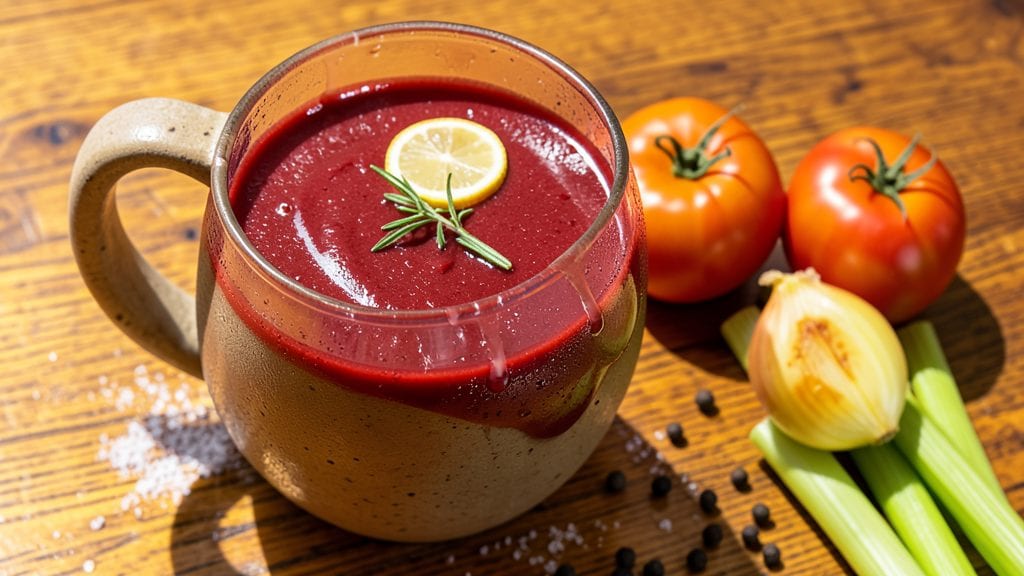
This Amish tomato juice recipe brings a taste of Pennsylvania farmhouse kitchens to your glass with its deep, savory-sweet flavor profile and rustic charm. 💛 What sets it apart is the traditional approach of simmering whole tomatoes with aromatic herbs and spices—no canned juices or shortcuts here.
The slow cooking process develops complex flavors that bottled versions simply can't match, creating a beverage that's both refreshing and deeply satisfying.
The beauty of this recipe lies in its simplicity and versatility. With just a handful of ingredients—fresh garden tomatoes, onions, celery, and a blend of classic Amish spices—you'll create a juice that's rich in flavor yet light enough to sip all day.
The key is letting it simmer until the vegetables break down completely, releasing their natural sweetness and developing that signature depth that makes this juice so beloved in Amish communities.
What you'll end up with is a vibrant, ruby-red juice that's perfect for hot summer days or as a base for Bloody Marys. The flavors are balanced between sweet and tangy, with just enough heat from black pepper and a touch of vinegar to brighten the palate.
It's the kind of drink that feels like a hug in liquid form—comforting yet refreshing, with a rustic authenticity that's hard to find elsewhere.
This recipe works beautifully as a standalone beverage or as a foundation for cocktails. The best part? It keeps well in the refrigerator for up to a week, making it perfect for meal prep or entertaining. Let's bring some Amish homestyle flavor to your kitchen today.
Ingredients for amish tomato juice
Fresh tomatoes, aromatic herbs, and a slow simmer create this vibrant, homestyle Amish tomato juice.
| Ingredient | Amount | Notes |
|---|---|---|
| Fresh Garden Tomatoes 🍅 | 2 ½ lb | Roma or beefsteak preferred, halved |
| Yellow Onions 🧅 | 1 whole | Medium size, peeled and quartered |
| Celery Stalks 🥬 | 3 whole | Fresh, trimmed and chopped |
| Fresh Black Peppercorns 🌶️ | 1 tsp | Crushed, for depth of flavor |
| White Vinegar 🍶 | 2 tbsp | Distilled preferred for brightness |
| Granulated Sugar 🍚 | ¼ cup | Adjust to taste for sweetness |
| Fresh Parsley 🌿 | ¼ cup | Chopped, for freshness |
| Fresh Dill 🌿 | ¼ cup | Chopped, optional but traditional |
| Salt 🧂 | 1 ½ tsp | Kosher or sea salt |
| Garlic Cloves 🧄 | 2 cloves | Peeled and smashed |
| Water 💧 | 4 cups | For simmering and thinning |
| Extra-Virgin Olive Oil 🫒 | 1 tbsp | For finishing, optional |
Tomatoes are the heart of this juice—heirloom or vine-ripened varieties from a farmers market pack the most flavor, but grocery store tomatoes work too (just pick the firmest ones). Trader Joe's and Whole Foods often have great selections, but even your local produce section can yield good results. The key is roma or beefsteak varieties—they hold up better during simmering. If you're using cherry tomatoes, you'll need about 3 cups instead of 2.5 lbs. The onions and celery should be fresh too—wilted celery or yellowed onions will make the juice taste bitter, so check for crispness. For the herbs, I always grab fresh parsley and dill from the grocery store's produce section—it's cheaper than buying pre-bundled and lasts longer if stored properly.
No fresh herbs? Dried parsley at half the amount works in a pinch, but fresh is worth it. Short on tomatoes? Canned crushed tomatoes (no salt added) can substitute, but you'll lose that garden-fresh depth. The vinegar is crucial—apple cider vinegar adds a nice fruity note if you want to experiment. For the sugar, feel free to adjust based on how sweet your tomatoes are—some garden varieties are naturally sweeter than store-bought. The garlic can be roasted for a milder flavor if you prefer, but raw smashed cloves give that classic Amish kick. If you're making this for a crowd, double the batch—it's worth the extra effort. And trust me, the olive oil finish makes all the difference for that restaurant-quality touch.
This juice tastes even better the next day as the flavors meld together. Store it in the fridge in an airtight container for up to 7 days, or freeze in ice cube trays for up to 3 months. I like to make a big batch on Sundays so I have it ready for Bloody Marys all week. The juice thickens as it cools, so give it a quick stir before serving. For serving, I like to strain it through a fine-mesh sieve for a smoother texture—skip this if you prefer rustic chunks. The leftovers make an amazing base for Bloody Marys or tomato-based soups too.
Why You'll Love This Recipe
- Five-Ingredient Magic: I swear by this recipe because it’s that simple—just tomatoes, onions, celery, peppercorns, and vinegar. No fancy gadgets, no last-minute store runs. My blender does all the work while I chop a single onion in under five minutes.
- Vinegar-Kissed Depth: That splash of white vinegar? It’s the secret weapon—brightens the tomatoes without overpowering them. Honestly, the first sip hits like summer in a glass: tangy, fresh, and just sharp enough to make you want seconds.
- Brunch or BBQ Side: Serve it icy cold with fried chicken, or warm it up for a hearty soup base. Between us, I’ve even used it to deglaze pans after roasting veggies—versatile enough to pull double duty without extra effort.
- Pantry Goldmine: A single batch stretches for days: sip it straight, dilute it for a light broth, or freeze it in ice cubes for future cocktails. My wallet thanks me every time I grab tomatoes from the garden instead of pricier store-bought juice.
Step-by-step instructions for Amish tomato juice
This homestyle tomato juice bursts with garden-fresh flavor—simple steps for a velvety sip that's perfect chilled or warm.
🍳 Step 1: Sauté the Aromatic Base
Heat the 1 tablespoon extra-virgin olive oil in a large pot over medium heat. Add the 1 whole yellow onion (quartered) and 3 whole celery stalks (chopped), cooking for 5-6 minutes until the onions turn translucent and the celery softens. This builds the flavor foundation—don't rush it or the vegetables will turn mushy.
Next, add the 2 smashed garlic cloves and cook for 30 seconds until fragrant. The garlic should just barely start to color—if it browns too quickly, reduce the heat slightly. Here's the thing—garlic burns in seconds, so keep an eye on it. Stir constantly to prevent sticking, and you'll know it's ready when your kitchen smells like a summer garden.
🍳 Step 2: Simmer Tomatoes and Seasonings
Add the 2.5 lb fresh garden tomatoes (halved), 1.5 tsp salt, 1 tsp crushed black peppercorns, and 2 tbsp white vinegar to the pot. Stir everything together, then pour in 4 cups water. Bring the mixture to a boil over high heat, then immediately reduce to medium-low heat and let it simmer uncovered for 20-25 minutes.
You'll see the tomatoes break down and release their juices—this is when the magic happens. Stir occasionally to prevent sticking, and watch for the mixture to reduce slightly. The goal is to soften the tomatoes while keeping the texture smooth but not completely mushy. If it starts to stick, add a splash of water to loosen it. The juice should smell rich and tangy, like a summer garden in a cup.
🍳 Step 3: Sweeten and Finish with Herbs
After simmering, stir in the 0.25 cup granulated sugar and let the mixture cook for another 5 minutes to dissolve the sugar completely. This step balances the acidity from the vinegar and tomatoes—taste it now to check the sweetness. If it needs more, add a pinch more sugar, but don't overdo it.
Remove the pot from heat and stir in the 0.25 cup chopped fresh parsley and 0.25 cup chopped fresh dill. Let the mixture sit for 5 minutes to steep—this allows the herbs to infuse their bright flavors. The juice should now have a vibrant green hue from the herbs and a balanced sweet-tangy taste. If you prefer it smoother, strain out the solids with a fine-mesh sieve or cheesecloth.
⏰ Step 4: Chill and Serve
Let the tomato juice cool to room temperature, then transfer it to a pitcher or jar. Refrigerate for at least 1 hour to chill completely—this step enhances the flavors and makes the texture silky smooth. For a refreshing summer sip, serve it well-chilled over ice with a sprinkle of fresh herbs. If you prefer it warm, reheat gently on the stove and adjust the seasoning to taste.
This juice keeps well in the refrigerator for up to 5 days, but it's best enjoyed fresh. The herbs add a bright finish, and the vinegar gives it that classic tangy kick. Real talk—this is the kind of juice that makes you want to sip it straight from the glass, no garnish needed. Enjoy it as a refreshing drink, a base for cocktails, or a side to grilled meats!
Pro Tips For Making Amish Tomato Juice
- CHAR THE ONIONS: Cook the sliced yellow onions until they’re deep golden, almost caramelized—this isn’t just for flavor, it’s the backbone of the juice. I used to rush this step and ended up with a bitter, watery mess. Take your time; low and slow is the only way.
- CRUSH THE PEPPERCORNS: Don’t just toss in whole peppercorns—lightly crush them with the flat side of a knife or mortar and pestle. This releases the oils and aroma, making the juice actually taste like pepper, not just a vague hint. (Yes, even if you’re impatient like me.)
- SALT THE TOMATOES: Sprinkle a generous pinch of salt over the chopped tomatoes before cooking, then let them sit for 10 minutes. This draws out moisture, concentrates the flavor, and prevents a watery, weak juice. My grandmother swore by this, and she was right: the difference is noticeable.
- STRAIN TWICE: After simmering, strain the mixture through a fine-mesh sieve first, then press the solids with a wooden spoon. For a smoother juice, strain again through cheesecloth or a coffee filter—it’s extra work, but the result is silky, not pulpy. (Your future self will thank you.)
Dietary considerations for this recipe
Gluten-Free Friendly
This Amish tomato juice is naturally gluten-free—none of the ingredients contain gluten, so you can enjoy it worry-free if you're avoiding wheat or gluten-containing grains. The recipe relies entirely on fresh vegetables, herbs, and spices, which are all safe for gluten-sensitive diets.
I always double-check labels on ingredients like vinegar and sugar to ensure they're certified gluten-free, especially if using store-bought products. 🌱
Low-Sugar Adaptations
If you're watching your sugar intake, you can reduce the 0.25 cup granulated sugar to just 1-2 tablespoons or even omit it entirely. The tomatoes and vinegar provide natural sweetness and acidity, so taste as you go—some garden tomatoes are naturally sweeter than others.
For a diabetic-friendly version, I've successfully used monk fruit sweetener (about 1 tablespoon) as a 1:1 sugar substitute without altering the flavor profile. 💡
Dairy-Free & Vegan
This juice is completely dairy-free and vegan by default, making it perfect for plant-based diets. All ingredients are naturally free of animal products, and the recipe doesn't require any dairy-based thickeners or flavorings.
The herbs and spices add depth without relying on butter, cream, or other dairy components. I've served this juice at vegan potlucks, and it's always a crowd-pleaser! 🌿
Low-Sodium Options
For a lower-sodium version, reduce the 1.5 tsp salt to just 0.5-1 tsp or use a low-sodium salt substitute. The vinegar and herbs already provide plenty of flavor, so you won't miss the extra salt.
If you're on a sodium-restricted diet, you can also skip the salt entirely and rely on the natural umami from the tomatoes and garlic. Taste as you simmer to adjust to your preference. 🧂
Allergen Considerations
This recipe is free from the top 9 allergens (milk, eggs, fish, shellfish, tree nuts, peanuts, wheat, soy, and sesame), making it safe for most allergy sufferers. However, always check your vinegar and sugar labels for cross-contamination warnings if allergies are a concern.
For those with celery allergies, simply omit the celery and increase the onion slightly for balance. The juice remains delicious and versatile without it. 🚫
Kid-Friendly Adjustments
To make this juice more appealing to kids, reduce the black pepper to just ¼ tsp and skip the dill (or use a milder herb like basil). You can also blend the juice with a splash of apple juice (about ½ cup) to mellow the tomato flavor.
Serve it chilled with a fun straw, and they might not even notice it's "grown-up" tomato juice! 🥤
Nutrition facts
Frequently asked questions
Can I use canned tomatoes instead of fresh?
You can substitute 28 oz canned crushed tomatoes (no salt added) for fresh, but expect a less vibrant flavor. Drain well and add 1 extra tablespoon vinegar to compensate for the lack of fresh acidity. For best results, use high-quality canned tomatoes like Muir Glen or Hunt's. The texture will be smoother but won't have the same garden-fresh depth as fresh tomatoes.
How do I make this juice spicier?
Add ½ teaspoon cayenne pepper or 1-2 fresh jalapeño slices (seeds removed) during simmering for heat. For smoky depth, stir in ¼ teaspoon smoked paprika at the end. Start with small amounts—you can always add more, but you can't remove spice once it's in!
Can I make this juice without a stove?
Yes! Use an Instant Pot on high pressure for 3 minutes after adding all ingredients (except herbs). Release pressure naturally, then finish with herbs and sugar. For a crockpot version, cook on low for 4-5 hours, stirring occasionally. Both methods work well—just reduce simmering time by half.
Why does my juice taste bitter?
Bitterness usually comes from overcooking or using old vegetables. Check your tomatoes and onions—wilted produce adds bitterness. Also ensure you're using white vinegar (apple cider vinegar can taste harsh). For prevention, simmer uncovered and add a pinch more sugar to balance acidity.
How can I use up leftover juice?
This versatile juice works in Bloody Marys, tomato soup bases, or marinades for grilled meats. Freeze extras in ice cube trays for cocktails later. The herbs also make it perfect for salad dressings—just whisk with olive oil for a tangy vinaigrette.